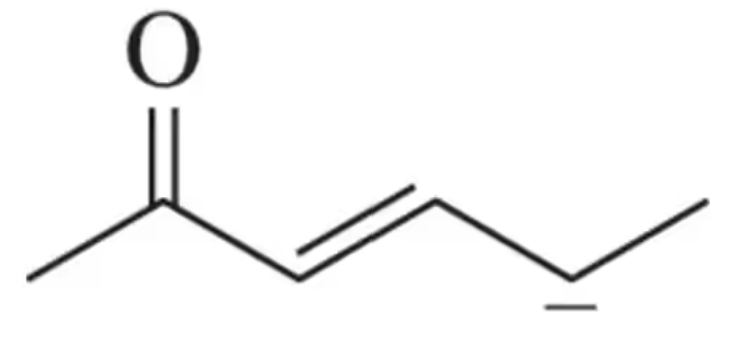
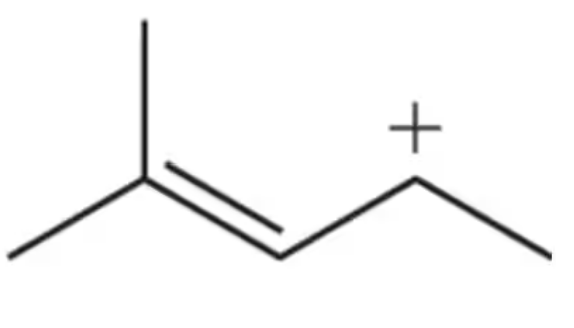
Draw all resonance structures of the following carbanion and carbocation. (a) (b)
Verified step by step guidance
1
Step 1: Understand the concept of resonance structures. Resonance structures are different Lewis structures for the same molecule that show the delocalization of electrons. They are used to represent molecules where electrons are not localized to a single bond or atom but are spread across multiple atoms.
Step 2: Identify the carbanion and carbocation in the given problem. A carbanion is a negatively charged carbon atom, while a carbocation is a positively charged carbon atom. These charges arise due to the gain or loss of electrons, respectively.
Step 3: For the carbanion (a), locate the lone pair of electrons on the negatively charged carbon atom. Use curved arrows to show the movement of electrons to form new resonance structures. Typically, electrons from lone pairs or π bonds will move to adjacent atoms or bonds to delocalize the charge.
Step 4: For the carbocation (b), identify the positively charged carbon atom. Resonance structures for carbocations are formed by moving π electrons or lone pairs from adjacent atoms toward the positively charged carbon to stabilize the charge. Use curved arrows to depict this electron movement.
Step 5: Draw all possible resonance structures for both the carbanion and carbocation. Ensure that each structure follows the rules of resonance: the total number of electrons must remain constant, and atoms must obey the octet rule where applicable. Label each resonance structure clearly and verify that the movement of electrons is consistent with the rules of resonance.
Verified video answer for a similar problem:
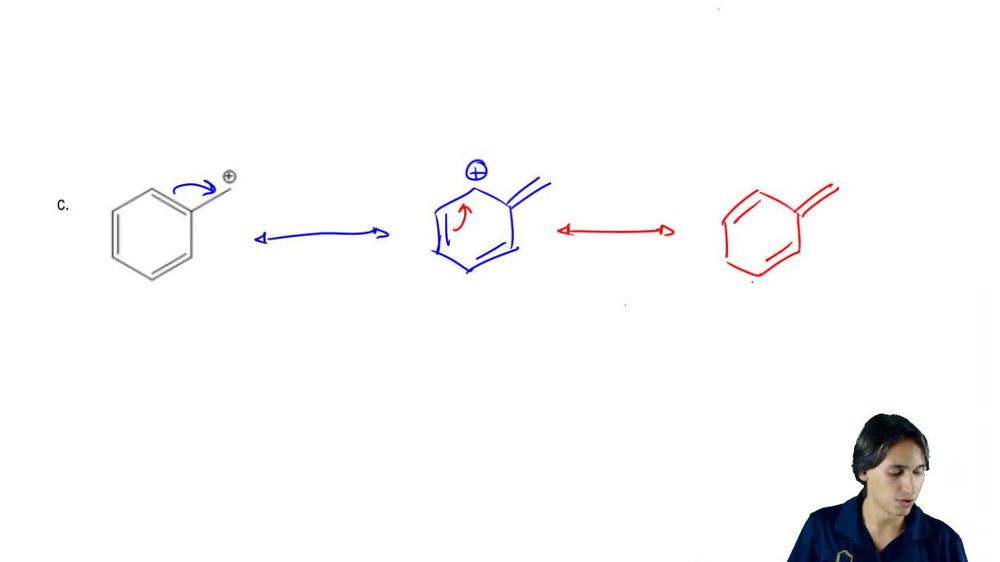
This video solution was recommended by our tutors as helpful for the problem above
Video duration:
7m
Play a video:
0 Comments
Key Concepts
Here are the essential concepts you must grasp in order to answer the question correctly.
Resonance Structures
Resonance structures are different Lewis structures for the same molecule that depict the same arrangement of atoms but differ in the placement of electrons. These structures help illustrate the delocalization of electrons within a molecule, which can stabilize reactive intermediates like carbanions and carbocations. The actual structure of the molecule is a hybrid of all possible resonance forms.
Carbanions are negatively charged species that contain a carbon atom with a lone pair of electrons. This extra electron density makes carbanions nucleophilic, allowing them to react with electrophiles. Understanding the stability of carbanions is crucial, as it is influenced by factors such as electronegativity of adjacent atoms and resonance stabilization.
Side-Chain Reactions of Substituted Pyridines Concept 1
Carbocations
Carbocations are positively charged carbon species that have only six electrons in their valence shell, making them electron-deficient and highly reactive. The stability of carbocations is determined by their degree (primary, secondary, tertiary) and the presence of resonance, which can help distribute the positive charge. Recognizing the factors that stabilize carbocations is essential for predicting their reactivity in organic reactions.