The following products were obtained from the oxidative cleavage of a diene. What is the structure of the diene?
Verified step by step guidance
1
Step 1: Understand the concept of oxidative cleavage. Oxidative cleavage is a reaction where a double bond in an alkene or diene is broken, and the resulting fragments are oxidized to form carbonyl compounds (such as aldehydes, ketones, or carboxylic acids). This reaction is typically carried out using reagents like ozone (O₃) followed by reductive workup or KMnO₄ under acidic conditions.
Step 2: Analyze the given products. Examine the carbonyl compounds provided as the result of the oxidative cleavage. Identify the functional groups (e.g., aldehydes, ketones, or carboxylic acids) and their positions in the molecule. This will help you deduce the original structure of the diene.
Step 3: Reconstruct the diene. Since oxidative cleavage splits the double bonds, the original diene must have had double bonds at positions that correspond to the locations of the carbonyl groups in the products. Use the positions of the carbonyl groups to determine where the double bonds were located in the diene.
Step 4: Verify the connectivity of the diene. Ensure that the reconstructed diene has the correct number of carbons and that the double bonds are positioned in a way that matches the products obtained from oxidative cleavage. Double-check that the structure is consistent with the given products.
Step 5: Confirm the stereochemistry (if applicable). If the problem specifies stereochemical details or if the diene could exist in different isomeric forms (e.g., cis/trans isomers), consider whether the stereochemistry of the diene affects the products formed during oxidative cleavage.
Verified video answer for a similar problem:
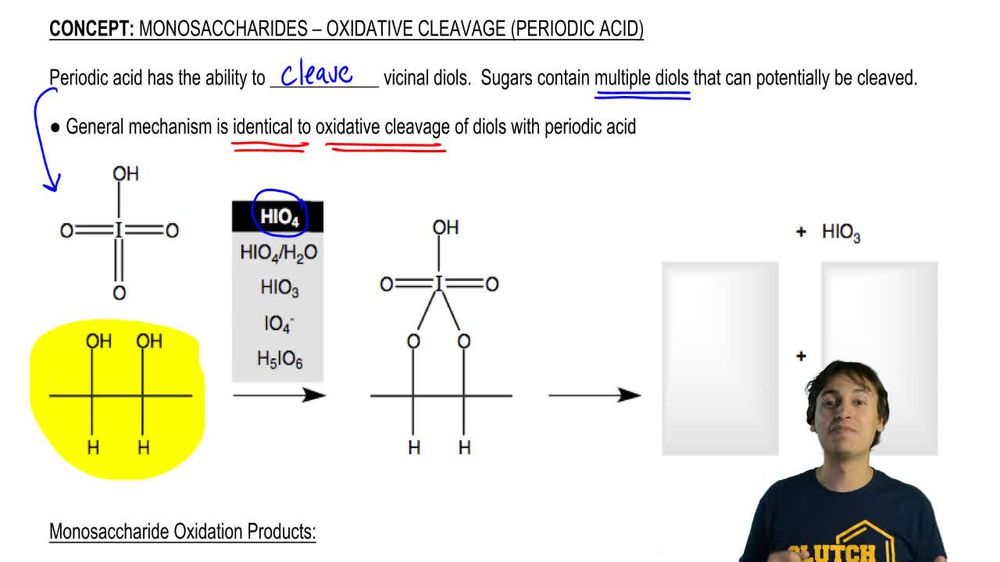
This video solution was recommended by our tutors as helpful for the problem above
Video duration:
1m
Play a video:
0 Comments
Key Concepts
Here are the essential concepts you must grasp in order to answer the question correctly.
Oxidative Cleavage
Oxidative cleavage is a chemical reaction that involves breaking carbon-carbon double bonds in alkenes or dienes, typically using oxidizing agents like ozone or potassium permanganate. This process results in the formation of carbonyl compounds, such as aldehydes or ketones, depending on the substitution pattern of the original diene. Understanding this reaction is crucial for deducing the structure of the starting diene from the products formed.
Dienes are organic compounds that contain two double bonds, which can be conjugated, cumulated, or isolated. The structure and reactivity of dienes are influenced by the arrangement of these double bonds, affecting how they undergo reactions like oxidative cleavage. Recognizing the type of diene involved is essential for predicting the products of the reaction and ultimately determining the original structure.
Product analysis involves examining the chemical products formed from a reaction to infer the structure of the reactants. In the context of oxidative cleavage, identifying the carbonyl compounds produced allows chemists to backtrack and deduce the possible structure of the diene. This analytical approach is fundamental in organic chemistry for reconstructing reaction pathways and understanding molecular transformations.