Correct the following incorrect names using standard IUPAC nomenclature. [Draw a compound that corresponds to the incorrect name, and then rename it.] (e) 2,6-diethyl-1-methylcycloheptane
Verified step by step guidance
1
Draw the structure of the compound based on the given incorrect name, 2,6-diethyl-1-methylcycloheptane. Start with a cycloheptane ring (a seven-membered ring) as the parent structure. Add a methyl group at carbon 1 and ethyl groups at carbons 2 and 6.
Check the numbering of the substituents to ensure it follows the IUPAC rule of assigning the lowest possible locants to the substituents. In this case, the numbering may not be optimal, so re-evaluate the numbering.
Reassign the numbering of the cycloheptane ring to minimize the locants for the substituents. Start numbering from the carbon that gives the substituents the lowest possible set of numbers.
Rename the compound based on the corrected numbering. List the substituents in alphabetical order, and include their positions on the ring. Ensure the name follows the IUPAC format: [position]-[substituent][parent chain].
Verify the final name by cross-checking it with IUPAC rules, ensuring that the name is unambiguous and correctly represents the structure of the compound.
Verified video answer for a similar problem:
This video solution was recommended by our tutors as helpful for the problem above
Play a video:
0 Comments
Key Concepts
Here are the essential concepts you must grasp in order to answer the question correctly.
IUPAC Nomenclature
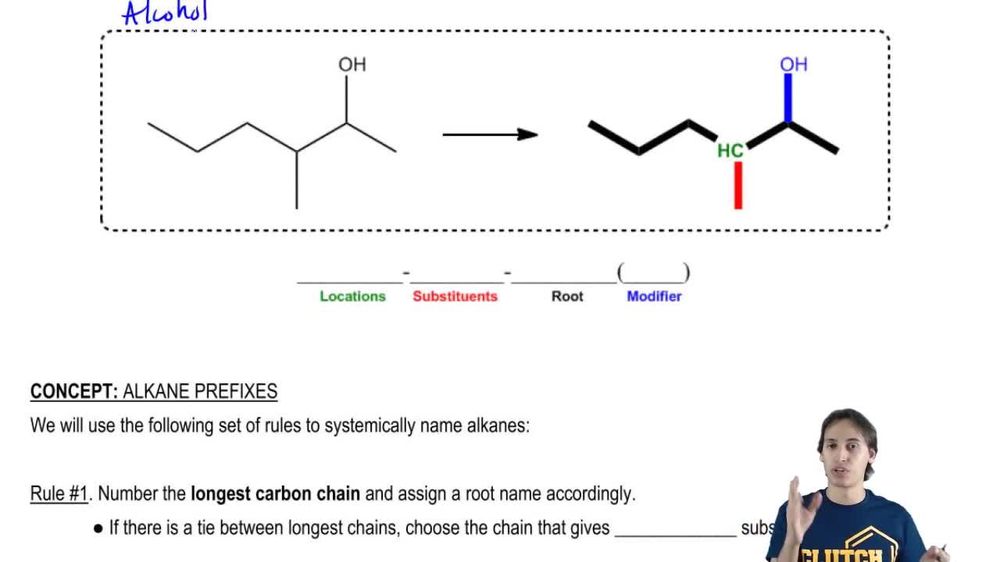
IUPAC nomenclature is a systematic method for naming organic chemical compounds. It provides rules for naming based on the structure of the molecule, including the longest carbon chain, functional groups, and substituents. Understanding these rules is essential for correcting incorrect names and ensuring clarity in communication within the field of chemistry.
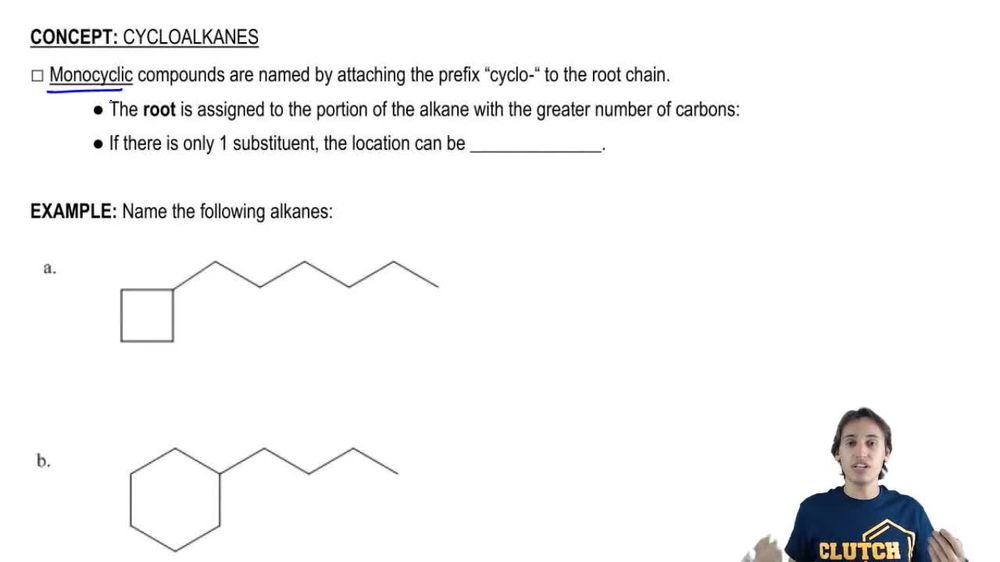
Cycloalkanes are saturated hydrocarbons that contain carbon atoms arranged in a ring structure. The naming of cycloalkanes involves identifying the ring size and the position of substituents. In the context of the question, recognizing the structure of cycloheptane and how substituents like ethyl and methyl groups are positioned is crucial for accurate nomenclature.
Substituent positioning refers to the correct identification and numbering of substituents on a carbon chain or ring. In IUPAC nomenclature, substituents must be numbered to give the lowest possible numbers to the substituents. This concept is vital for renaming compounds accurately, as it affects the overall name and clarity of the compound's structure.