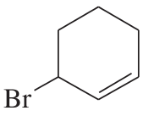
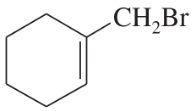
Allylic halides have the structure b. Draw the resonance structures of the allylic cations formed by ionization of the following halides. (i) (ii)
Verified step by step guidance
1
Identify the allylic position in the given halides. The allylic position is the carbon atom adjacent to the carbon-carbon double bond.
For compound (i), remove the bromine atom to form a carbocation at the allylic position. This will result in a positive charge on the carbon atom adjacent to the double bond.
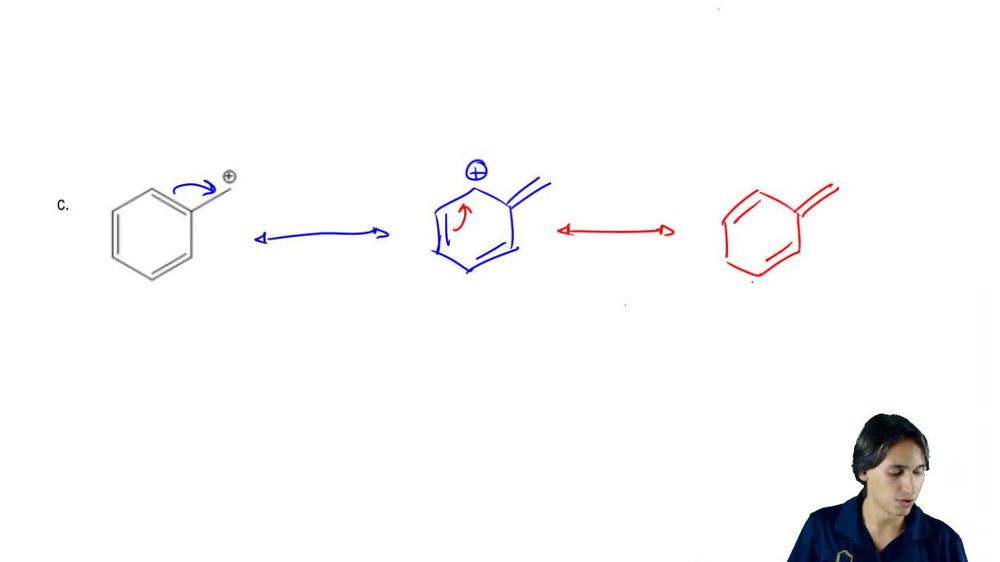
Draw the first resonance structure for compound (i) by moving the pi electrons from the double bond to form a new double bond with the carbocation, shifting the positive charge to the other end of the original double bond.
For compound (ii), similarly, remove the bromine atom to form a carbocation at the allylic position, resulting in a positive charge on the carbon atom adjacent to the double bond.
Draw the first resonance structure for compound (ii) by moving the pi electrons from the double bond to form a new double bond with the carbocation, shifting the positive charge to the other end of the original double bond.
Verified video answer for a similar problem:
This video solution was recommended by our tutors as helpful for the problem above
Video duration:
5m
Play a video:
0 Comments
Key Concepts
Here are the essential concepts you must grasp in order to answer the question correctly.
Allylic Halides
Allylic halides are organic compounds where a halogen atom is bonded to a carbon atom adjacent to a carbon-carbon double bond. This structure allows for unique reactivity due to the presence of the double bond, which can stabilize intermediates through resonance. The allylic position is particularly reactive in substitution and elimination reactions.
Resonance structures are different Lewis structures for a molecule that depict the same arrangement of atoms but differ in the distribution of electrons. They are used to represent the delocalization of electrons within a molecule, which can stabilize charged intermediates like allylic cations. Resonance structures are crucial for understanding the stability and reactivity of organic compounds.
Allylic cations are positively charged intermediates formed when a halide ion leaves an allylic halide, resulting in a carbocation at the allylic position. These cations are stabilized by resonance, as the positive charge can be delocalized over the adjacent double bond. This delocalization makes allylic cations more stable than typical carbocations, influencing their reactivity in chemical reactions.

 5:22 minutes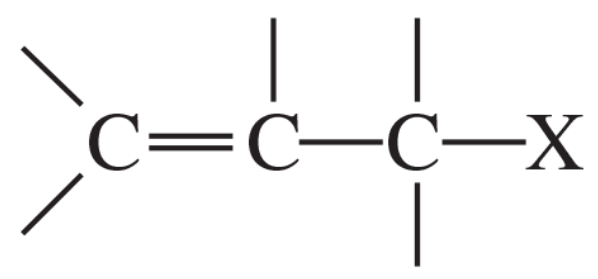
 Verified step by step guidance
 01:52
01:52