Purine is a heterocyclic compound with four nitrogen atoms. a. Which nitrogen is most apt to be protonated? b. Which nitrogen is least apt to be protonated?
Verified step by step guidance
1
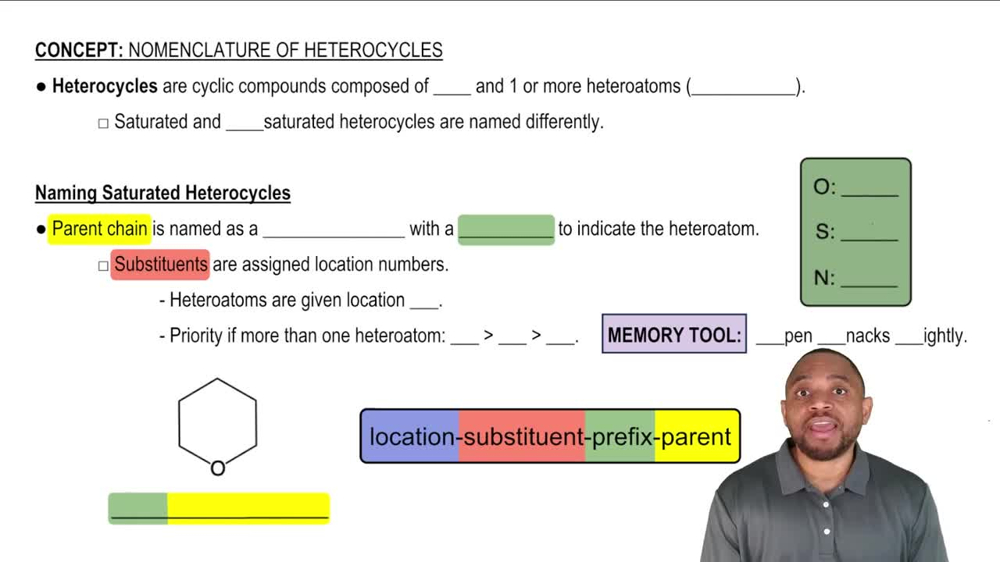
Step 1: Understand the structure of purine. Purine is a bicyclic heterocyclic compound composed of a pyrimidine ring fused to an imidazole ring. It contains four nitrogen atoms, each with different electronic environments.
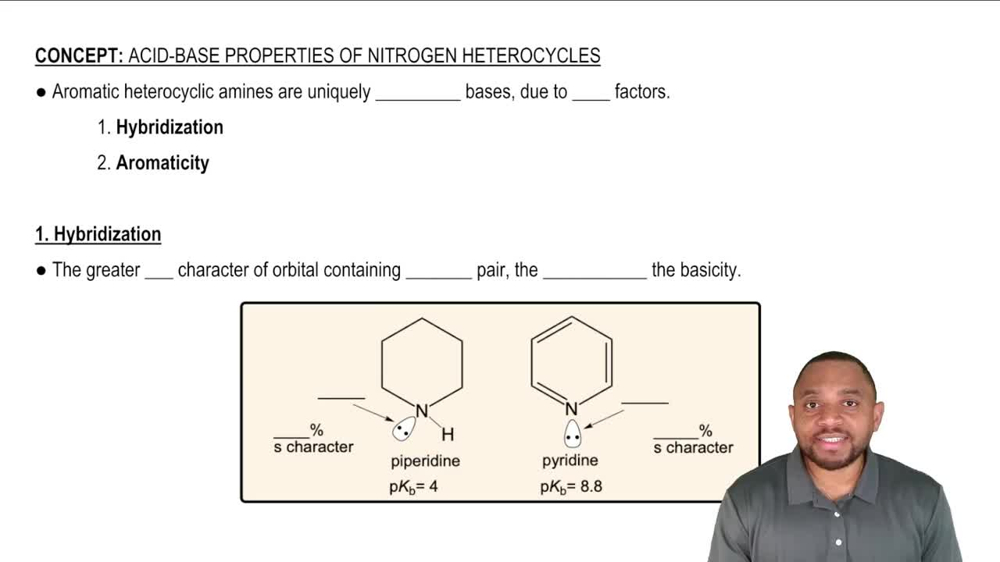
Step 2: Analyze the electronic environment of each nitrogen atom. The nitrogen atoms in purine can be classified as either sp2-hybridized or sp3-hybridized, and their ability to be protonated depends on factors such as lone pair availability and resonance stabilization.
Step 3: Determine which nitrogen is most apt to be protonated. The nitrogen atom with the most available lone pair and least steric hindrance, and which contributes least to resonance stabilization, is the most likely to be protonated.
Step 4: Determine which nitrogen is least apt to be protonated. The nitrogen atom whose lone pair is involved in resonance or aromaticity, or is sterically hindered, is the least likely to be protonated.
Step 5: Apply these principles to purine's structure. Examine the resonance structures and aromaticity of purine to identify the nitrogen atoms most and least apt to be protonated. Consider the role of each nitrogen in maintaining the aromatic stability of the molecule.
Verified video answer for a similar problem:
This video solution was recommended by our tutors as helpful for the problem above
Video duration:
5m
Play a video:
0 Comments
Key Concepts
Here are the essential concepts you must grasp in order to answer the question correctly.
Protonation and Basicity
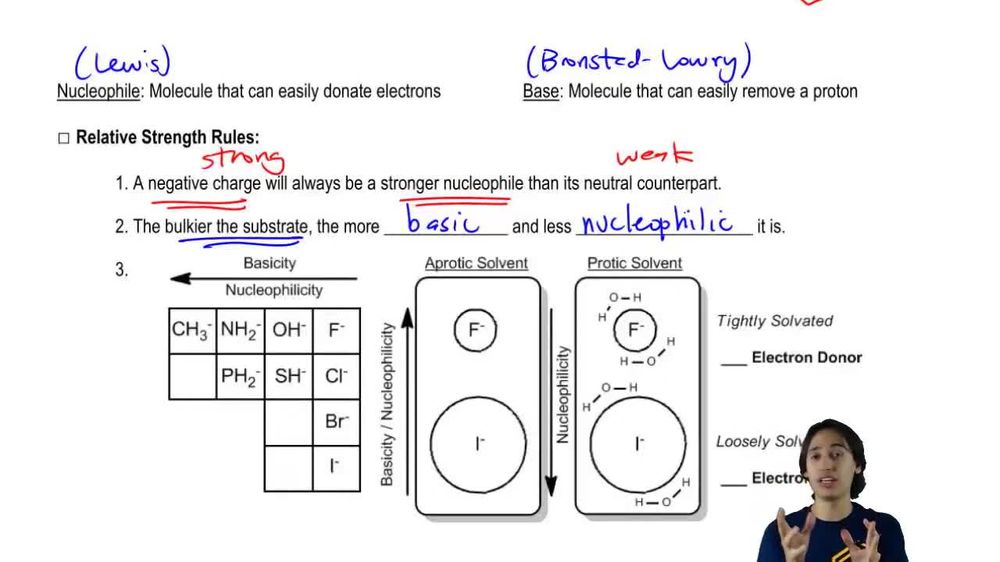
Protonation refers to the addition of a proton (H+) to a molecule, which often occurs at basic sites. In heterocyclic compounds like purines, the basicity of nitrogen atoms varies due to their electronic environment. The nitrogen atom that can best stabilize the positive charge after protonation is considered the most basic and thus the most likely to be protonated.
Understanding the difference between basicity and nucleophilicity.
Heterocyclic Compounds
Heterocyclic compounds are cyclic structures that contain atoms of at least two different elements in their rings, commonly carbon and nitrogen. In purines, the presence of multiple nitrogen atoms influences their chemical properties, including acidity and basicity. Understanding the structure of these compounds is crucial for predicting their reactivity and interactions.
The acidity and basicity of nitrogen atoms in a heterocyclic compound depend on their hybridization and the presence of electron-withdrawing or electron-donating groups. In the context of purines, the nitrogen atoms can exhibit different levels of acidity and basicity, affecting their likelihood of being protonated. This concept is essential for determining which nitrogen is most or least likely to accept a proton.

 5:54 minutes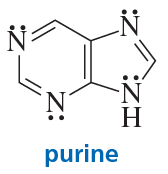
 Verified step by step guidance
 06:21
06:21