Ch. 16 - Reactions of Aldehydes and Ketones • More Reactions of Carboxylic Acid Derivatives
Bruice - Organic Chemistry 8th Edition
Bruice8th EditionOrganic ChemistryISBN: 9780135213711Not the one you use?Change textbook
Chapter 17, Problem 50d

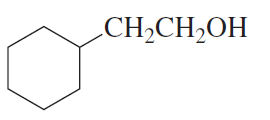
Using bromocyclohexane as a starting material, how could you synthesize the following compounds?
d. Structural formula of bromocyclohexane with the molecular formula CH2CH2OH displayed alongside.

Verified step by step guidance
1
Step 1: Analyze the target molecule. The target compound is cyclohexylmethanol, which contains a cyclohexane ring attached to a CH2OH group. This indicates that the bromine atom in bromocyclohexane needs to be replaced with a hydroxyl group (-OH).
Step 2: Identify the reaction type. To replace the bromine atom with a hydroxyl group, a nucleophilic substitution reaction (SN2 or SN1) can be used. Bromine is a good leaving group, making bromocyclohexane suitable for this transformation.
Step 3: Choose the appropriate reagent. Sodium hydroxide (NaOH) or potassium hydroxide (KOH) in an aqueous solution can act as a nucleophile to substitute the bromine atom with a hydroxyl group. Alternatively, water (H2O) under acidic or basic conditions can also be used.
Step 4: Reaction conditions. If using NaOH or KOH, the reaction should be carried out under mild heating to facilitate the substitution. Ensure the reaction conditions favor SN2 (if the solvent is polar aprotic) or SN1 (if the solvent is polar protic) mechanisms, depending on the setup.
Step 5: Purification. After the reaction, the product cyclohexylmethanol can be purified using techniques such as distillation or recrystallization, depending on the physical properties of the product and impurities.

Verified video answer for a similar problem:

This video solution was recommended by our tutors as helpful for the problem above.
Video duration:
5m
Was this helpful?

Key Concepts

Here are the essential concepts you must grasp in order to answer the question correctly.

Nucleophilic Substitution

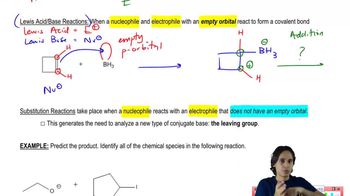
Nucleophilic substitution is a fundamental reaction in organic chemistry where a nucleophile attacks an electrophilic carbon atom, replacing a leaving group. In the case of bromocyclohexane, the bromine atom acts as a leaving group, allowing nucleophiles such as hydroxide ions (OH-) to replace it, leading to the formation of alcohols.
Recommended video:
Guided course
01:47
Nucleophiles and Electrophiles can react in Substitution Reactions.

Stereochemistry

Stereochemistry refers to the study of the spatial arrangement of atoms in molecules and how this affects their chemical behavior. When synthesizing compounds from bromocyclohexane, understanding the stereochemistry is crucial, as the configuration of the resulting alcohol can influence its reactivity and interactions with other molecules.
Recommended video:
1:38
Polymer Stereochemistry Concept 1

Reagents and Reaction Conditions

The choice of reagents and reaction conditions is vital in organic synthesis. For converting bromocyclohexane to the desired alcohol, appropriate nucleophiles (like NaOH or KOH) and conditions (such as temperature and solvent) must be selected to ensure a successful reaction and to control the formation of the desired product while minimizing side reactions.
Recommended video: