Ch. 17 - Reactions at the Alpha-Carbon
Bruice - Organic Chemistry 8th Edition
Bruice8th EditionOrganic ChemistryISBN: 9780135213711Not the one you use?Change textbook
Chapter 18, Problem 74a

Show how the amino acid alanine can be synthesized from propanoic acid.

Verified step by step guidance
1
Identify the structure of alanine and propanoic acid. Alanine is an amino acid with the structure CH₃-CH(NH₂)-COOH, and propanoic acid is CH₃-CH₂-COOH.
Recognize that the transformation involves introducing an amino group (-NH₂) at the alpha-carbon of propanoic acid. This is a common reaction in amino acid synthesis.
Convert propanoic acid into an alpha-bromo acid. This can be achieved by brominating the alpha-carbon using bromine (Br₂) in the presence of phosphorus tribromide (PBr₃) to form 2-bromopropanoic acid (CH₃-CH(Br)-COOH).
Substitute the bromine atom with an amino group. This can be done by treating 2-bromopropanoic acid with excess ammonia (NH₃), resulting in the formation of alanine (CH₃-CH(NH₂)-COOH).
Purify the product to isolate alanine. This can involve recrystallization or other purification techniques to ensure the final product is pure.

Verified video answer for a similar problem:

This video solution was recommended by our tutors as helpful for the problem above.
Video duration:
1m
Was this helpful?

Key Concepts

Here are the essential concepts you must grasp in order to answer the question correctly.

Amino Acid Structure

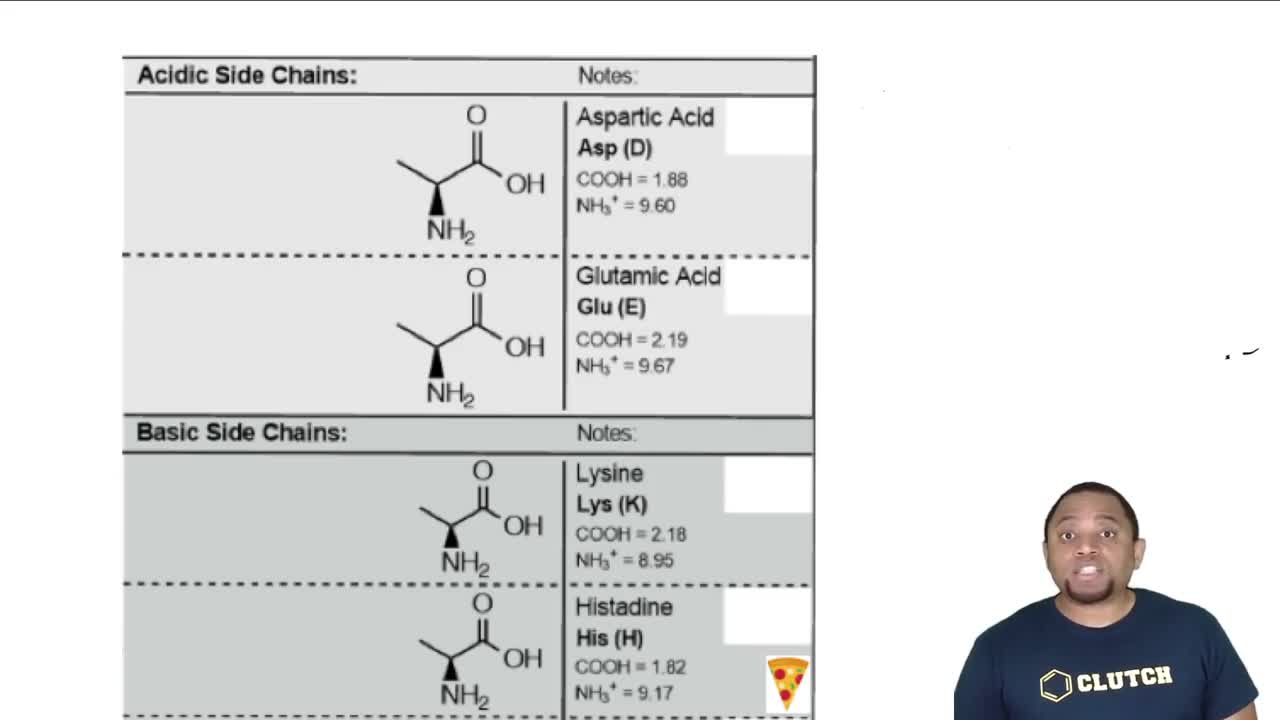
Amino acids are organic compounds characterized by the presence of an amino group (-NH2), a carboxyl group (-COOH), and a unique side chain (R group) that determines their properties. Alanine, specifically, has a simple side chain consisting of a methyl group (-CH3), making it a non-polar, aliphatic amino acid. Understanding this structure is essential for grasping how alanine can be synthesized from simpler organic molecules.
Recommended video:
Guided course
11:14
Charged Amino Acids

Decarboxylation

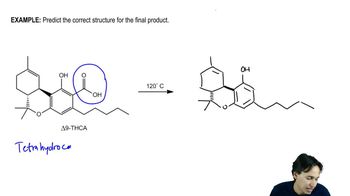
Decarboxylation is a chemical reaction that involves the removal of a carboxyl group (-COOH) from a molecule, releasing carbon dioxide (CO2). In the synthesis of alanine from propanoic acid, decarboxylation plays a crucial role as it transforms the propanoic acid into an intermediate that can be further modified to form alanine. This process is fundamental in organic synthesis and metabolic pathways.
Recommended video:
Guided course
02:32
Predict the correct structure

Transamination

Transamination is a biochemical process where an amino group from one amino acid is transferred to a keto acid, forming a new amino acid and a new keto acid. In the context of synthesizing alanine from propanoic acid, transamination can occur with an intermediate compound, allowing the incorporation of the amino group necessary for alanine formation. This concept is vital for understanding amino acid metabolism and synthesis.