Ch. 18 - Reactions of Benzene and Substituted Benzenes
Bruice - Organic Chemistry 8th Edition
Bruice8th EditionOrganic ChemistryISBN: 9780135213711Not the one you use?Change textbook
Chapter 19, Problem 41a

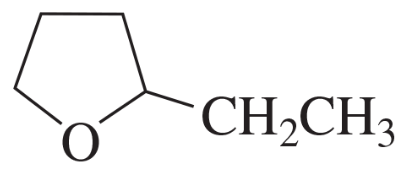
Design a synthesis for each of the following, using an intramolecular reaction:
a.

Verified step by step guidance
1
Analyze the target molecule: The structure provided is a six-membered cyclic ether (tetrahydropyran) with two methyl groups attached to the ring. This suggests the use of an intramolecular reaction to form the cyclic ether.
Select a precursor molecule: To form the cyclic ether via an intramolecular reaction, choose a molecule with both an alcohol (-OH) group and a leaving group (e.g., halide or tosylate) positioned appropriately for cyclization.
Plan the intramolecular reaction: The reaction mechanism likely involves nucleophilic substitution (SN2) or elimination followed by ring closure. The alcohol group will act as the nucleophile, attacking the electrophilic carbon attached to the leaving group.
Ensure proper functional group placement: Design the precursor molecule such that the alcohol and leaving group are separated by the correct number of carbons to form a six-membered ring upon cyclization. For example, a 6-carbon chain with an alcohol at one end and a halide at the other end would work.
Propose reaction conditions: Use a base (e.g., NaH or KOH) to deprotonate the alcohol, increasing its nucleophilicity. Heat the reaction mixture to promote cyclization and form the tetrahydropyran ring.

Verified video answer for a similar problem:

This video solution was recommended by our tutors as helpful for the problem above.
Video duration:
7m
Was this helpful?

Key Concepts

Here are the essential concepts you must grasp in order to answer the question correctly.

Intramolecular Reactions

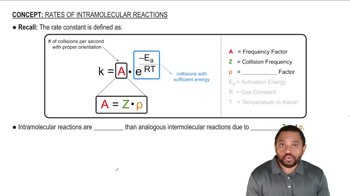
Intramolecular reactions occur when a reaction takes place within a single molecule, leading to the formation of a cyclic structure. This type of reaction often involves the nucleophilic attack of a functional group on another part of the same molecule, resulting in the closure of a ring. Understanding intramolecular reactions is crucial for designing syntheses that yield cyclic compounds, as they can significantly influence the reaction pathway and product formation.
Recommended video:
2:29
Rates of Intramolecular Reactions Concept 1

Williamson Ether Synthesis

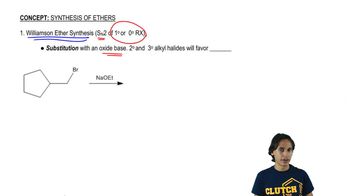
Williamson Ether Synthesis is a method for creating ethers through the reaction of an alkoxide ion with a primary alkyl halide. This reaction typically involves a nucleophilic substitution mechanism (SN2), where the alkoxide acts as a nucleophile and attacks the electrophilic carbon of the alkyl halide. This concept is essential for the synthesis of cyclic ethers, as it provides a pathway to form ethers that can be further manipulated in intramolecular reactions.
Recommended video:
Guided course
03:50
The Mechanism of Williamson Ether Synthesis.

Cyclic Ethers

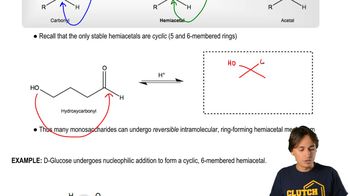
Cyclic ethers are a class of compounds characterized by a ring structure containing one or more ether linkages (–O–). They are often formed through intramolecular reactions and can exhibit unique chemical properties due to their ring strain and reactivity. Understanding the structure and reactivity of cyclic ethers is vital for predicting the outcomes of synthetic routes and for designing effective synthesis strategies in organic chemistry.
Recommended video:
Guided course
06:23
Monosaccharides - Forming Cyclic Hemiacetals