
Textbook Question
Which of the following is not a function of synovial fluid?
(a) Shock absorption
(b) Nutrient distribution
(c) Maintenance of ionic balance
(d) Lubrication of the articular surfaces
(e) Waste disposal
71
views

 Verified step by step guidance
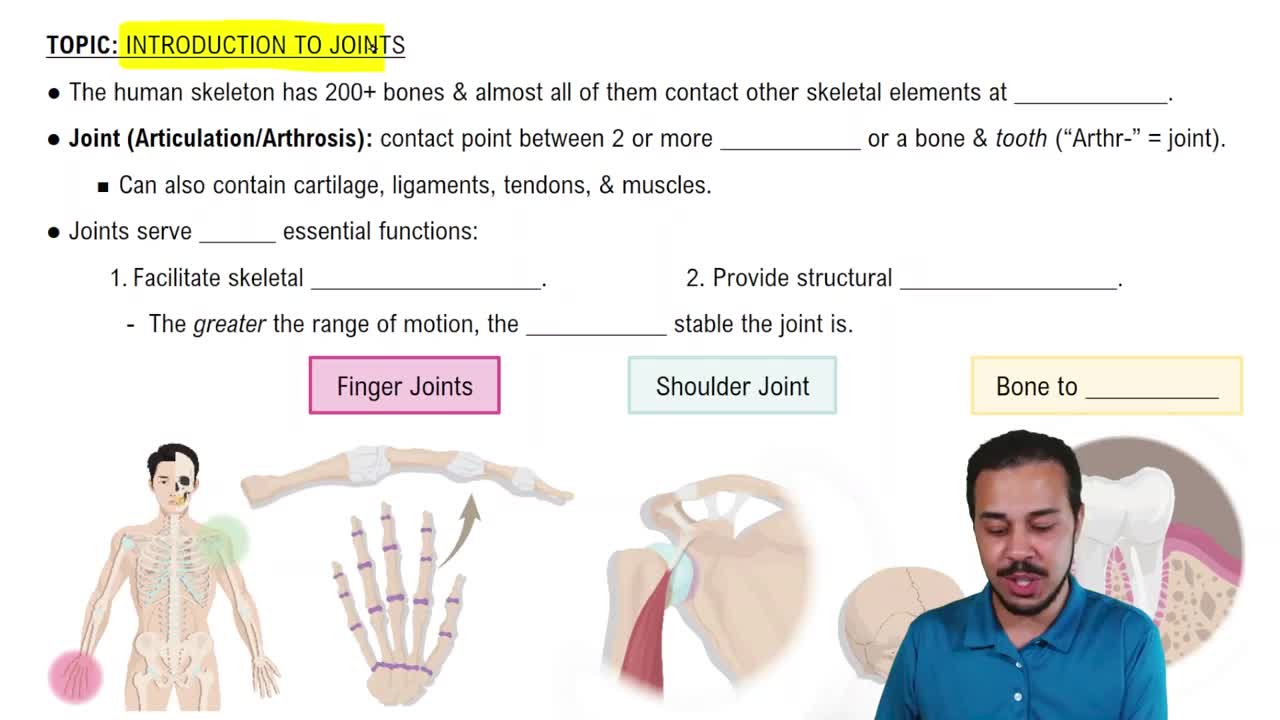
 05:39
05:39
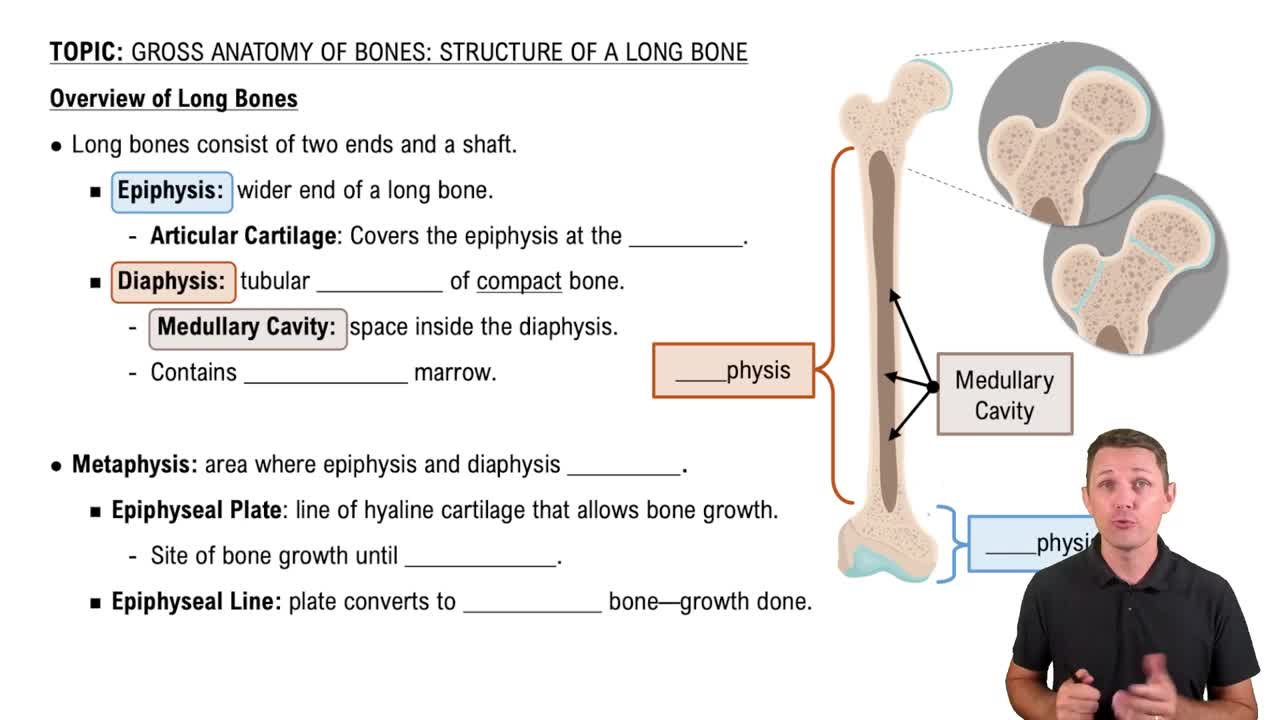 6:19
6:19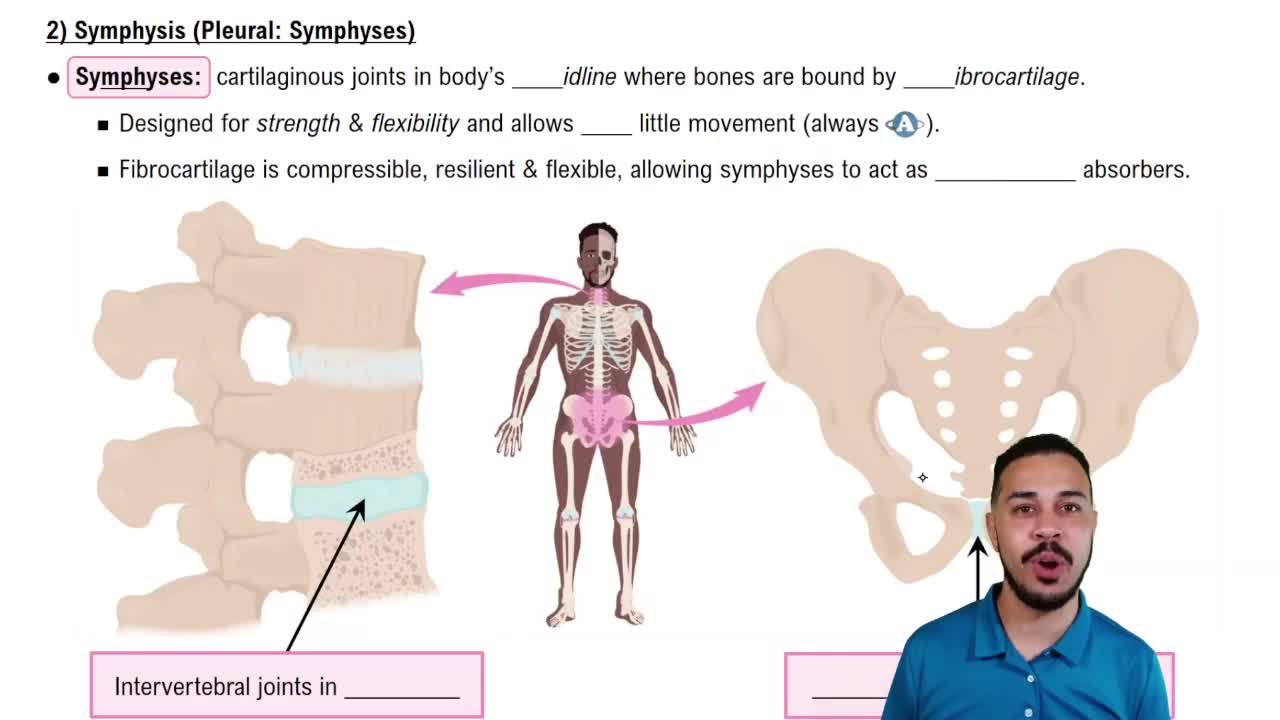 05:50
05:50Which of the following is not a function of synovial fluid?
(a) Shock absorption
(b) Nutrient distribution
(c) Maintenance of ionic balance
(d) Lubrication of the articular surfaces
(e) Waste disposal
Subacromial, subcoracoid, and subscapular bursae reduce friction in the____joint.
(a) hip
(b) knee
(c) elbow
(d) shoulder
The joint between adjacent vertebral bodies is a
(a) Syndesmosis
(b) Symphysis
(c) Synchondrosis
(d) Synostosis.
The function of the articular cartilage is:
(a) To reduce friction
(b) To prevent bony surfaces from contacting one another
(c) To provide lubrication
(d) Both a and b
A synarthrosis located between the bones of the skull is a
(a) Symphysis
(b) Syndesmosis
(c) Synchondrosis
(d) Suture
The anterior joint between the two pubic bones is a
(a) Synchondrosis
(b) Synostosis
(c) Symphysis
(d) Synarthrosis