A synarthrosis located between the bones of the skull is a (a) Symphysis (b) Syndesmosis (c) Synchondrosis (d) Suture
Verified step by step guidance
1
Step 1: Understand the term 'synarthrosis' — it refers to an immovable joint where bones are tightly connected, allowing little to no movement.
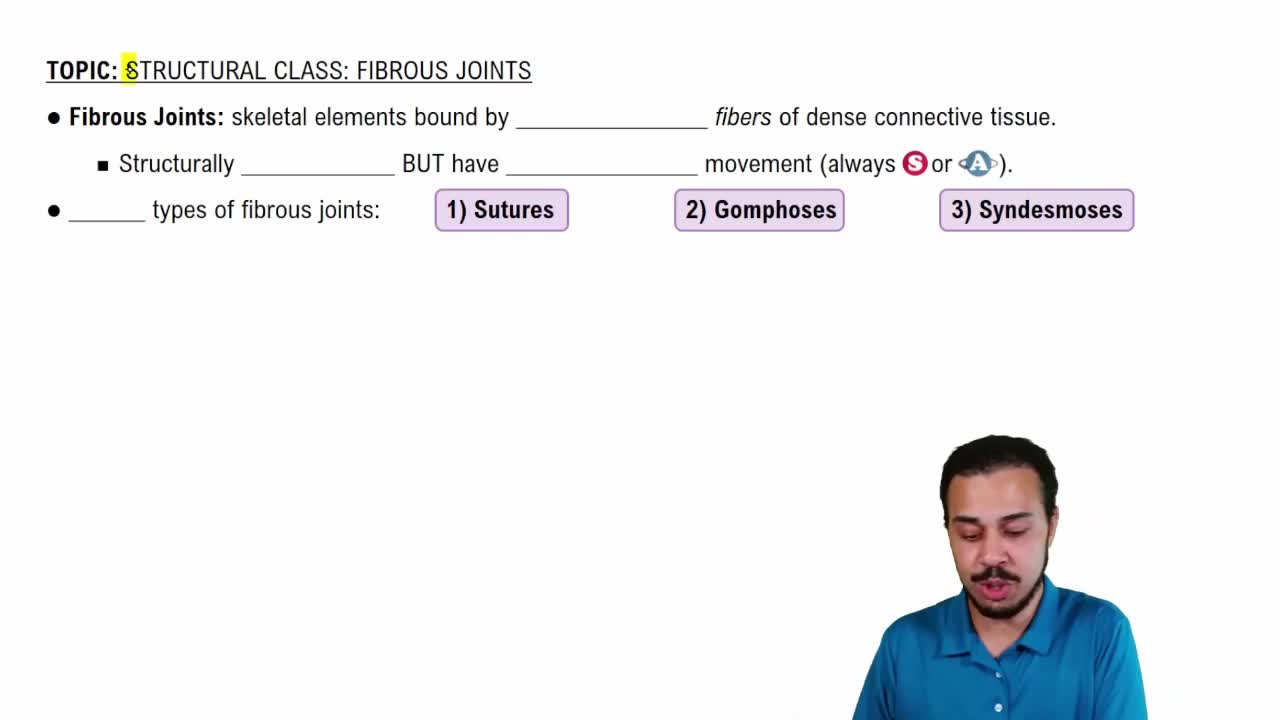
Step 2: Review the types of synarthroses: Symphysis (a slightly movable joint with fibrocartilage), Syndesmosis (a joint where bones are connected by ligaments), Synchondrosis (a joint where bones are joined by hyaline cartilage), and Suture (a fibrous joint found only between skull bones).
Step 3: Recognize that the question specifies a synarthrosis located between the bones of the skull, which is a key clue.
Step 4: Recall that sutures are immovable fibrous joints that connect the bones of the skull, fitting the definition of synarthrosis perfectly.
Step 5: Conclude that the correct answer is the type of joint known as a 'Suture' because it is a synarthrosis specific to skull bones.
Verified video answer for a similar problem:
This video solution was recommended by our tutors as helpful for the problem above
Video duration:
1m
Play a video:
0 Comments
Key Concepts
Here are the essential concepts you must grasp in order to answer the question correctly.
Synarthrosis
Synarthrosis refers to a type of joint that is immovable or allows very limited movement. These joints are typically found where stability is essential, such as between the bones of the skull, providing protection and structural integrity.
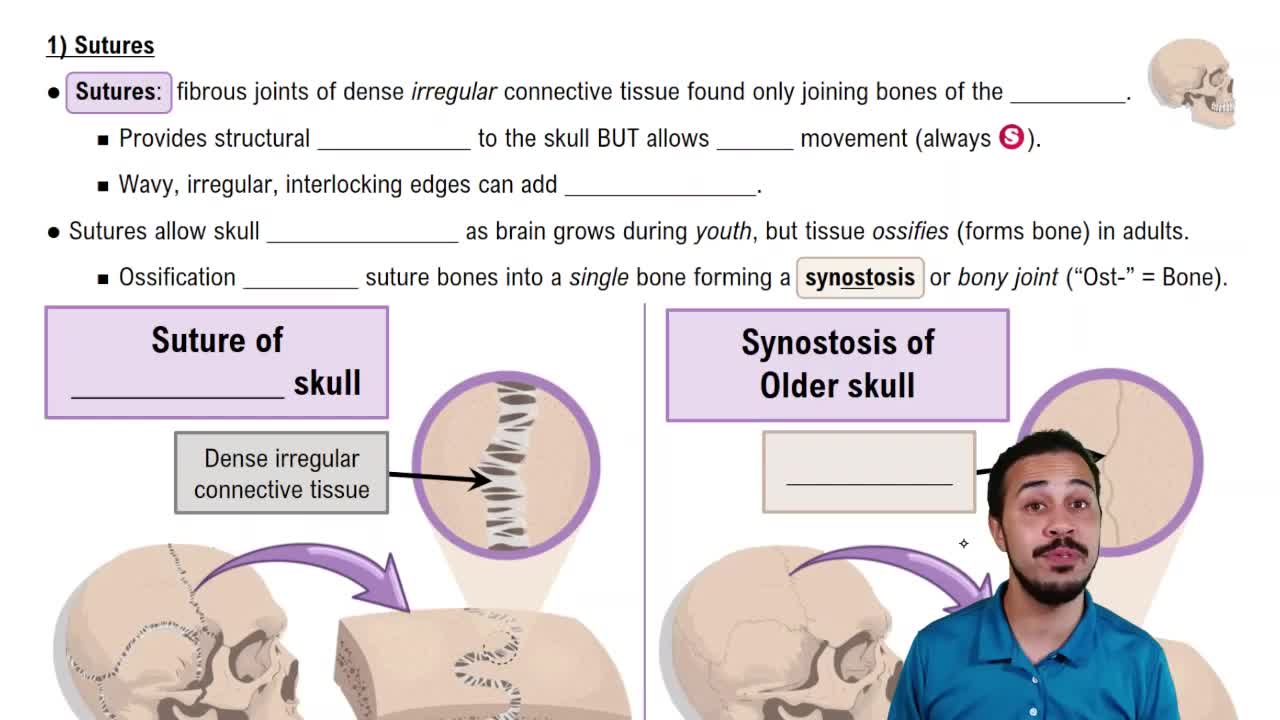
A suture is a fibrous joint found exclusively between the bones of the skull. It is characterized by interlocking edges that fuse during development, creating a strong, immovable connection that protects the brain.
Other Types of Fibrous Joints (Symphysis, Syndesmosis, Synchondrosis)
Symphysis is a cartilaginous joint allowing slight movement, found in the pubic symphysis. Syndesmosis is a fibrous joint with bones connected by ligaments, allowing limited movement. Synchondrosis is a cartilaginous joint where bones are joined by hyaline cartilage, such as the epiphyseal plates.