The joint between adjacent vertebral bodies is a (a) Syndesmosis (b) Symphysis (c) Synchondrosis (d) Synostosis.
Verified step by step guidance
1
Step 1: Understand the types of joints listed in the options. Each type represents a different kind of connection between bones.
Step 2: Define each joint type: (a) Syndesmosis is a fibrous joint where bones are connected by ligaments, allowing slight movement; (b) Symphysis is a cartilaginous joint where bones are joined by fibrocartilage, allowing limited movement; (c) Synchondrosis is a cartilaginous joint where bones are joined by hyaline cartilage, usually immovable; (d) Synostosis is a bony fusion where two bones have completely fused together, eliminating movement.
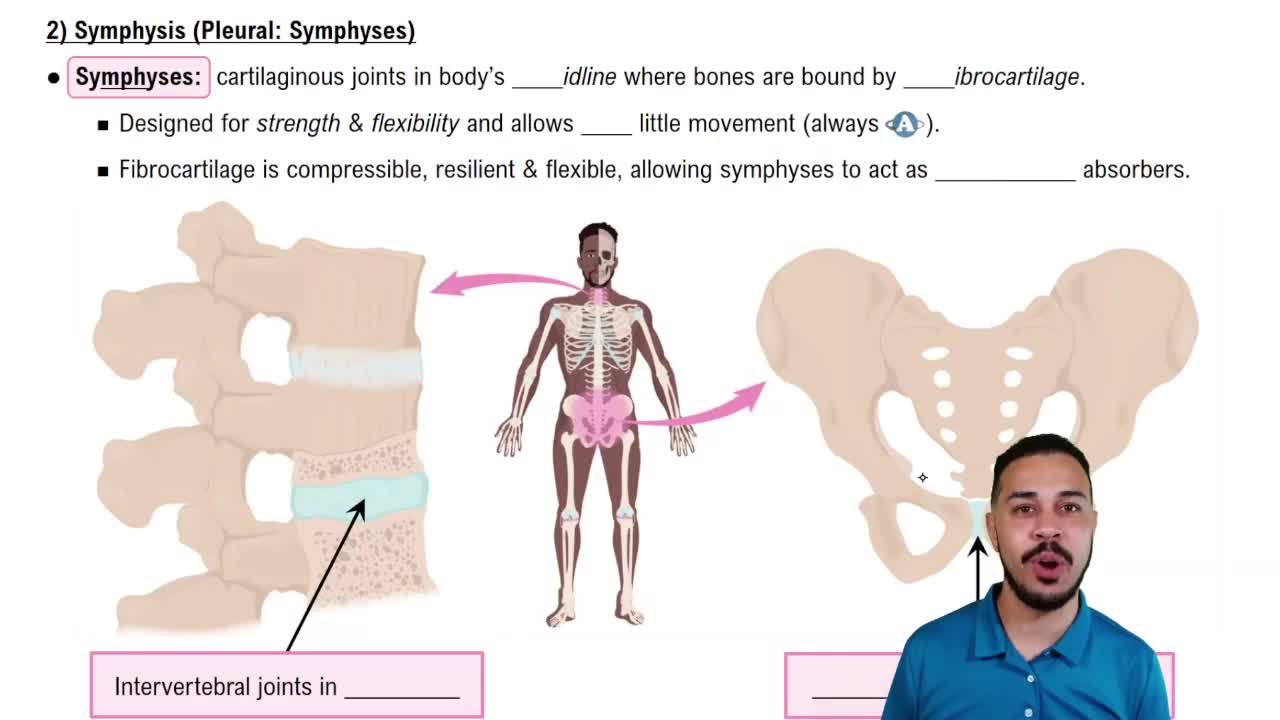
Step 3: Recall the anatomy of vertebral bodies: adjacent vertebral bodies are connected by an intervertebral disc composed of fibrocartilage, which allows slight movement and acts as a shock absorber.
Step 4: Match the joint type to the vertebral bodies: since the connection involves fibrocartilage, the joint is classified as a symphysis.
Step 5: Conclude that the joint between adjacent vertebral bodies is a symphysis, corresponding to option (b).
Verified video answer for a similar problem:
This video solution was recommended by our tutors as helpful for the problem above
Video duration:
1m
Play a video:
0 Comments
Key Concepts
Here are the essential concepts you must grasp in order to answer the question correctly.
Types of Joints
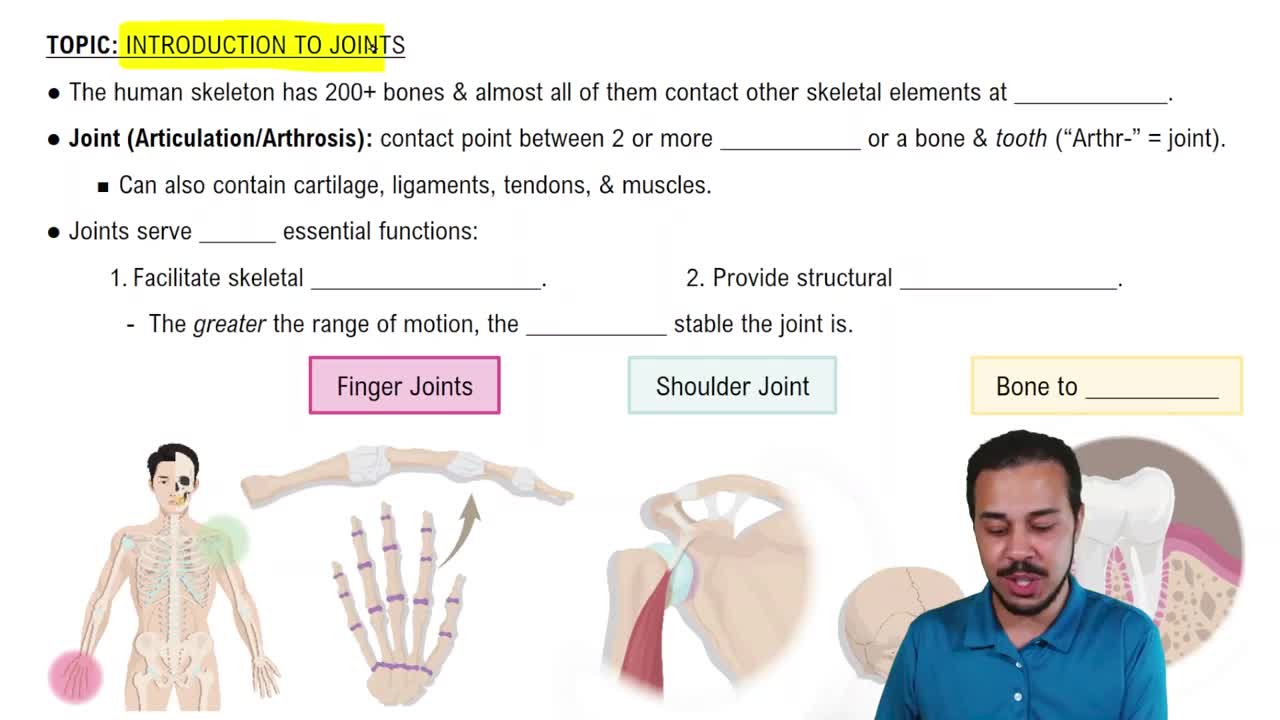
Joints are connections between bones that allow varying degrees of movement. They are classified based on their structure and function into fibrous, cartilaginous, and synovial joints, each with distinct characteristics and roles in the skeletal system.
A symphysis is a type of cartilaginous joint where bones are joined by fibrocartilage, allowing limited movement. The joint between adjacent vertebral bodies is a symphysis, providing both strength and flexibility to the spine.
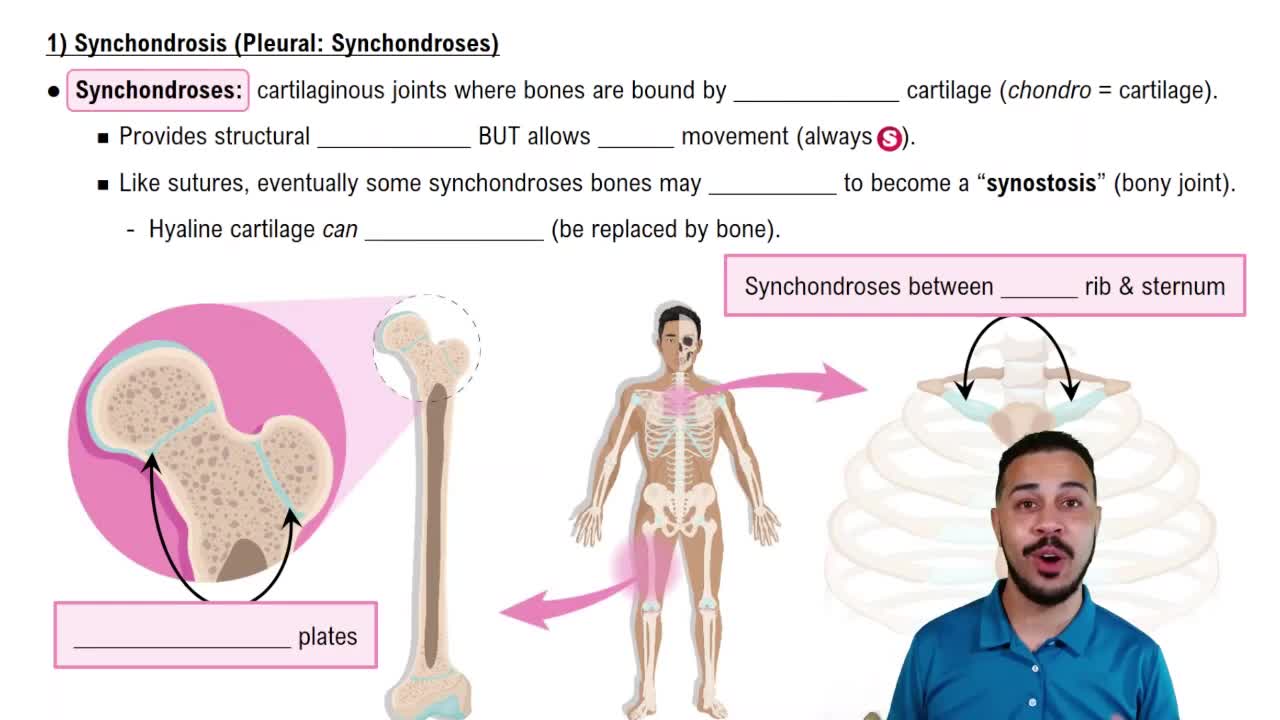
Synchondrosis is a cartilaginous joint where bones are joined by hyaline cartilage, typically temporary and found in growth plates. Unlike symphysis, synchondroses usually allow no movement and eventually ossify into bone.