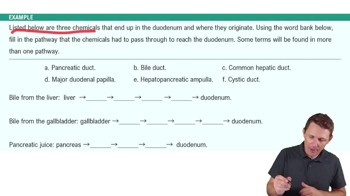
a. What is the relationship between the cystic, common hepatic, bile, and pancreatic ducts? b. What is the point of fusion of the bile and pancreatic ducts called?
Verified step by step guidance
1
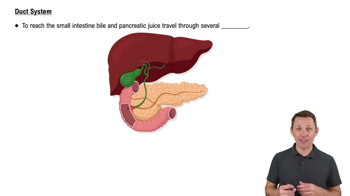
Step 1: Understand the anatomy of the biliary and pancreatic duct systems. The cystic duct connects the gallbladder to the common hepatic duct. The common hepatic duct is formed by the convergence of the right and left hepatic ducts from the liver.
Step 2: Recognize that the cystic duct and the common hepatic duct join to form the common bile duct. This duct carries bile from the liver and gallbladder toward the small intestine.
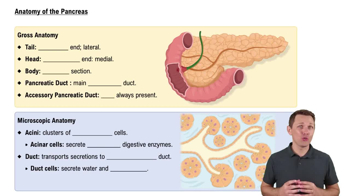
Step 3: Identify the pancreatic duct, which carries digestive enzymes from the pancreas. This duct runs through the pancreas and eventually joins the common bile duct.
Step 4: Understand that the common bile duct and the pancreatic duct fuse together before entering the duodenum (the first part of the small intestine). This fusion allows bile and pancreatic enzymes to enter the digestive tract at the same location.
Step 5: Know the anatomical term for the point where the bile duct and pancreatic duct merge is called the hepatopancreatic ampulla, also known as the ampulla of Vater.
Verified video answer for a similar problem:
This video solution was recommended by our tutors as helpful for the problem above
Video duration:
1m
Play a video:
0 Comments
Key Concepts
Here are the essential concepts you must grasp in order to answer the question correctly.
Anatomy of the Biliary Duct System
The biliary duct system includes the cystic duct, common hepatic duct, and common bile duct, which transport bile from the liver and gallbladder to the duodenum. The cystic duct connects the gallbladder to the common bile duct, while the common hepatic duct drains bile from the liver. Understanding their connections is essential to grasp bile flow and its regulation.
The pancreatic duct carries digestive enzymes from the pancreas to the duodenum. It typically joins the common bile duct before entering the small intestine, allowing coordinated release of bile and pancreatic secretions for digestion. Recognizing this duct's path is key to understanding digestive processes.
The ampulla of Vater is the anatomical site where the common bile duct and pancreatic duct merge before emptying into the duodenum. This fusion point regulates the flow of bile and pancreatic juices via the sphincter of Oddi, playing a critical role in digestion and preventing reflux.