What are the general structural characteristics of connective tissues? What are the functions of connective tissues? How are their functions reflected in their structures?
Verified step by step guidance
1
Connective tissues are characterized by three main structural components: cells, fibers, and ground substance. The cells include fibroblasts, adipocytes, chondrocytes, and others, depending on the type of connective tissue. Fibers, such as collagen, elastin, and reticular fibers, provide strength, elasticity, and support. The ground substance is a gel-like material composed of water, glycosaminoglycans, and proteoglycans, which fills the space between cells and fibers.
The primary functions of connective tissues include providing structural support, connecting and binding tissues, protecting organs, storing energy (as in adipose tissue), transporting substances (as in blood), and facilitating immune responses. These functions vary depending on the specific type of connective tissue.
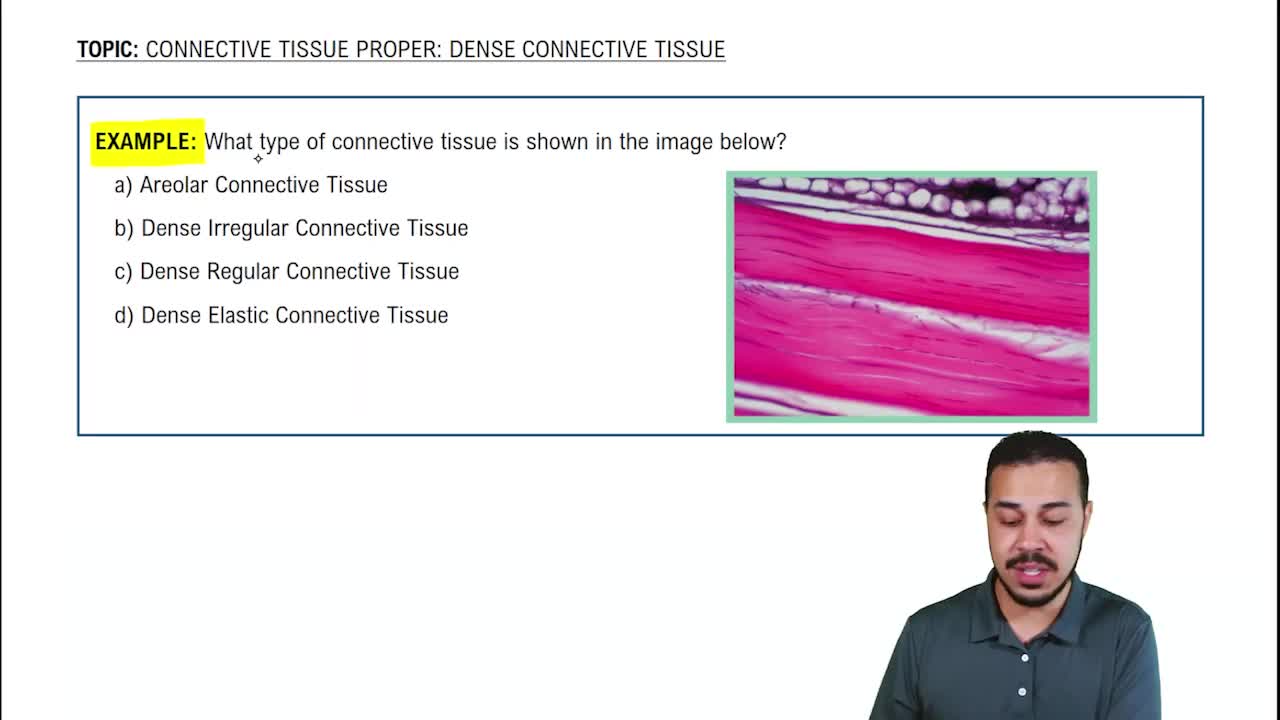
The functions of connective tissues are closely tied to their structures. For example, the dense arrangement of collagen fibers in tendons and ligaments provides tensile strength for connecting muscles to bones and stabilizing joints. Similarly, the loose arrangement of fibers in areolar connective tissue allows flexibility and cushioning around organs.
Adipose tissue, a type of connective tissue, is specialized for energy storage and insulation. Its structure includes large adipocytes filled with lipid droplets, which reflect its function of storing energy and insulating the body.
Blood, another type of connective tissue, has a liquid ground substance (plasma) that facilitates the transport of nutrients, gases, and waste products. Its structure, including red blood cells, white blood cells, and platelets suspended in plasma, is directly related to its role in transportation and immune defense.
Verified video answer for a similar problem:
This video solution was recommended by our tutors as helpful for the problem above
Video duration:
3m
Play a video:
0 Comments
Key Concepts
Here are the essential concepts you must grasp in order to answer the question correctly.
Connective Tissue Types
Connective tissues are classified into various types, including loose connective tissue, dense connective tissue, adipose tissue, cartilage, bone, and blood. Each type has distinct structural characteristics that suit its specific functions, such as providing support, storing energy, or facilitating transport within the body.
Connective Tissue Proper: Dense Connective Tissue Example 1
Extracellular Matrix (ECM)
The extracellular matrix is a crucial component of connective tissues, consisting of protein fibers and ground substance. The composition and organization of the ECM determine the tissue's strength, elasticity, and ability to withstand stress, reflecting the functional demands placed on the tissue.
The relationship between the structure and function of connective tissues is fundamental to their role in the body. For example, the dense arrangement of collagen fibers in tendons provides tensile strength for connecting muscles to bones, while the loose structure of adipose tissue allows for energy storage and insulation, illustrating how structural features are tailored to specific functions.