Ch. 18 The Cardiovascular System II: The Blood Vessels
Amerman - Human Anatomy & Physiology 2nd Edition
Amerman2nd EditionHuman Anatomy & PhysiologyISBN: 9780136873822Not the one you use?Change textbook
Chapter 18, Problem 3

The carotid sinus contains:
a. Baroreceptors
b. Chemoreceptors
c. Metabolic controls
d. Smooth muscle cells

Verified step by step guidance
1
Step 1: Begin by understanding the carotid sinus's anatomical location. The carotid sinus is a dilated area located at the base of the internal carotid artery, near its bifurcation from the common carotid artery.
Step 2: Recognize the primary function of the carotid sinus. It plays a crucial role in regulating blood pressure by detecting changes in arterial pressure.
Step 3: Identify the type of receptors present in the carotid sinus. The carotid sinus contains baroreceptors, which are specialized mechanoreceptors that sense changes in the stretch of the arterial wall due to blood pressure fluctuations.
Step 4: Differentiate baroreceptors from other types of receptors. Baroreceptors are distinct from chemoreceptors, which detect changes in chemical composition (e.g., oxygen, carbon dioxide, and pH levels) and are located in the carotid body, not the carotid sinus.
Step 5: Conclude that the correct answer is 'a. Baroreceptors,' as they are the specific sensory structures found in the carotid sinus responsible for monitoring blood pressure.

Verified video answer for a similar problem:

This video solution was recommended by our tutors as helpful for the problem above.
Was this helpful?

Key Concepts

Here are the essential concepts you must grasp in order to answer the question correctly.

Baroreceptors

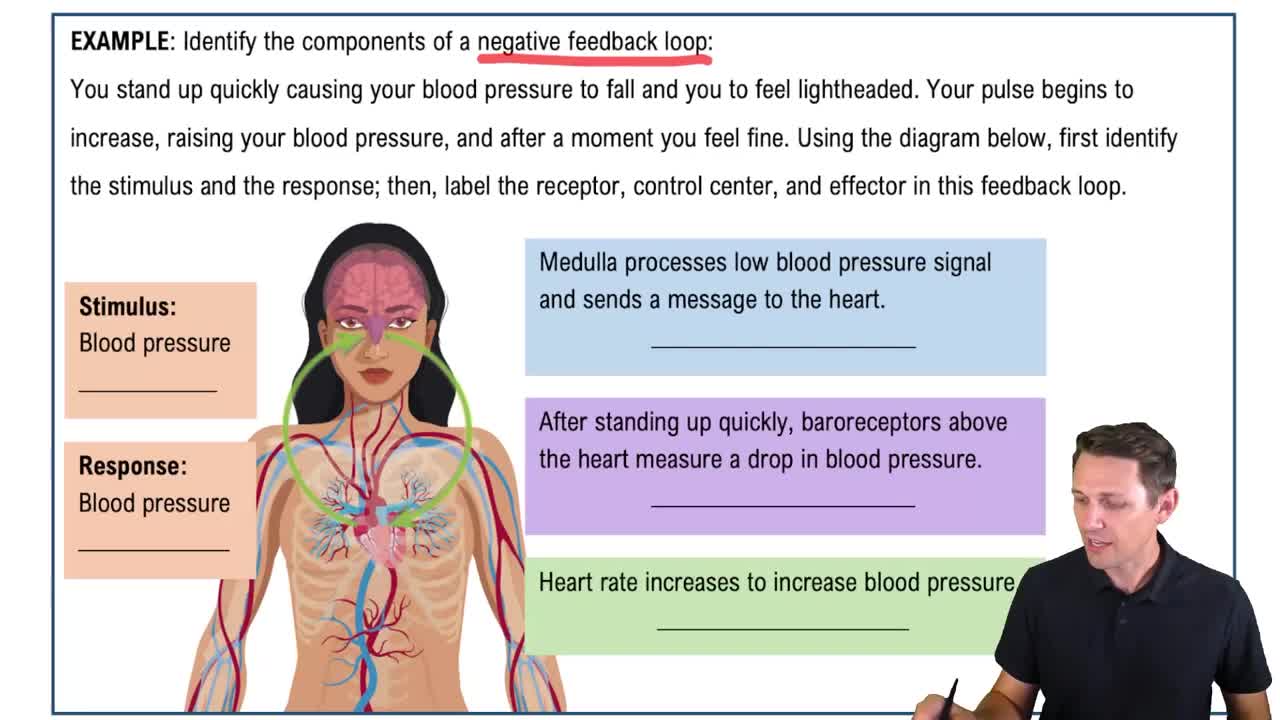
Baroreceptors are specialized sensory nerve endings located in the carotid sinus and aortic arch that detect changes in blood pressure. They respond to the stretch of the arterial walls, providing critical feedback to the central nervous system to help regulate cardiovascular function and maintain homeostasis.
Recommended video:
Guided course
03:00
Feedback Loops: Negative Feedback Example 1

Chemoreceptors

Chemoreceptors are sensory receptors that respond to chemical changes in the blood, such as levels of oxygen, carbon dioxide, and pH. In the context of the carotid sinus, these receptors play a role in monitoring blood chemistry and can influence respiratory and cardiovascular responses to maintain adequate oxygenation and acid-base balance.
Recommended video:
2:11
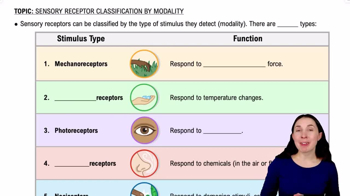
Sensory Receptor Classification by Modality

Smooth Muscle Cells

Smooth muscle cells are involuntary muscle fibers found in the walls of blood vessels, including those in the carotid sinus. They are responsible for regulating the diameter of the vessels, which affects blood flow and pressure. Their contraction and relaxation are influenced by signals from baroreceptors and chemoreceptors, contributing to overall vascular tone.
Recommended video:
Guided course
06:27
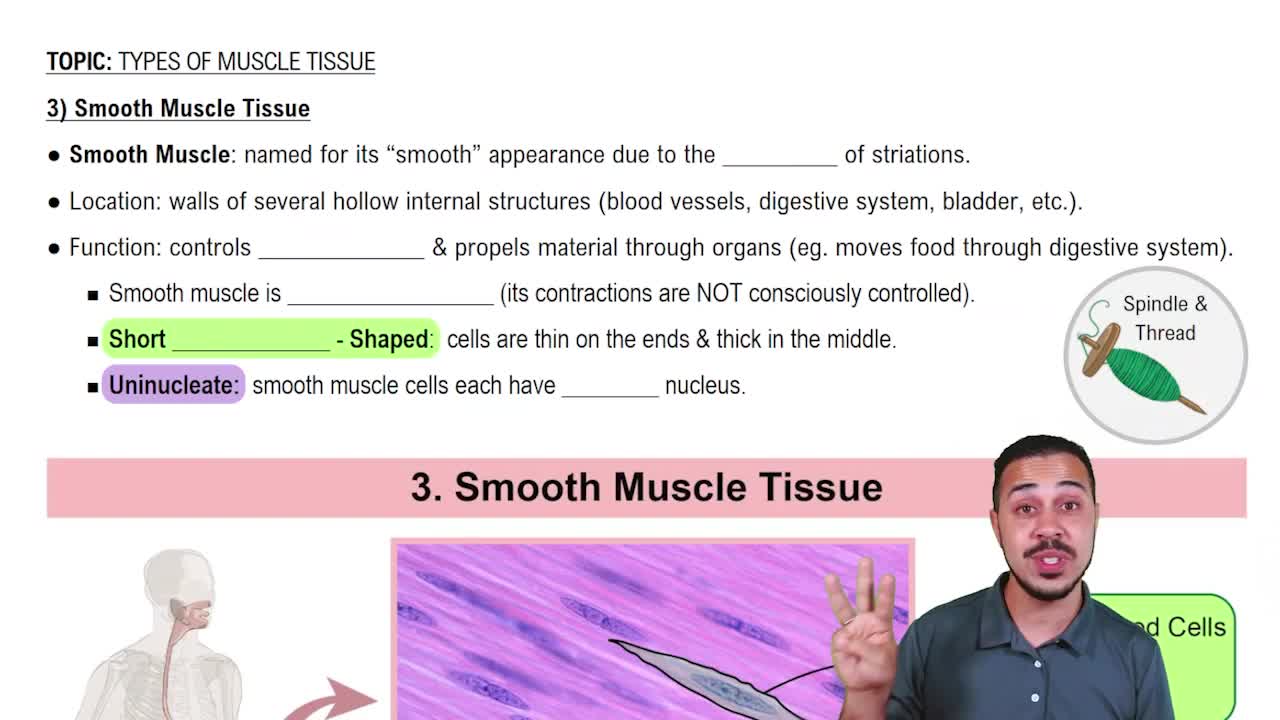
Smooth Muscle Tissue