Textbook Question
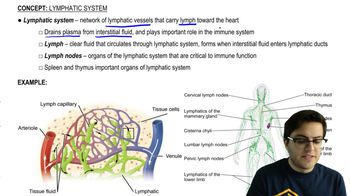
Which of the following body systems facilitates (but doesn't regulate) the functions of the other systems? respiratory system endocrine system digestive system circulatory system
1467
views



 Taylor, Simon, Dickey, Hogan 10th EditionCh. 20 Unifying Concepts of Animal Structure and FunctionProblem 6
 Verified step by step guidance
 07:47
07:47
 02:15
02:15 04:25
04:25Which of the following body systems facilitates (but doesn't regulate) the functions of the other systems? respiratory system endocrine system digestive system circulatory system
Negative-feedback mechanisms are
a. Most often involved in maintaining homeostasis.
b. Analogous to a furnace that produces heat.
c. Found only in birds and mammals.
d. All of the above.
Which of the following best illustrates homeostasis? (Explain your answer.)
a. Most adult humans are between 5 and 6 feet tall.
b. All the cells of the body are about the same size.
c. When the salt concentration of the blood goes up, the kidneys expel more salt.
d. When oxygen in the blood decreases, you feel dizzy.
The diaphragm is a large sheet of muscle that helps move air in and out of your lungs. Breathing is automatically controlled by the brain, but you can choose to hold your breath or breathe deeper. What kind of muscle do you suppose makes up the diaphragm? (Explain your answer.)
You read a blog that states, 'A squid's eye has been perfectly designed to see in the dark depths of the ocean.' Draft a paragraph that responds to the blog's use of the phrase 'perfect design' by citing an example discussed in this chapter.