Pearson+ LogoPearson+ Logo
Ch. 33 Control Systems in Plants
Taylor - Campbell Biology: Concepts & Connections 10th Edition
Taylor, Simon, Dickey, Hogan10th EditionCampbell Biology: Concepts & ConnectionsISBN: 9780136538783Not the one you use?Change textbook
Chapter 33, Problem 16

If apples are to be stored for long periods, it is best to keep them in a place with good air circulation. Explain why.

Verified step by step guidance
1
Understand the biological process of respiration in fruits: Apples, like other fruits, continue to respire after being harvested. During respiration, they consume oxygen (O₂) and release carbon dioxide (CO₂). This process is essential for maintaining their cellular functions but can lead to spoilage over time.
Recognize the role of ethylene gas: Apples produce ethylene gas, a plant hormone that accelerates ripening and aging. If ethylene accumulates in a poorly ventilated space, it can speed up the spoilage process of the apples and nearby fruits.
Consider the importance of air circulation: Good air circulation helps remove excess CO₂ and ethylene gas from the storage area, maintaining a balanced atmosphere that slows down respiration and ripening.
Understand the impact of oxygen levels: Proper air circulation ensures that oxygen levels remain adequate for controlled respiration. If oxygen levels drop too low, anaerobic respiration may occur, leading to the production of undesirable compounds that can spoil the apples.
Connect to practical storage methods: By storing apples in a well-ventilated area, you can extend their shelf life by reducing the accumulation of gases that promote spoilage and maintaining an environment conducive to slower respiration rates.

Verified video answer for a similar problem:

This video solution was recommended by our tutors as helpful for the problem above.
Video duration:
1m
Was this helpful?

Key Concepts

Here are the essential concepts you must grasp in order to answer the question correctly.

Respiration in Fruits

Fruits, including apples, continue to respire after being harvested. This process involves the consumption of oxygen and the release of carbon dioxide, which can lead to spoilage if not managed properly. Good air circulation helps to maintain a balance of gases around the fruit, slowing down the respiration rate and extending shelf life.
Recommended video:

Ethylene Production

Apples produce ethylene gas, a natural plant hormone that regulates growth and ripening. High concentrations of ethylene can accelerate ripening and lead to quicker spoilage. Adequate air circulation disperses ethylene, reducing its concentration around the apples and prolonging their freshness.
Recommended video:
Guided course
04:36
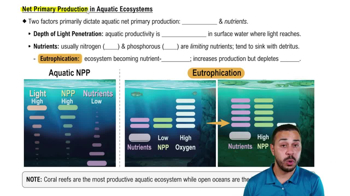
Primary Production in Aquatic Ecosystems

Fungal Growth Prevention

Fruits are susceptible to fungal infections, which thrive in moist, stagnant environments. Good air circulation helps to reduce humidity levels around the apples, making it less favorable for mold and other pathogens to grow. This is crucial for maintaining the quality and safety of stored apples over time.
Recommended video:
Guided course
06:53
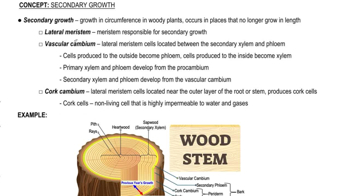
Secondary Growth
Related Practice
Textbook Question

Which of the following is a type of defense used by plants to deter herbivores?

a. Chemicals toxic to the herbivore

b. Chemicals that recruit other animals

c. Spines

d. a, b, and c

1186
views
Textbook Question

"Match each definition with the correct term.

Bending of a shoot toward light, Growth response to touch, Cycle with a period of about 24 hours Pigment that helps control flowering Relative lengths of night and day Growth response to gravity Folding of plant leaves at night

a. Phytochrome

b. Photoperiod

c. Sleep movement

d. Circadian rhythm

e. Thigmotropism

f. Phototropism

g. Gravitropism"

951
views
Textbook Question
A certain short-day plant flowers only when days are less than 12 hours long. Which of the following would cause it to flower?a. a 9-hour night and 15-hour day with 1 minute of darkness after 7 hoursb. an 8-hour day and 16-hour night with a flash of white light after 8 hoursc. a 13-hour night and 11-hour day with 1 minute of darkness after 6 hoursd. a 12-hour day and 12-hour night with a flash of red light after 6 hours
1306
views
Textbook Question
Write a short paragraph explaining why a houseplant becomes bushier if you pinch off its terminal buds.
955
views
Textbook Question
A plant nursery manager tells the new night security guard to stay out of a room where chrysanthemums (which are short-day plants) are about to flower. Around midnight, the guard accidentally opens the door to the chrysanthemum room and turns on the lights for a moment. How might this affect the chrysanthemums? How could the guard correct the mistake?
756
views
Textbook Question

A plant biologist observed a peculiar pattern when a tropical shrub was attacked by caterpillars. After a caterpillar ate a leaf, it would skip over nearby leaves and attack a leaf some distance away. Simply removing a leaf did not trigger the same change nearby. The biologist suspected that a damaged leaf sent out a chemical that signaled other leaves. How could this hypothesis be tested?

1049
views