Pearson+ LogoPearson+ Logo
Ch. 12 DNA Technology and Genomics
Taylor - Campbell Biology: Concepts & Connections 10th Edition
Taylor, Simon, Dickey, Hogan10th EditionCampbell Biology: Concepts & ConnectionsISBN: 9780136538783Not the one you use?Change textbook
Chapter 12, Problem 2

Which of the following would be considered a transgenic organism?
a. A bacterium that has received genes via conjugation
b. A human given a corrected human blood-clotting gene
c. A fern grown in cell culture from a single fern root cell
d. A rat with rabbit hemoglobin genes

Verified step by step guidance
1
Understand the term 'transgenic organism': A transgenic organism is one that has been genetically modified to contain a gene or genes from another species. This is achieved through genetic engineering techniques, not natural processes like conjugation or cell culture.
Analyze option (a): A bacterium receiving genes via conjugation is not considered transgenic because conjugation is a natural process of gene transfer between bacteria, not genetic engineering.
Analyze option (b): A human given a corrected human blood-clotting gene is not transgenic because the gene introduced is from the same species (human), not from a different species.
Analyze option (c): A fern grown in cell culture from a single fern root cell is not transgenic because no foreign genes from another species are introduced; this is simply a form of asexual reproduction.
Analyze option (d): A rat with rabbit hemoglobin genes is transgenic because it has been genetically engineered to contain and express a gene (hemoglobin) from a different species (rabbit), which fits the definition of a transgenic organism.

Verified video answer for a similar problem:

This video solution was recommended by our tutors as helpful for the problem above.
Video duration:
1m
Was this helpful?

Key Concepts

Here are the essential concepts you must grasp in order to answer the question correctly.

Transgenic Organism

A transgenic organism is one that has been genetically modified to contain DNA from another species. This process often involves the insertion of specific genes that confer desired traits, such as resistance to pests or improved nutritional content. Transgenic organisms are commonly used in research, agriculture, and medicine to study gene function and develop new products.
Recommended video:
Guided course
06:52
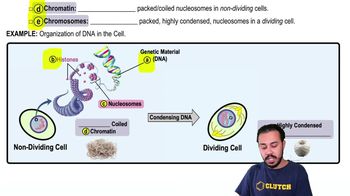
Organization of DNA in the Cell

Gene Transfer Methods

Gene transfer methods are techniques used to introduce foreign DNA into an organism's genome. Common methods include transformation, transfection, and conjugation. Understanding these methods is crucial for identifying how genetic material can be exchanged between organisms, which is a key aspect of creating transgenic organisms.
Recommended video:
Guided course
04:42
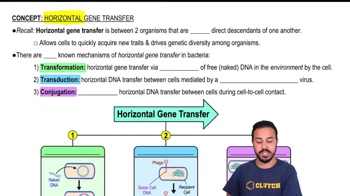
Horizontal Gene Transfer

Examples of Transgenic Organisms

Examples of transgenic organisms include genetically modified crops, such as Bt corn, which has been engineered to express a bacterial toxin that deters pests. Other examples include animals like mice or rats that have been modified to express human genes for research purposes. Recognizing these examples helps clarify what constitutes a transgenic organism in practical applications.
Recommended video:
Guided course
06:52
Organization of DNA in the Cell