Magnetite, an iron ore with formula Fe3O4, can be reduced by treatment with hydrogen to yield iron metal and water vapor.This reaction haS K = 2.3 x 10^-18. Are the reactants or the products favored?
Verified step by step guidance
1
Identify the reaction: Fe3O4 + 4H2 -> 3Fe + 4H2O.
Understand the equilibrium constant (K): It indicates the ratio of the concentration of products to reactants at equilibrium.
Given K = 2.3 \(\times\) 10^{-18}, which is a very small number.
A small K value (much less than 1) suggests that the equilibrium position favors the reactants.
Conclude that in this reaction, the reactants are favored over the products.
Verified video answer for a similar problem:
This video solution was recommended by our tutors as helpful for the problem above
Video duration:
1m
Play a video:
0 Comments
Key Concepts
Here are the essential concepts you must grasp in order to answer the question correctly.
Equilibrium Constant (K)
The equilibrium constant (K) is a numerical value that expresses the ratio of the concentrations of products to reactants at equilibrium for a given reaction at a specific temperature. A small K value, such as 2.3 x 10^-18, indicates that at equilibrium, the concentration of reactants is much greater than that of products, suggesting that the reaction favors the reactants.
In chemical reactions, favorability refers to the tendency of a reaction to proceed towards products or remain with reactants. When K is significantly less than 1, it implies that the formation of products is not favored, and the reaction is more likely to remain in the reactant state. This concept is crucial for predicting the direction of a reaction under equilibrium conditions.
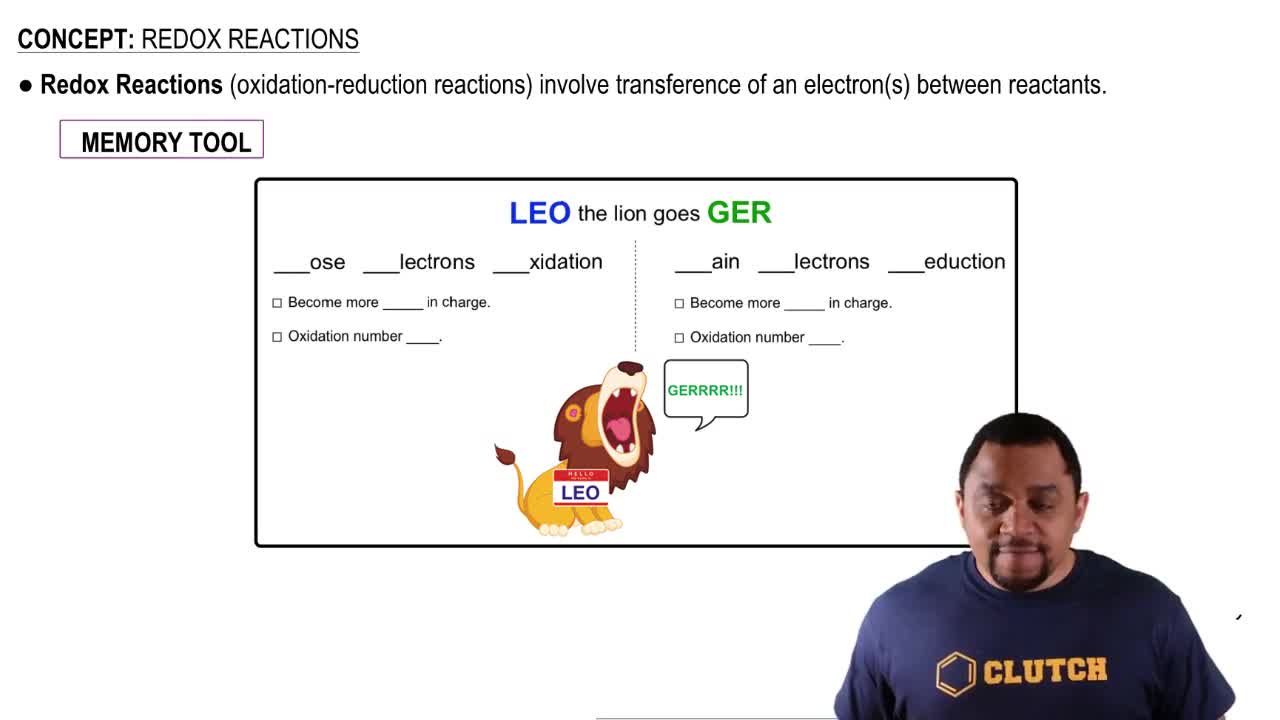
Reduction reactions involve the gain of electrons or the decrease in oxidation state by a substance. In the context of the given reaction, hydrogen acts as a reducing agent, converting iron ore (Fe3O4) into iron metal. Understanding reduction is essential for analyzing the chemical processes involved and the energy changes that accompany these transformations.

 1:09 minutes
 Verified step by step guidance
 02:50
02:50