Using any alkene and any other reagents, how would you prepare the following compounds? a.
Verified step by step guidance
1
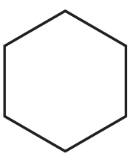
Step 1: Identify the target compound. The structure provided is cyclohexane, which is a saturated cyclic alkane with six carbon atoms and no double bonds.
Step 2: Choose an appropriate alkene precursor. To synthesize cyclohexane, you can start with cyclohexene, which is a six-membered cyclic structure containing one double bond.
Step 3: Select a reagent for hydrogenation. Hydrogenation is the process of adding hydrogen (H₂) across a double bond to convert an alkene into an alkane. Common catalysts for this reaction include platinum (Pt), palladium (Pd), or nickel (Ni).
Step 4: Perform the hydrogenation reaction. React cyclohexene with H₂ gas in the presence of a metal catalyst (e.g., Pd/C) under appropriate conditions, such as room temperature and pressure or slightly elevated conditions, to yield cyclohexane.
Step 5: Verify the product. After the reaction, confirm the formation of cyclohexane using techniques such as gas chromatography (GC) or nuclear magnetic resonance (NMR) spectroscopy to ensure the absence of the double bond and the presence of the saturated cyclic structure.
Verified video answer for a similar problem:
This video solution was recommended by our tutors as helpful for the problem above
Video duration:
1m
Play a video:
0 Comments
Key Concepts
Here are the essential concepts you must grasp in order to answer the question correctly.
Alkene Reactivity
Alkenes are unsaturated hydrocarbons characterized by at least one carbon-carbon double bond. Their reactivity is primarily due to this double bond, which can undergo various reactions such as addition, oxidation, and polymerization. Understanding the types of reactions that alkenes can participate in is crucial for synthesizing target compounds.
Addition reactions involve the addition of atoms or groups to the carbon atoms of the double bond in alkenes, resulting in the formation of saturated compounds. Common addition reactions include hydrogenation, halogenation, and hydrohalogenation. Recognizing the specific reagents and conditions required for these reactions is essential for preparing desired products from alkenes.
Functional group transformation refers to the process of converting one functional group into another through chemical reactions. This concept is vital in organic synthesis, as it allows chemists to modify the structure and reactivity of molecules. Understanding how to strategically change functional groups can help in designing pathways to synthesize complex compounds from simpler starting materials.