The following steps were used in the synthesis of the antimalarial thiaplakortone A. Identify the missing reagents, (a) and (b),
Verified step by step guidance
1
Examine the first transformation where the ether group is converted to an alcohol. This suggests a cleavage of the ether bond, likely through an acid-catalyzed hydrolysis. Consider using a strong acid like HCl or HBr as reagent (a) to facilitate this conversion.
In the second transformation, the alcohol group is oxidized to a ketone. This indicates the use of an oxidizing agent. Common oxidizing agents for such transformations include PCC (Pyridinium chlorochromate) or Jones reagent (CrO3, H2SO4). Choose an appropriate oxidizing agent for reagent (b).
The final step involves the addition of a sulfonamide group, followed by cyclization to form the thiaplakortone A structure. The sulfonamide reagent is likely a sulfonyl chloride, such as p-toluenesulfonyl chloride, which reacts with the amine group to form the sulfonamide linkage.
After the sulfonamide formation, the addition of H2SO4 suggests an acid-catalyzed cyclization or rearrangement to form the final thiaplakortone A structure. This step involves protonation and subsequent intramolecular reactions to achieve the desired ring closure.
Review the entire synthesis pathway to ensure that each reagent and condition aligns with the transformations observed in the chemical structures. Consider the functional groups present and the typical reactions they undergo to confirm the choice of reagents.
Verified video answer for a similar problem:
This video solution was recommended by our tutors as helpful for the problem above
Video duration:
4m
Play a video:
0 Comments
Key Concepts
Here are the essential concepts you must grasp in order to answer the question correctly.
Reagents in Organic Synthesis
In organic chemistry, reagents are substances that are added to a reaction to cause a chemical change. Identifying the correct reagents is crucial for synthesizing a target compound, as they dictate the reaction pathway and the final product. Understanding the role of each reagent, including their reactivity and compatibility with other components, is essential for successful synthesis.
Synthesis of Amino Acids: Strecker Synthesis Example 1
Reaction Mechanisms
A reaction mechanism describes the step-by-step process by which reactants are converted into products. It includes the formation and breaking of bonds, the intermediates formed, and the energy changes involved. Familiarity with common mechanisms, such as nucleophilic substitution or electrophilic addition, helps predict the outcomes of reactions and identify missing reagents in a synthesis.
Functional groups are specific groups of atoms within molecules that are responsible for the characteristic chemical reactions of those molecules. Recognizing functional groups is vital in organic synthesis, as they influence the reactivity and properties of compounds. Understanding how different functional groups interact can aid in determining the appropriate reagents needed for a specific transformation.

 4:24 minutes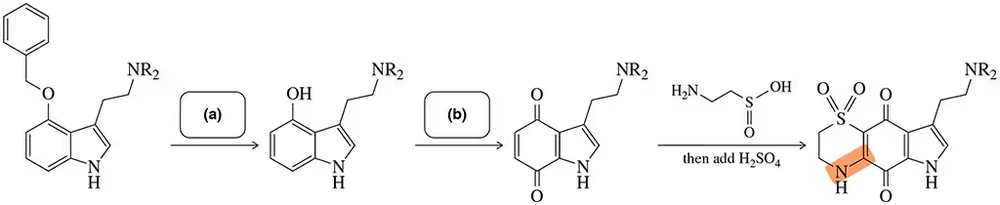
 Verified step by step guidance
 1:16
1:16