Starting with benzene and any other reagents you need, show how you would synthesize the compound shown here. (Hint: Consider a Pd-catalyzed coupling for the final step.)
Verified step by step guidance
1
Step 1: Begin with benzene as the starting material. Perform a Friedel-Crafts alkylation using isopropyl chloride (CH3CHClCH3) and AlCl3 as the catalyst to introduce the isopropyl group onto the benzene ring, forming isopropylbenzene.
Step 2: Brominate the isopropylbenzene by reacting it with Br2 and FeBr3 as the catalyst. This will selectively add a bromine atom to the benzene ring in the para position relative to the isopropyl group, forming para-bromo-isopropylbenzene.
Step 3: Prepare the alkenyl coupling partner by synthesizing 1-butenylboronic acid. This can be achieved by hydroboration of 1-butyne using a borane reagent, followed by oxidation to form the boronic acid.
Step 4: Perform a Suzuki coupling reaction using para-bromo-isopropylbenzene and 1-butenylboronic acid. Use a palladium catalyst (e.g., Pd(PPh3)4) and a base such as K2CO3 in an appropriate solvent like toluene or ethanol to couple the two components, forming the desired product.
Step 5: Purify the final product using techniques such as recrystallization or column chromatography to isolate the compound shown in the image.
Verified video answer for a similar problem:
This video solution was recommended by our tutors as helpful for the problem above
Video duration:
12m
Play a video:
0 Comments
Key Concepts
Here are the essential concepts you must grasp in order to answer the question correctly.
Electrophilic Aromatic Substitution (EAS)
EAS is a fundamental reaction in organic chemistry where an electrophile replaces a hydrogen atom on an aromatic ring. This process is crucial for modifying benzene derivatives to create more complex structures. Understanding the mechanism, which involves the formation of a sigma complex and subsequent deprotonation, is essential for synthesizing compounds from benzene.
Palladium-Catalyzed Coupling Reactions
Palladium-catalyzed coupling reactions, such as Suzuki or Heck reactions, are powerful methods for forming carbon-carbon bonds. These reactions typically involve the coupling of an aryl halide with an organometallic reagent in the presence of a palladium catalyst. This concept is particularly relevant for the final step of the synthesis, as it allows for the introduction of substituents onto the aromatic ring.
Reagents and Reaction Conditions
The choice of reagents and reaction conditions is critical in organic synthesis. For the synthesis of the target compound, one must consider the appropriate electrophiles, bases, and solvents that facilitate the desired reactions. Additionally, understanding the role of temperature and pressure can influence reaction rates and yields, making it essential to optimize these parameters for successful synthesis.


 12:02 minutes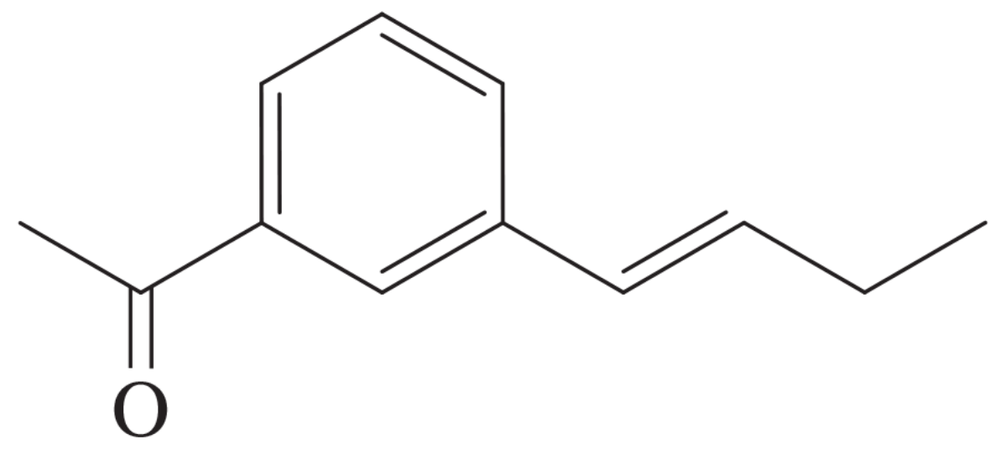
 Verified step by step guidance