Show how you would accomplish the following synthetic conversions efficiently and in good yield. You may use any necessary additional reagents and solvents. (b)
Verified step by step guidance
1
Step 1: Analyze the starting material and the product. The starting material is ethylbenzene, and the product is phenylacetaldehyde. This transformation involves the oxidation of the benzylic position to an aldehyde group.
Step 2: Select an appropriate reagent for the oxidation of the benzylic position to an aldehyde. A common reagent for this transformation is chromyl chloride (CrO2Cl2) in carbon tetrachloride (CCl4), which selectively oxidizes the benzylic position to an aldehyde.
Step 3: Set up the reaction conditions. Dissolve ethylbenzene in carbon tetrachloride (CCl4) and add chromyl chloride (CrO2Cl2) dropwise under controlled temperature conditions to avoid overoxidation.
Step 4: Monitor the reaction progress using techniques such as thin-layer chromatography (TLC) or gas chromatography (GC) to ensure the formation of phenylacetaldehyde without overoxidation to a carboxylic acid.
Step 5: Purify the product. After the reaction is complete, isolate phenylacetaldehyde by extraction, followed by distillation or recrystallization, depending on the physical properties of the product.
Verified video answer for a similar problem:
This video solution was recommended by our tutors as helpful for the problem above
Video duration:
13m
Play a video:
0 Comments
Key Concepts
Here are the essential concepts you must grasp in order to answer the question correctly.
Electrophilic Aromatic Substitution (EAS)
Electrophilic Aromatic Substitution is a fundamental reaction in organic chemistry where an electrophile replaces a hydrogen atom on an aromatic ring. This process is crucial for synthesizing various aromatic compounds. The reaction typically involves the generation of a sigma complex, where the aromaticity is temporarily lost, followed by deprotonation to restore aromaticity.
The choice of reagents and reaction conditions significantly influences the efficiency and yield of synthetic conversions. In EAS, common electrophiles include halogens, nitronium ions, and acylium ions, while Lewis acids like AlCl3 are often used as catalysts. Understanding the reactivity of the starting materials and the stability of intermediates is essential for optimizing the reaction.
Regioselectivity refers to the preference of a chemical reaction to yield one structural isomer over others when multiple possibilities exist. In EAS, the position of substitution on the aromatic ring can be influenced by existing substituents, which can either activate or deactivate the ring towards further substitution. Recognizing these patterns is vital for predicting the outcome of synthetic transformations.

 13:21 minutes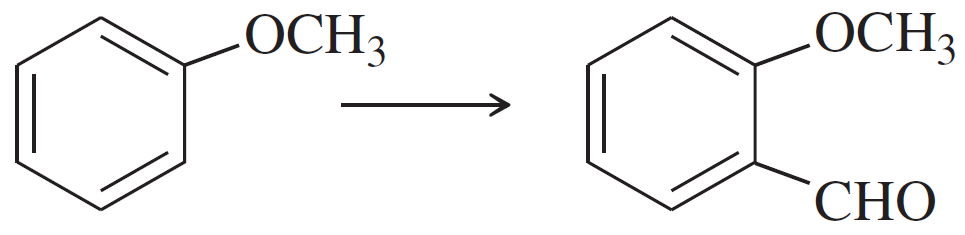
 Verified step by step guidance
 03:07
03:07