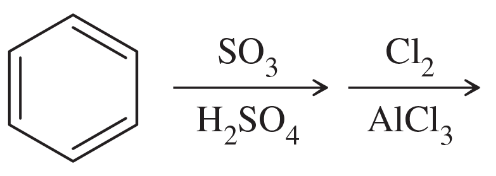
Predict the major product at the end of each sequence. (a)
Verified step by step guidance
1
Step 1: Analyze the first reaction in the sequence. The benzene ring undergoes sulfonation when treated with SO₃ and H₂SO₄. This reaction introduces a sulfonic acid group (-SO₃H) onto the benzene ring. The sulfonation typically occurs at one of the positions on the aromatic ring.
Step 2: Consider the second reaction in the sequence. The benzene ring with the sulfonic acid group reacts with Cl₂ in the presence of AlCl₃, which is a Friedel-Crafts halogenation reaction. This reaction introduces a chlorine atom onto the benzene ring.
Step 3: Determine the regioselectivity of the reactions. The sulfonic acid group (-SO₃H) is a meta-directing group due to its electron-withdrawing nature. Therefore, the chlorine atom will be added to the meta position relative to the sulfonic acid group.
Step 4: Draw the intermediate product after the sulfonation step, showing the benzene ring with the -SO₃H group attached. Then, draw the final product after the halogenation step, showing the benzene ring with both the -SO₃H group and the chlorine atom in the meta position.
Step 5: Verify the major product by considering the stability and reactivity of the intermediates formed during the sequence. Ensure that the substitution pattern aligns with the directing effects of the functional groups involved.
Verified video answer for a similar problem:
This video solution was recommended by our tutors as helpful for the problem above
Video duration:
4m
Play a video:
0 Comments
Key Concepts
Here are the essential concepts you must grasp in order to answer the question correctly.
Electrophilic Aromatic Substitution
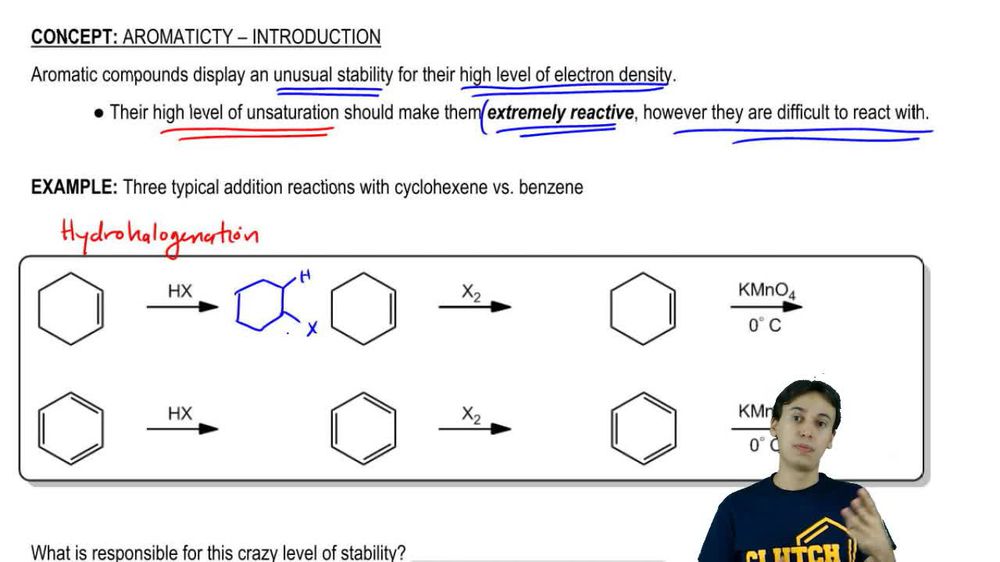
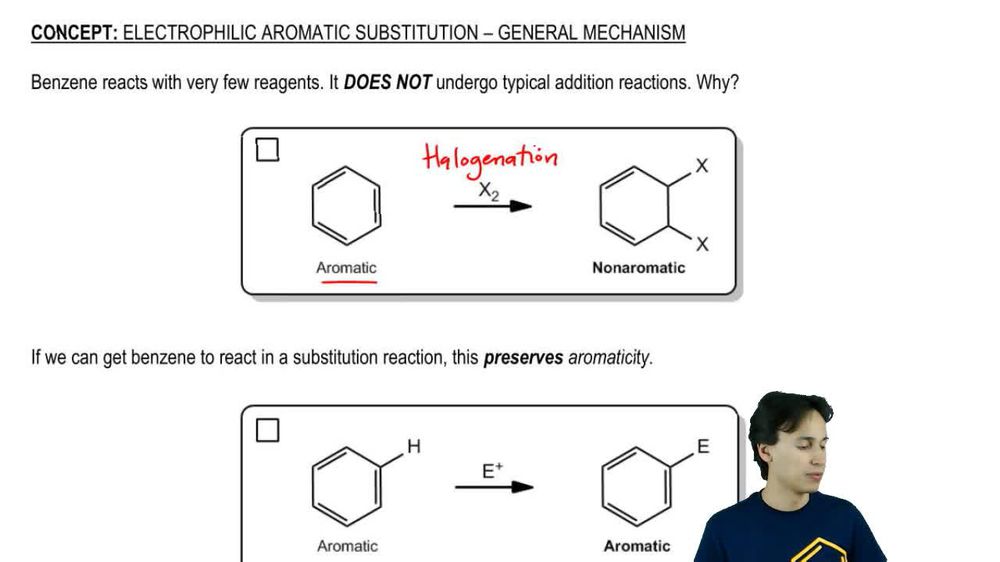
Electrophilic aromatic substitution (EAS) is a fundamental reaction in organic chemistry where an electrophile replaces a hydrogen atom on an aromatic ring. This process is facilitated by the stability of the aromatic system, which allows the ring to undergo temporary disruption to accommodate the electrophile. Common electrophiles include halogens, nitronium ions, and sulfonium ions, making EAS a key mechanism for functionalizing aromatic compounds.
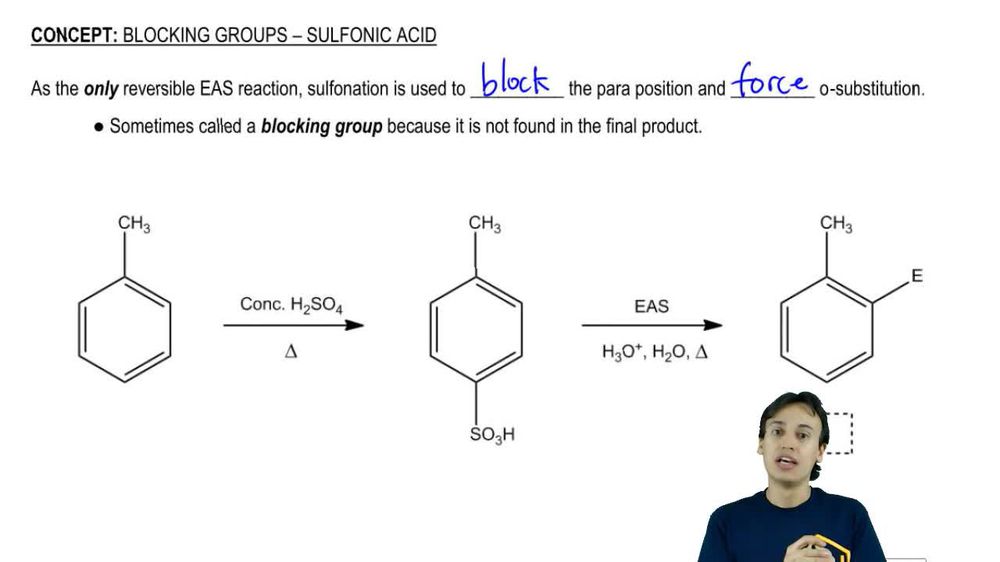
Sulfonation is a specific type of electrophilic aromatic substitution where a sulfonyl group (–SO3H) is introduced into an aromatic ring. This reaction typically uses sulfur trioxide (SO3) in the presence of concentrated sulfuric acid (H2SO4) as a catalyst. The resulting sulfonic acid group is a strong electron-withdrawing group, which can influence the reactivity of the aromatic compound in subsequent reactions.
Chlorination of aromatics involves the introduction of chlorine atoms into an aromatic ring, typically using chlorine gas (Cl2) in the presence of a Lewis acid catalyst like aluminum chloride (AlCl3). This reaction also follows the electrophilic aromatic substitution mechanism, where the chlorine acts as the electrophile. The presence of the Lewis acid enhances the electrophilicity of chlorine, facilitating the substitution process and leading to the formation of chlorinated aromatic products.