Predict the major products of the following reactions. (d) nitrobenzene + acetyl chloride + AlCl3
Verified step by step guidance
1
Step 1: Recognize the reaction type. This is an example of Friedel-Crafts acylation, where an aromatic compound reacts with an acyl chloride in the presence of a Lewis acid catalyst (AlCl₃). The goal is to introduce an acyl group (-COCH₃) onto the aromatic ring.
Step 2: Analyze the reactivity of nitrobenzene. The nitro group (-NO₂) is an electron-withdrawing group, which deactivates the benzene ring toward electrophilic aromatic substitution. This means the reaction will be slower or may not occur under mild conditions.
Step 3: Determine the directing effects of the nitro group. The nitro group is a meta-directing group due to its electron-withdrawing nature. If the reaction proceeds, the acyl group will preferentially attach to the meta position relative to the nitro group.
Step 4: Write the mechanism. The AlCl₃ catalyst reacts with acetyl chloride (CH₃COCl) to form a highly reactive acylium ion (CH₃CO⁺). This electrophile then interacts with the aromatic ring of nitrobenzene, leading to substitution at the meta position.
Step 5: Consider steric and electronic factors. The major product will be 3-nitroacetophenone, where the acetyl group (-COCH₃) is attached to the meta position relative to the nitro group. Ensure to account for the deactivating effect of the nitro group, which may require harsher reaction conditions for the substitution to occur.
Verified video answer for a similar problem:
This video solution was recommended by our tutors as helpful for the problem above
Video duration:
1m
Play a video:
0 Comments
Key Concepts
Here are the essential concepts you must grasp in order to answer the question correctly.
Electrophilic Aromatic Substitution
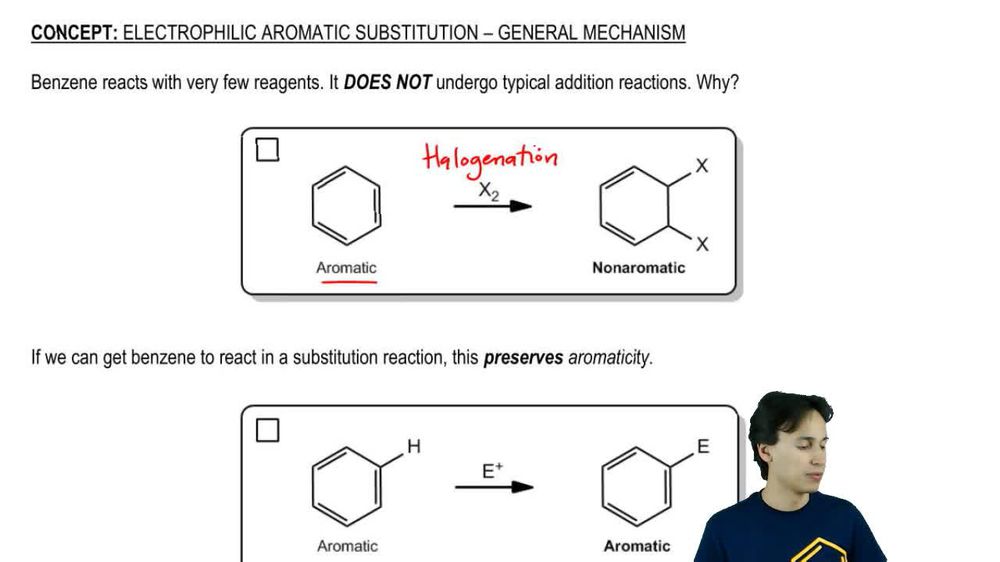
Electrophilic aromatic substitution (EAS) is a fundamental reaction in organic chemistry where an electrophile replaces a hydrogen atom on an aromatic ring. In this process, the aromatic system donates electrons to the electrophile, forming a sigma complex, which then loses a proton to restore aromaticity. Understanding EAS is crucial for predicting the products of reactions involving aromatic compounds like nitrobenzene.
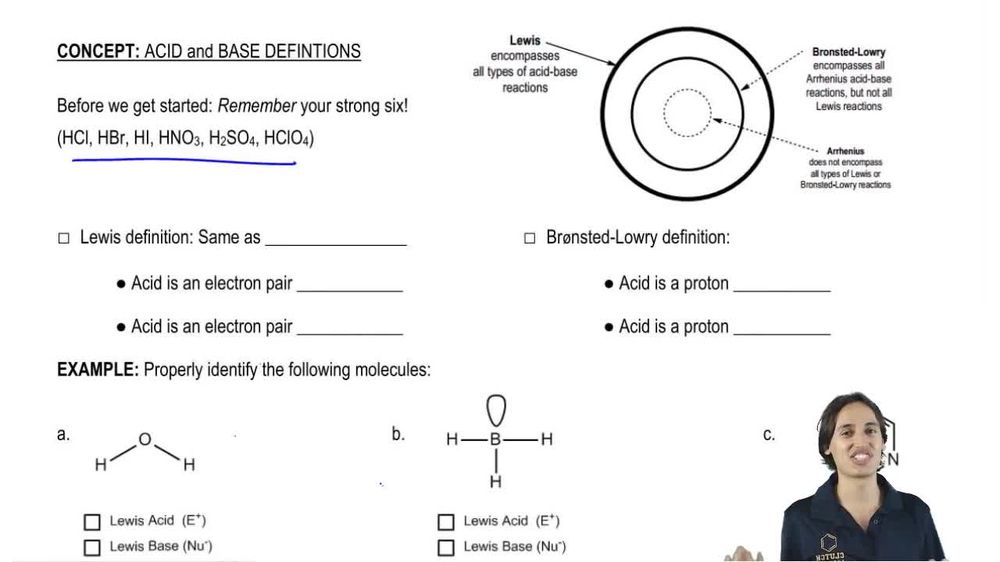
Lewis acids, such as AlCl3, are compounds that can accept an electron pair from a Lewis base. In the context of the reaction with acetyl chloride, AlCl3 acts as a catalyst by forming a complex with the acetyl chloride, enhancing its electrophilic character. This interaction is essential for facilitating the electrophilic attack on the aromatic ring, leading to the formation of acylated products.
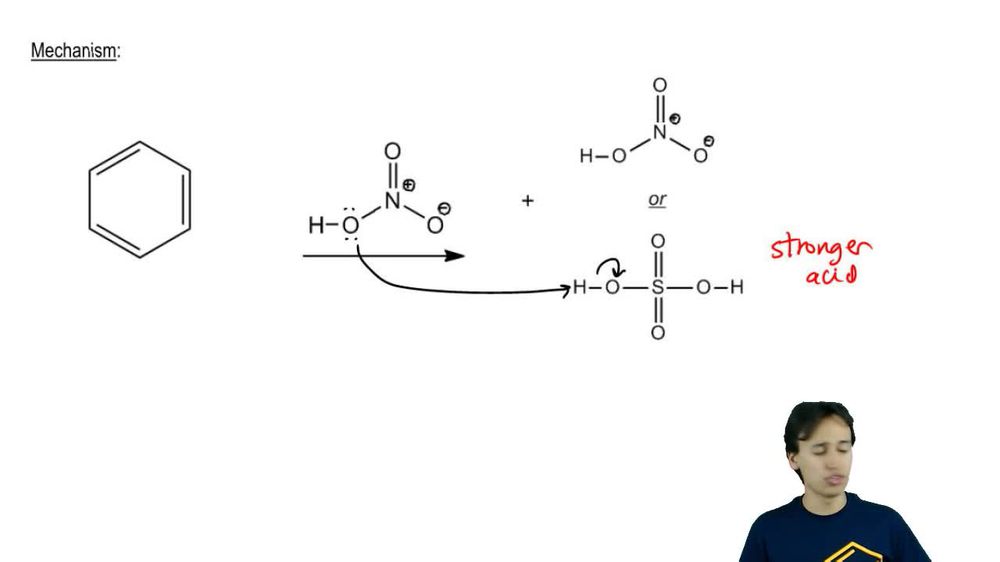
The presence of a nitro group (-NO2) on an aromatic ring significantly influences its reactivity in electrophilic aromatic substitution reactions. Nitro groups are strong electron-withdrawing groups, which deactivate the ring towards further electrophilic attack. However, they direct incoming electrophiles to the meta position relative to themselves, which is critical for predicting the major products when nitrobenzene reacts with acetyl chloride.

 1:30 minutes
 Verified step by step guidance
 03:07
03:07