What are the answers to Problem 29 when the same compounds are treated with Br2 at 125 °C? c.
Verified step by step guidance
1
Identify the type of reaction occurring when the compounds are treated with Br₂ at 125 °C. At elevated temperatures, bromination typically proceeds via a free radical mechanism rather than an electrophilic addition or substitution mechanism.
Determine the structure of the compound in question. Analyze the possible hydrogen atoms that can be abstracted to form the most stable radical intermediate. Stability of radicals follows the order: tertiary > secondary > primary > methyl.
Write the initiation step of the free radical bromination mechanism. This involves the homolytic cleavage of Br₂ into two bromine radicals under the influence of heat (125 °C). Represent this as: Br₂ → 2Br•.
Write the propagation steps. In the first propagation step, a bromine radical abstracts a hydrogen atom from the compound, forming HBr and a carbon radical. In the second propagation step, the carbon radical reacts with another Br₂ molecule to form the brominated product and regenerate a bromine radical.
Analyze the possible products based on the stability of the intermediate radicals formed. The major product will result from bromination at the position that forms the most stable radical intermediate. Consider regioselectivity and the influence of the compound's structure on the reaction outcome.
Verified video answer for a similar problem:
This video solution was recommended by our tutors as helpful for the problem above
Video duration:
3m
Play a video:
0 Comments
Key Concepts
Here are the essential concepts you must grasp in order to answer the question correctly.
Electrophilic Addition Reactions
Electrophilic addition reactions are a fundamental type of reaction in organic chemistry where an electrophile reacts with a nucleophile, typically involving alkenes or alkynes. In the presence of bromine (Br2), these unsaturated compounds can undergo addition, resulting in the formation of vicinal dibromides. Understanding this mechanism is crucial for predicting the products when compounds are treated with Br2.
The temperature at which a reaction occurs can significantly influence the reaction pathway and the products formed. At elevated temperatures, such as 125 °C, reactions may favor different mechanisms or lead to the formation of more stable products. Recognizing how temperature affects reaction kinetics and thermodynamics is essential for interpreting the outcomes of organic reactions.
Directing Effects in Substituted Pyrroles, Furans, and Thiophenes Concept 2
Stereochemistry of Addition Reactions
Stereochemistry refers to the spatial arrangement of atoms in molecules and how this affects their chemical behavior. In electrophilic addition reactions, the stereochemical outcome can lead to different isomers, such as cis and trans forms. Understanding stereochemistry is vital for predicting the specific products formed when compounds react with bromine, especially in terms of their spatial configuration.

 3:53 minutes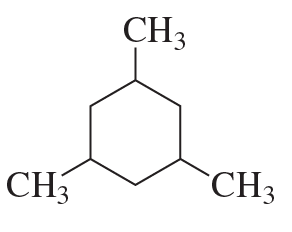
 Verified step by step guidance
 05:39
05:39