What alkyl halide will be obtained in greatest yield? Ignore stereoisomers. b.
Verified step by step guidance
1
Identify the starting material and the reaction conditions provided in the problem. This will help determine the mechanism (SN1, SN2, E1, or E2) and the type of alkyl halide that will form.
Analyze the structure of the starting material to determine the most likely site for substitution or elimination. Consider factors such as the stability of the carbocation (if SN1 or E1) or the steric hindrance around the electrophilic carbon (if SN2 or E2).
If the reaction proceeds via an SN1 mechanism, predict the major product by identifying the most stable carbocation intermediate. Stability is influenced by factors such as resonance, hyperconjugation, and inductive effects.
If the reaction proceeds via an SN2 mechanism, predict the major product by considering the nucleophile's attack on the least sterically hindered carbon. The product will result from a backside attack, leading to inversion of configuration at the electrophilic carbon.
Once the mechanism is determined and the major product is identified, confirm that the product is an alkyl halide. The alkyl halide with the greatest yield will typically correspond to the most stable intermediate or the least sterically hindered pathway, depending on the mechanism.
Verified video answer for a similar problem:
This video solution was recommended by our tutors as helpful for the problem above
Video duration:
5m
Play a video:
0 Comments
Key Concepts
Here are the essential concepts you must grasp in order to answer the question correctly.
Alkyl Halides
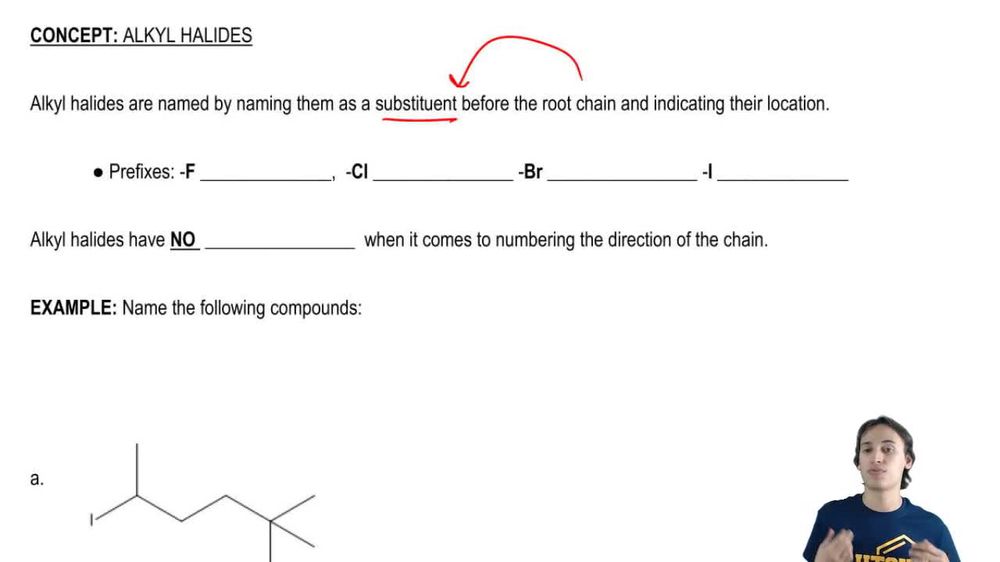
Alkyl halides are organic compounds derived from alkanes that contain one or more halogen atoms (F, Cl, Br, I) replacing hydrogen atoms. They are classified based on the number of carbon atoms attached to the carbon bearing the halogen: primary, secondary, or tertiary. The structure of the alkyl halide significantly influences its reactivity and the types of reactions it can undergo.
Nucleophilic substitution reactions involve the replacement of a leaving group (such as a halogen) by a nucleophile. The mechanism can follow either an SN1 or SN2 pathway, depending on the structure of the alkyl halide and the conditions of the reaction. Understanding these mechanisms is crucial for predicting which alkyl halide will yield the most product in a given reaction.
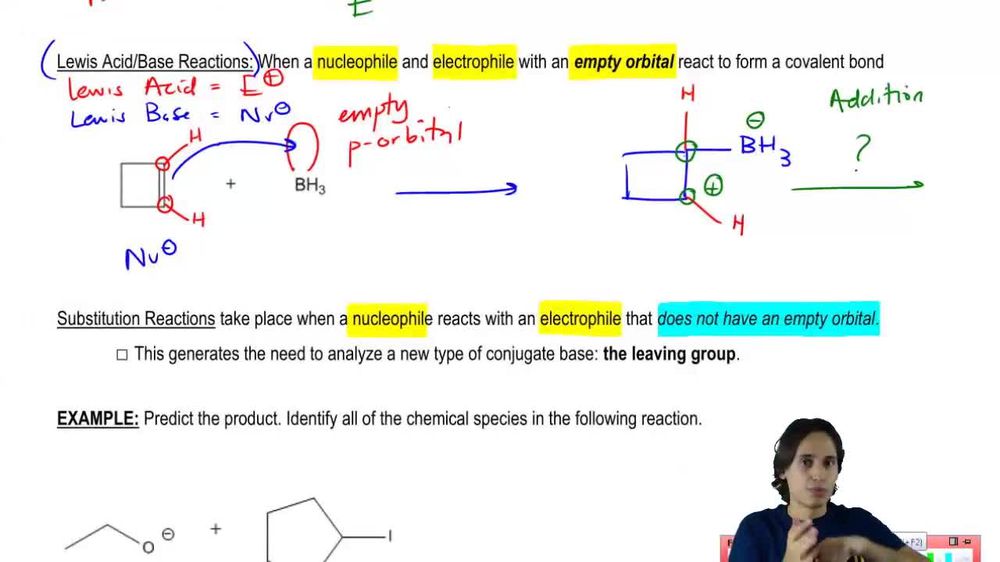
Nucleophiles and Electrophiles can react in Substitution Reactions.
Steric Hindrance
Steric hindrance refers to the prevention of chemical reactions due to the spatial arrangement of atoms within a molecule. In the context of alkyl halides, tertiary alkyl halides are generally more reactive in SN1 reactions due to less steric hindrance, while primary alkyl halides are more reactive in SN2 reactions. Recognizing the impact of steric hindrance helps in determining which alkyl halide will be produced in the greatest yield.

 5:48 minutes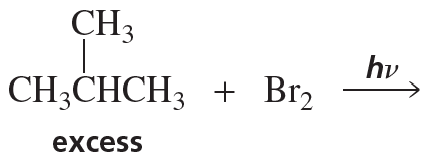
 Verified step by step guidance
 01:52
01:52