Draw the products of the following reactions, including all stereoisomers: f.
Verified step by step guidance
1
Step 1: Recognize the reaction type. The reaction involves NBS (N-Bromosuccinimide) in the presence of heat (Δ) and peroxide. This is a radical bromination reaction that selectively brominates allylic positions due to the stability of the allylic radical.
Step 2: Identify the allylic position in the given molecule. The allylic position is the carbon atom adjacent to the double bond. In this case, the allylic position is the carbon atom directly connected to the double bond in the side chain.
Step 3: Generate the allylic radical intermediate. The peroxide initiates the formation of a bromine radical, which abstracts a hydrogen atom from the allylic position, forming a stable allylic radical.
Step 4: Add the bromine atom to the allylic radical. The bromine radical reacts with the allylic radical to form the brominated product at the allylic position.
Step 5: Consider stereoisomers. Since the allylic position is not a stereocenter in this molecule, no stereoisomers are formed. The product will be a single brominated compound at the allylic position.
Verified video answer for a similar problem:
This video solution was recommended by our tutors as helpful for the problem above
Video duration:
5m
Play a video:
0 Comments
Key Concepts
Here are the essential concepts you must grasp in order to answer the question correctly.
Allylic Bromination
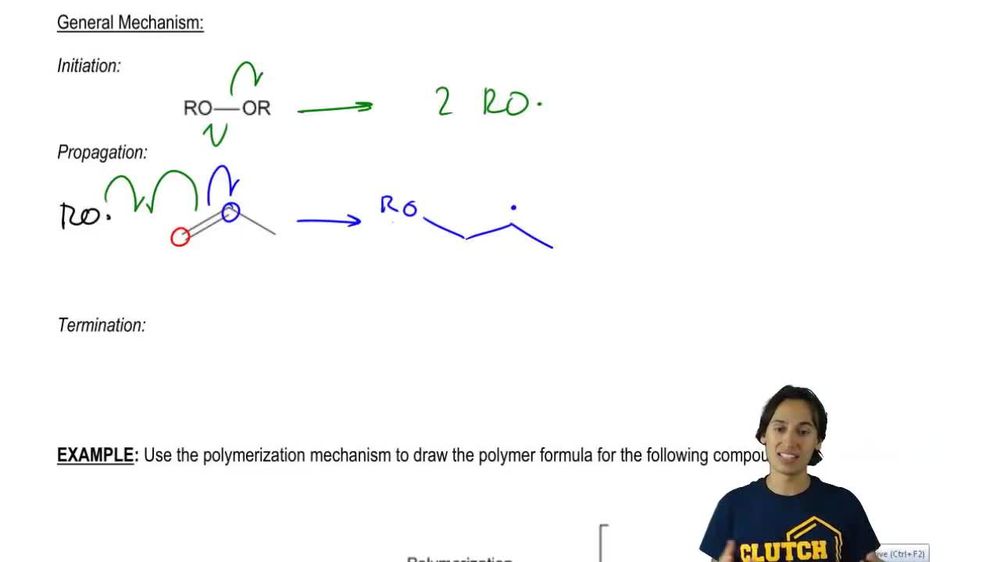
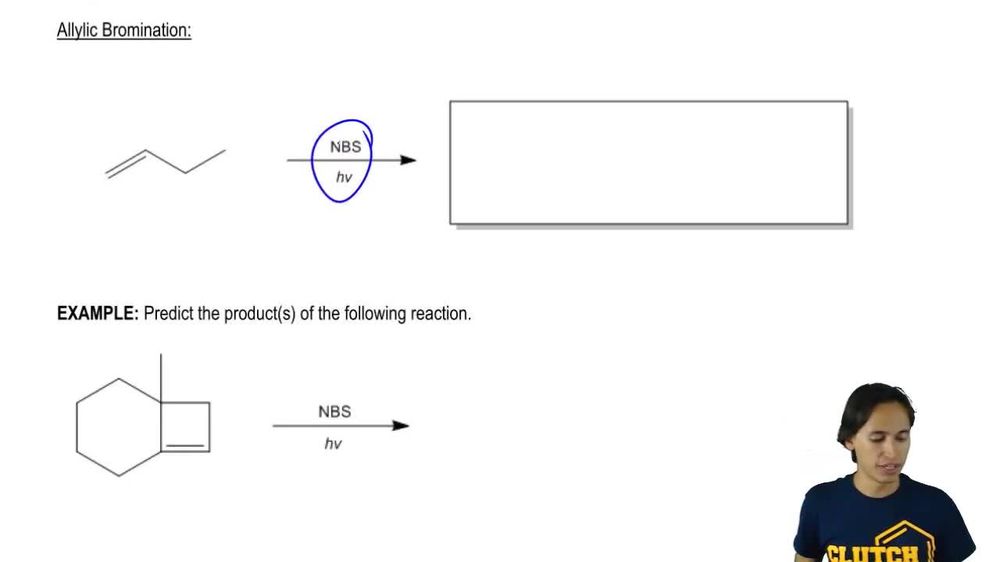
Allylic bromination is a reaction where bromine is added to the allylic position of an alkene, typically using N-bromosuccinimide (NBS) in the presence of a peroxide. This reaction proceeds via a radical mechanism, where the allylic hydrogen is abstracted, forming a resonance-stabilized radical that can then react with bromine to yield brominated products.
A radical mechanism involves the formation and reaction of free radicals, which are highly reactive species with unpaired electrons. In the context of allylic bromination, the reaction starts with the generation of a radical intermediate through the homolytic cleavage of a bond, allowing for subsequent reactions that lead to the formation of products, including stereoisomers.
Stereoisomerism refers to the existence of compounds with the same molecular formula and connectivity but different spatial arrangements of atoms. In the case of allylic bromination, the formation of stereoisomers occurs due to the different orientations of substituents around the double bond, leading to distinct products that must be accounted for when drawing the final reaction products.

 5:23 minutes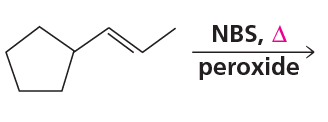
 Verified step by step guidance
 00:54
00:54