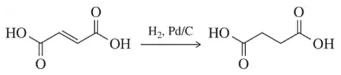
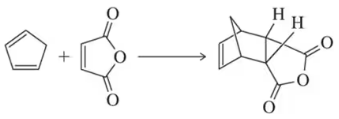
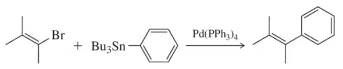
Which of the following reactions would benefit from micellar technology (Figure 7.10), allowing them to be run in water? (a) (b) (c)
Verified step by step guidance
1
Step 1: Analyze the reactions provided in the images. Reaction (a) involves the hydrogenation of an alkene using H2 and Pd/C, which is a heterogeneous catalytic reaction. Reaction (b) is a Diels-Alder reaction between a diene and a dienophile, forming a cyclic product. Reaction (c) is a Stille coupling reaction involving an organotin compound and a brominated substrate, catalyzed by Pd(PPh3)4.
Step 2: Understand micellar technology. Micellar technology uses surfactants to create micelles in water, which can encapsulate hydrophobic reactants, allowing reactions to occur in aqueous environments. This is particularly beneficial for reactions involving hydrophobic substrates or catalysts.
Step 3: Evaluate reaction (a). The hydrogenation reaction involves a heterogeneous catalyst (Pd/C) and does not require micellar technology because the catalyst can function effectively in water without the need for micelles.
Step 4: Evaluate reaction (b). The Diels-Alder reaction involves hydrophobic reactants (cyclopentadiene and maleic anhydride). Micellar technology could be beneficial here, as it would allow these hydrophobic reactants to interact within micelles in an aqueous environment.
Step 5: Evaluate reaction (c). The Stille coupling reaction involves hydrophobic organotin and brominated substrates. Micellar technology would be advantageous for this reaction, as it would facilitate the interaction of hydrophobic reactants in water, improving reaction efficiency.
Verified video answer for a similar problem:

This video solution was recommended by our tutors as helpful for the problem above
Video duration:
2m
Play a video:
0 Comments
Key Concepts
Here are the essential concepts you must grasp in order to answer the question correctly.
Micellar Technology
Micellar technology involves the use of micelles, which are aggregates of surfactant molecules that can solubilize hydrophobic compounds in an aqueous environment. This technology is particularly useful in organic reactions that typically require non-polar solvents, allowing them to be conducted in water, thus enhancing reaction efficiency and reducing environmental impact.
Hydrogenation is a chemical reaction that involves the addition of hydrogen (H2) to unsaturated organic compounds, typically alkenes or alkynes, to convert them into saturated compounds. This process often requires a catalyst, such as palladium on carbon (Pd/C), to facilitate the reaction, making it essential for transforming double bonds into single bonds in organic molecules.
Understanding the reactivity of functional groups is crucial in organic chemistry, as different groups exhibit distinct behaviors during chemical reactions. In the context of the provided reactions, hydroxyl (-OH) and carbonyl (C=O) groups play significant roles in determining the pathways and products of reactions, influencing how micellar technology can be applied to enhance solubility and reaction rates.