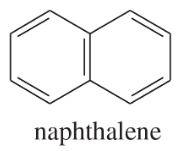
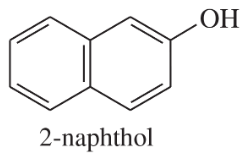
Rank the given solvents in decreasing order of their ability to dissolve each compound. Solutes: (a) NaOAc (b) (c)
Solvents: ethyl ether water ethanol dichloromethane
Verified step by step guidance
1
Step 1: Understand the solubility principles. Solubility depends on the polarity of the solvent and solute. Polar solvents dissolve polar solutes, and non-polar solvents dissolve non-polar solutes. This is often summarized by the phrase 'like dissolves like'.
Step 2: Analyze the polarity of the solvents. Water is highly polar due to its hydrogen bonding capabilities. Ethanol is also polar but less so than water, as it has both a polar hydroxyl group and a non-polar ethyl group. Ethyl ether is less polar, and dichloromethane is moderately polar.
Step 3: Consider the solute NaOAc (sodium acetate). NaOAc is an ionic compound, which means it is highly polar. Ionic compounds generally dissolve well in polar solvents.
Step 4: Rank the solvents based on their ability to dissolve NaOAc. Since NaOAc is ionic, it will dissolve best in the most polar solvent. Therefore, water will be the best solvent, followed by ethanol, dichloromethane, and ethyl ether.
Step 5: Apply the same analysis to other solutes (b) and (c) if they are provided. Determine their polarity and match them with the solvents using the 'like dissolves like' principle.
Verified video answer for a similar problem:
This video solution was recommended by our tutors as helpful for the problem above
Play a video:
0 Comments
Key Concepts
Here are the essential concepts you must grasp in order to answer the question correctly.
Polarity of Solvents
Polarity is a key factor in determining a solvent's ability to dissolve a solute. Polar solvents, like water, can dissolve ionic compounds and polar solutes due to their ability to form hydrogen bonds and dipole-dipole interactions. Non-polar solvents, such as ethyl ether, are better suited for dissolving non-polar solutes through van der Waals forces.
The principle 'like dissolves like' is fundamental in organic chemistry, indicating that polar solutes dissolve well in polar solvents, while non-polar solutes dissolve in non-polar solvents. This concept helps predict solubility based on the chemical nature of both the solvent and solute, guiding the ranking of solvents for each compound.
Introducing common solvents and other molecules in organic chemistry.
Ionic vs. Covalent Compounds
Understanding the nature of the solute, whether ionic or covalent, is crucial for predicting solubility. Ionic compounds, like NaOAc, typically dissolve in polar solvents due to ion-dipole interactions. Covalent compounds may require specific solvent characteristics, such as polarity or hydrogen bonding capability, to dissolve effectively.