What products would you expect to obtain from the following reactions? b. methyl carbamate + methylamine
Verified step by step guidance
1
Identify the functional groups in the reactants: Methyl carbamate is a carbamate functional group (R-O-C(=O)-NR2), which is a derivative of carbamic acid. Methylamine is a primary amine (CH3NH2). The reaction involves nucleophilic substitution or addition-elimination mechanisms.
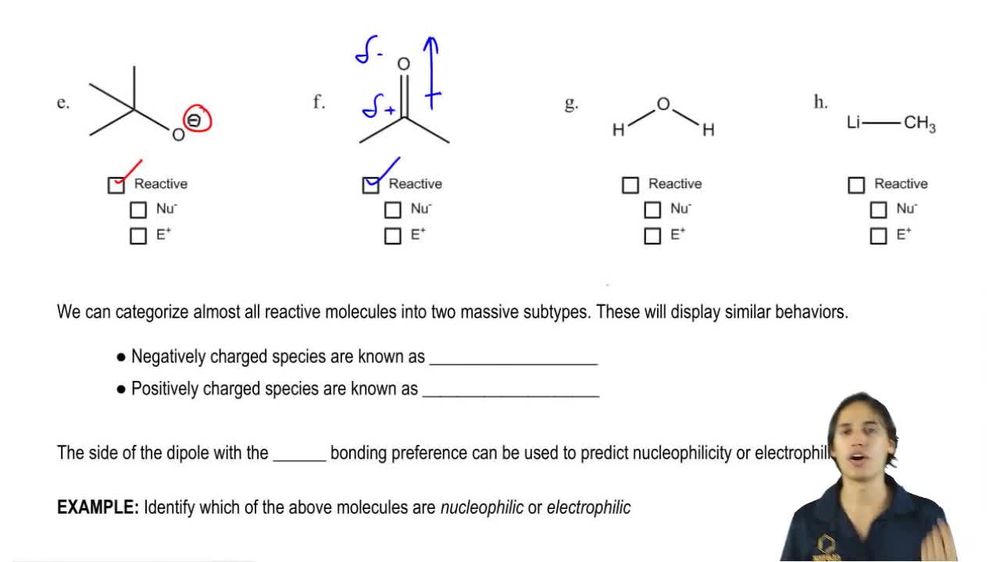
Understand the reactivity of the carbamate group: The carbonyl carbon in the carbamate group is electrophilic due to the partial positive charge on the carbon atom. This makes it susceptible to attack by nucleophiles like methylamine.
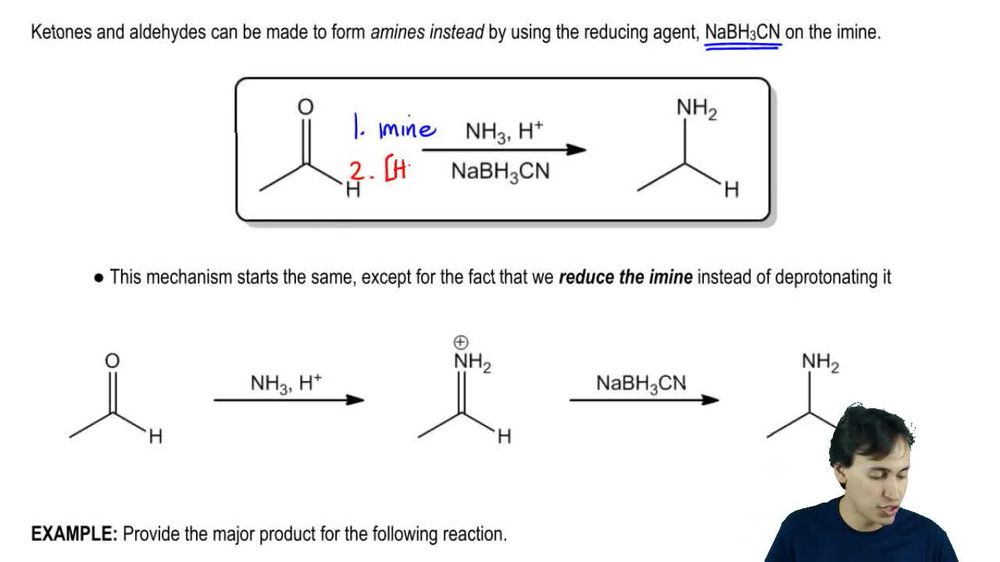
Propose the mechanism: Methylamine, as a nucleophile, will attack the electrophilic carbonyl carbon of the methyl carbamate. This leads to the formation of a tetrahedral intermediate.
Determine the leaving group: In the tetrahedral intermediate, the -OCH3 group (methoxy group) is a good leaving group. It will depart, leading to the formation of a new product where the methylamine has replaced the methoxy group.
Predict the products: The reaction will yield N-methylurea (CH3NHCONHCH3) as the main product, along with methanol (CH3OH) as a byproduct from the departure of the methoxy group.
Verified video answer for a similar problem:
This video solution was recommended by our tutors as helpful for the problem above
Video duration:
5m
Play a video:
0 Comments
Key Concepts
Here are the essential concepts you must grasp in order to answer the question correctly.
Carbamate Structure and Reactivity
Carbamates are esters of carbamic acid, characterized by the functional group -O-C(=O)-NH2. They can undergo nucleophilic substitution reactions, where the amine can attack the carbonyl carbon, leading to the formation of new products. Understanding the structure helps predict how they will react with nucleophiles like methylamine.
Nucleophilic substitution is a fundamental reaction mechanism in organic chemistry where a nucleophile replaces a leaving group in a molecule. In the case of methyl carbamate reacting with methylamine, the amine acts as a nucleophile, attacking the electrophilic carbon of the carbamate, which can lead to the formation of a new amide or urea derivative.
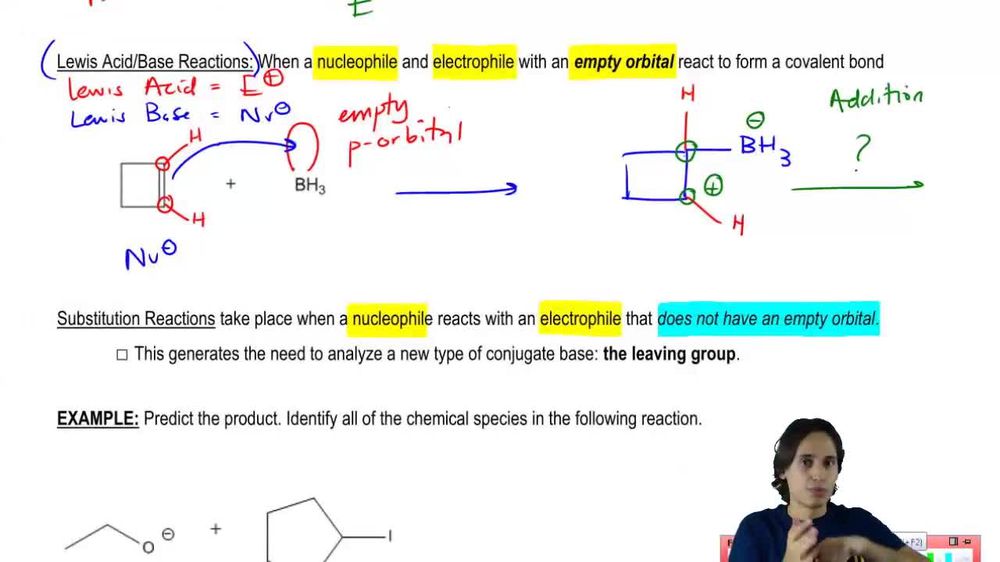
Nucleophiles and Electrophiles can react in Substitution Reactions.
Amine Reactivity
Amines are basic organic compounds that can act as nucleophiles due to the presence of a lone pair of electrons on the nitrogen atom. In this reaction, methylamine can react with the electrophilic carbon of the carbamate, resulting in the formation of a new product. The reactivity of amines is crucial for predicting the outcome of reactions involving carbamates.