Label each sulfhydryl group as primary (1°) secondary (2°) , or tertiary (3°)
Verified step by step guidance
1
Identify the sulfhydryl group (-SH) in the given molecule. A sulfhydryl group consists of a sulfur atom bonded to a hydrogen atom.
Examine the carbon atom directly attached to the sulfur atom in the sulfhydryl group. The classification of the sulfhydryl group depends on the number of carbon atoms bonded to this carbon atom.
If the carbon atom attached to the sulfur is bonded to only one other carbon atom, the sulfhydryl group is classified as primary (1°).
If the carbon atom attached to the sulfur is bonded to two other carbon atoms, the sulfhydryl group is classified as secondary (2°).
If the carbon atom attached to the sulfur is bonded to three other carbon atoms, the sulfhydryl group is classified as tertiary (3°).
Verified video answer for a similar problem:
This video solution was recommended by our tutors as helpful for the problem above
Video duration:
3m
Play a video:
0 Comments
Key Concepts
Here are the essential concepts you must grasp in order to answer the question correctly.
Sulfhydryl Group Structure
A sulfhydryl group (-SH) consists of a sulfur atom bonded to a hydrogen atom. It is a functional group commonly found in organic compounds, particularly in amino acids like cysteine. Understanding the structure of sulfhydryl groups is essential for identifying their classification as primary, secondary, or tertiary based on the carbon atom to which they are attached.
In organic chemistry, carbon atoms are classified based on the number of other carbon atoms they are directly bonded to. A primary (1°) carbon is attached to one other carbon, a secondary (2°) carbon to two, and a tertiary (3°) carbon to three. This classification is crucial for determining the type of sulfhydryl group present in a molecule.
The difference between atomic numbers and atomic mass.
Functional Group Analysis
Functional group analysis involves examining the specific groups of atoms within a molecule that determine its chemical properties and reactivity. In the context of sulfhydryl groups, analyzing their position and the type of carbon they are attached to allows chemists to predict the behavior of the molecule in various chemical reactions, including oxidation and disulfide bond formation.

 3:55 minutes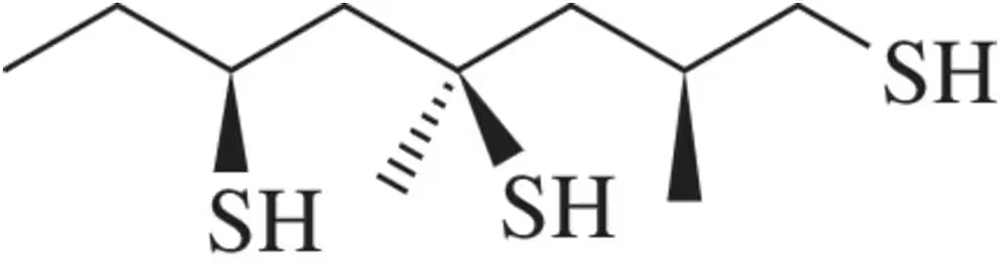
 Verified step by step guidance
 04:42
04:42