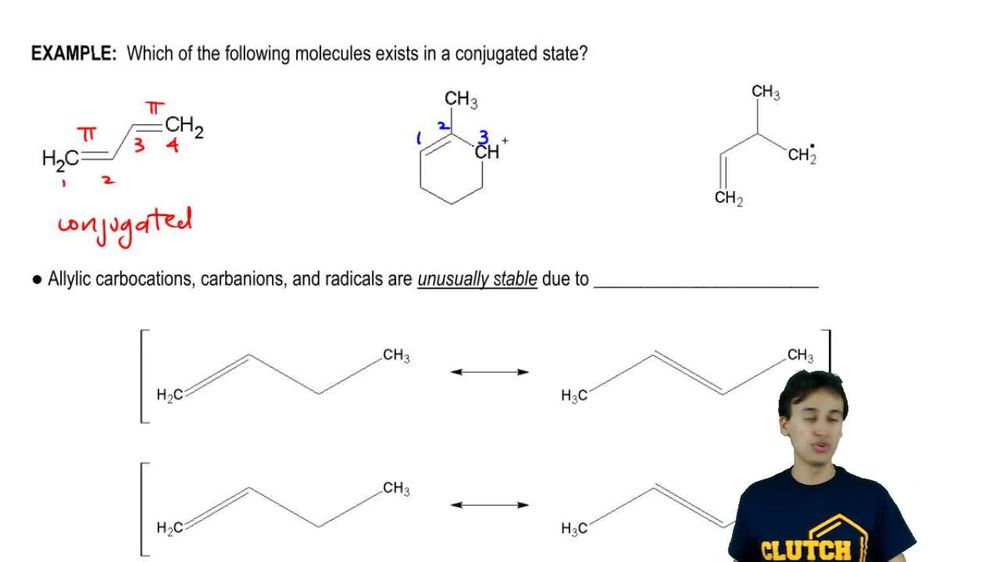
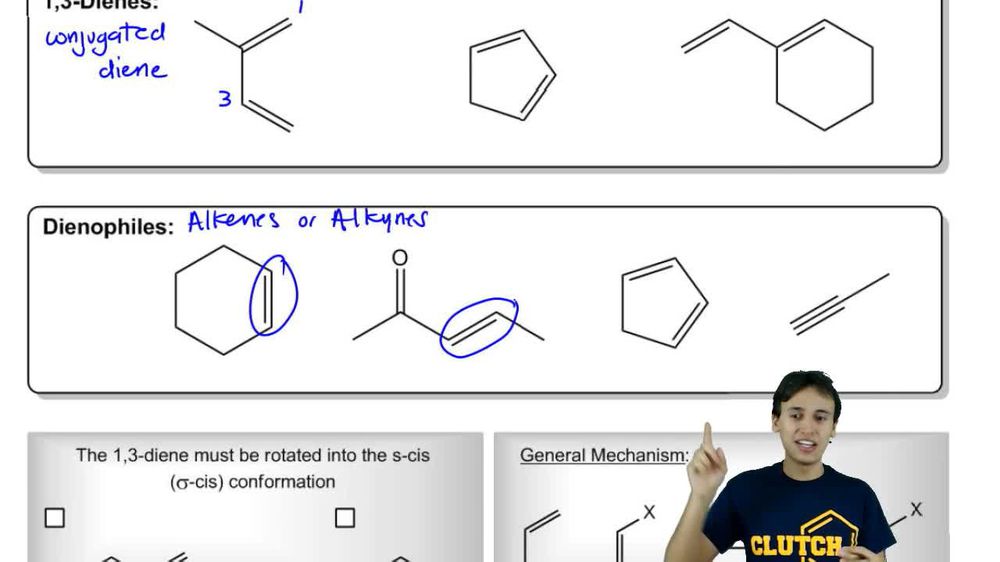
How could the following compounds be synthesized using a Diels–Alder reaction? d.
Verified step by step guidance
1
Step 1: Identify the product structure. The compound shown is a bicyclic system with two ketone groups and a conjugated double bond. This suggests it could be formed via a Diels–Alder reaction, which creates a six-membered ring by combining a diene and a dienophile.
Step 2: Analyze the product to determine the diene and dienophile components. The conjugated double bond in the product indicates the diene, while the ketone groups suggest the dienophile likely contains electron-withdrawing groups to enhance reactivity.
Step 3: Propose the diene. The diene must have two conjugated double bonds. A common choice for such reactions is 1,3-butadiene or a substituted diene that matches the product's structure.
Step 4: Propose the dienophile. The dienophile should contain two electron-withdrawing groups (such as carbonyl groups) to match the two ketone groups in the product. A suitable dienophile could be maleic anhydride or a similar compound.
Step 5: Combine the diene and dienophile in a Diels–Alder reaction. The reaction occurs under thermal conditions, where the diene and dienophile undergo a [4+2] cycloaddition to form the bicyclic product. Ensure the stereochemistry and regiochemistry align with the product structure.
Verified video answer for a similar problem:
This video solution was recommended by our tutors as helpful for the problem above
Video duration:
1m
Play a video:
0 Comments
Key Concepts
Here are the essential concepts you must grasp in order to answer the question correctly.
Diels–Alder Reaction
The Diels–Alder reaction is a [4+2] cycloaddition reaction between a conjugated diene and a dienophile, resulting in the formation of a six-membered ring. This reaction is a powerful tool in organic synthesis due to its ability to create complex cyclic structures in a single step, often with high stereoselectivity. Understanding the reactivity of the diene and dienophile is crucial for predicting the outcome of the reaction.
Conjugated dienes are compounds that contain two double bonds separated by a single bond, allowing for resonance stabilization and increased reactivity in cycloaddition reactions. The ability of these compounds to adopt a s-cis conformation is essential for participating in the Diels–Alder reaction, as it positions the double bonds favorably for interaction with the dienophile.
A dienophile is an electron-deficient alkene or alkyne that reacts with a diene in the Diels–Alder reaction. The reactivity of the dienophile is influenced by its substituents; electron-withdrawing groups enhance its ability to participate in the reaction. Recognizing the nature of the dienophile is key to predicting the products formed in the synthesis process.

 1:20 minutes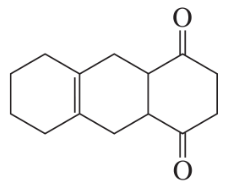
 Verified step by step guidance
 04:02
04:02