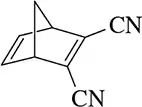
Give the diene and dienophile that could be used to make the following Diels–Alder products. (d)
Verified step by step guidance
1
Identify the Diels–Alder product structure given in the problem. The Diels–Alder reaction involves a [4+2] cycloaddition between a diene and a dienophile, resulting in a cyclohexene ring.
Examine the product to determine the positions of the new sigma bonds formed during the reaction. This will help in identifying the original diene and dienophile.
Determine the structure of the diene. The diene is a conjugated system with two double bonds. Look for the part of the product that corresponds to the four-carbon chain with two double bonds.
Identify the dienophile. The dienophile is typically an alkene or alkyne that reacts with the diene. In the product, it corresponds to the two-carbon unit that forms a new bond with the diene.
Consider any substituents or stereochemistry in the product. This can provide clues about the substituents on the diene and dienophile before the reaction. Ensure that the stereochemistry in the product matches the expected outcome of the Diels–Alder reaction.
Verified video answer for a similar problem:
This video solution was recommended by our tutors as helpful for the problem above
Play a video:
0 Comments
Key Concepts
Here are the essential concepts you must grasp in order to answer the question correctly.
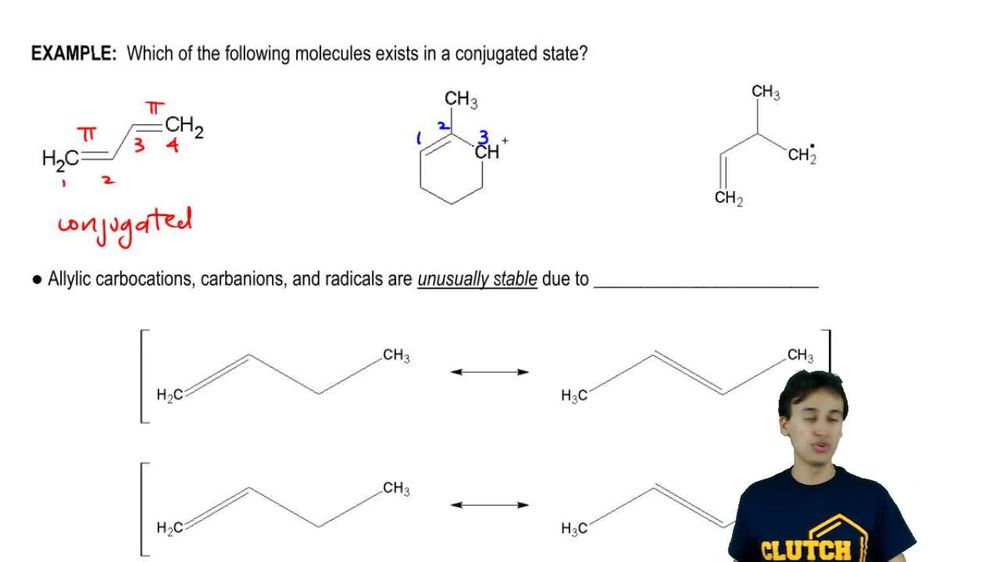
Diels–Alder Reaction
The Diels–Alder reaction is a [4+2] cycloaddition reaction between a conjugated diene and a dienophile, typically an alkene or alkyne, to form a six-membered ring. This reaction is a cornerstone of organic synthesis due to its ability to form complex cyclic structures in a stereospecific manner. Understanding the electronic and steric requirements of both the diene and dienophile is crucial for predicting the outcome of the reaction.
A conjugated diene consists of two double bonds separated by a single bond, allowing for electron delocalization across the π-system. This delocalization stabilizes the diene and is essential for its reactivity in the Diels–Alder reaction. The s-cis conformation of the diene is particularly reactive, as it allows the p-orbitals to overlap effectively with those of the dienophile during the cycloaddition process.
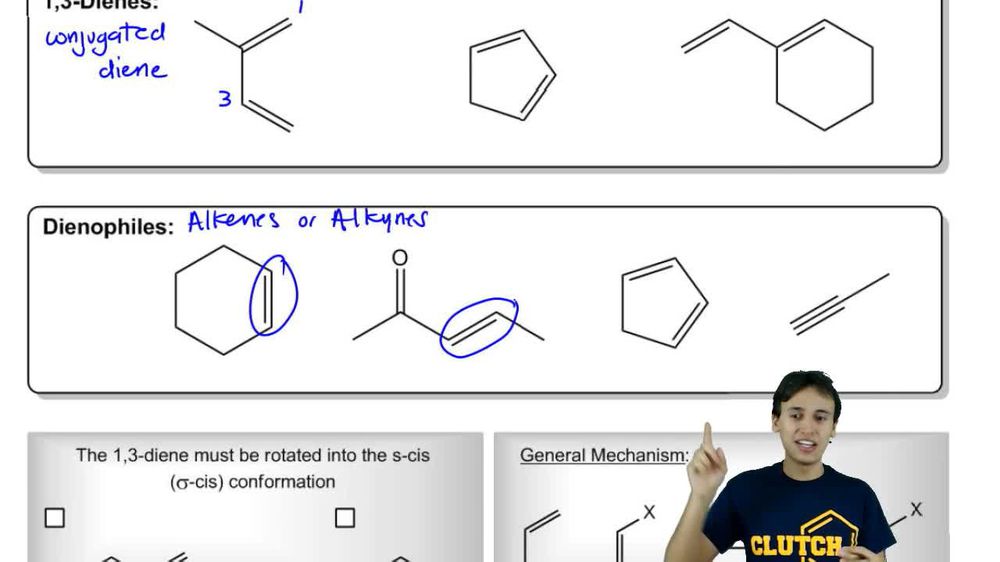
A dienophile is an electron-deficient alkene or alkyne that participates in the Diels–Alder reaction by reacting with a conjugated diene. The presence of electron-withdrawing groups on the dienophile enhances its reactivity by making it more electrophilic. Understanding the electronic nature of the dienophile is crucial for predicting the regioselectivity and stereochemistry of the Diels–Alder product.

 Verified step by step guidance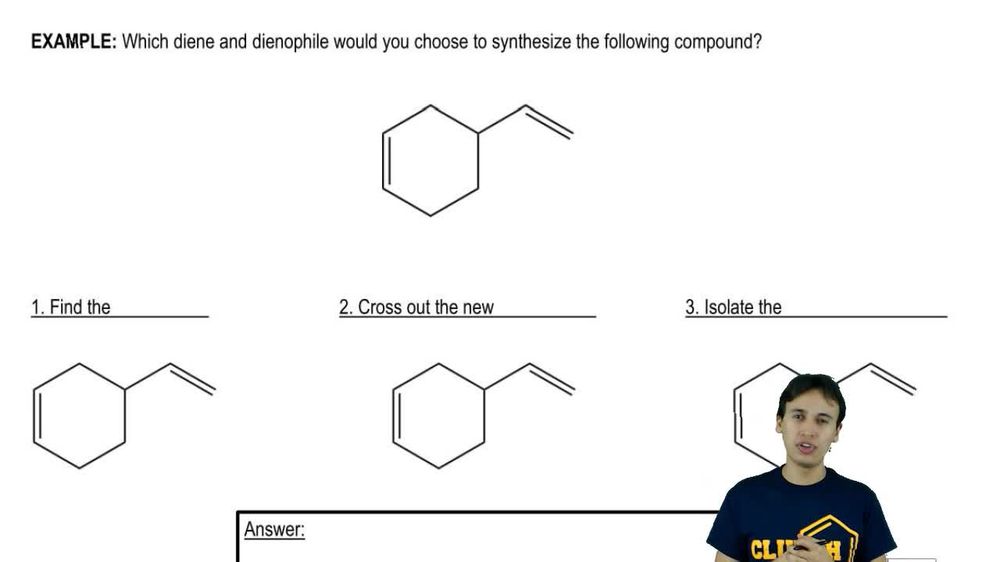
 04:02
04:02