How could you synthesize the following compound from starting materials containing no more than six carbons?
Verified step by step guidance
1
Step 1: Analyze the target molecule. The compound contains two ketone groups separated by a chain of four carbons. This suggests that the synthesis might involve a reaction that forms ketones, such as oxidation or acylation.
Step 2: Plan the synthesis. Since the starting materials are limited to six carbons, consider using smaller carbon fragments and coupling them together. A possible approach is to use a Claisen condensation, which can form a β-diketone from two esters or ketones.
Step 3: Select appropriate starting materials. Choose two compounds with no more than six carbons that can undergo Claisen condensation. For example, ethyl acetate (CH₃COOCH₂CH₃) and butanone (CH₃CH₂COCH₃) could be suitable starting materials.
Step 4: Perform the Claisen condensation. Treat the selected starting materials with a strong base, such as sodium ethoxide (NaOEt), to deprotonate the α-hydrogen of one molecule and allow it to attack the carbonyl carbon of the other molecule. This forms a β-diketone intermediate.
Step 5: Purify and verify the product. After the reaction, isolate the product using techniques like distillation or recrystallization. Confirm the structure of the synthesized compound using spectroscopic methods such as NMR or IR.
Verified video answer for a similar problem:
This video solution was recommended by our tutors as helpful for the problem above
Video duration:
7m
Play a video:
0 Comments
Key Concepts
Here are the essential concepts you must grasp in order to answer the question correctly.
Functional Groups
Functional groups are specific groups of atoms within molecules that are responsible for the characteristic chemical reactions of those molecules. Understanding the functional groups present in the target compound is essential for determining the appropriate synthetic pathways and reactions needed to construct the compound from simpler starting materials.
Retrosynthetic analysis is a strategy used in organic chemistry to deconstruct a target molecule into simpler precursor structures. By working backward from the desired compound, chemists can identify feasible synthetic routes and the necessary starting materials, which is crucial for planning the synthesis of the compound in question.
Different chemical reactions require specific reagents and conditions to proceed effectively. Knowledge of common reagents, such as acids, bases, and catalysts, as well as the conditions under which reactions occur (temperature, pressure, solvent), is vital for successfully synthesizing the target compound from the chosen starting materials.

 7:16 minutes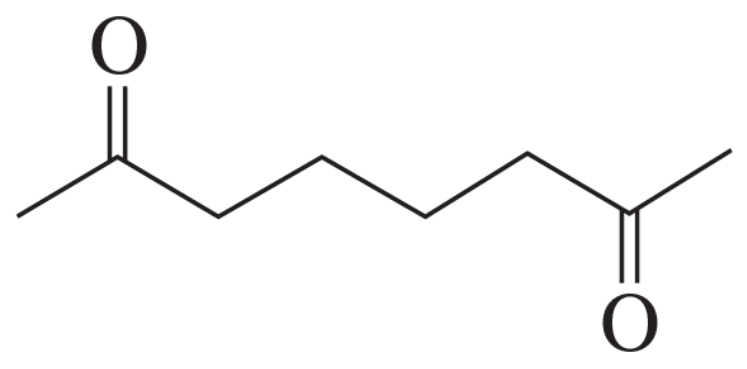
 Verified step by step guidance
 02:36
02:36