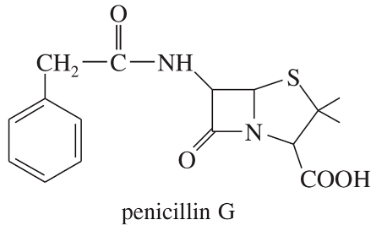
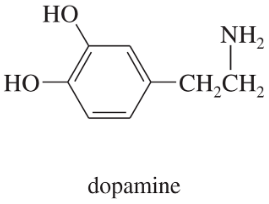
Many naturally occurring compounds contain more than one functional group. Identify the functional groups in the following compounds: a. Penicillin G is a naturally occurring antibiotic. b. Dopamine is the neurotransmitter that is deficient in Parkinson’s disease.
Verified step by step guidance
1
Examine the structure of Penicillin G. Identify the amide group, which is characterized by the presence of a carbonyl group (C=O) directly bonded to a nitrogen atom (NH).
In Penicillin G, locate the beta-lactam ring, a four-membered cyclic amide, which is a distinctive feature of penicillins.
Identify the carboxylic acid group in Penicillin G, which is represented by the -COOH group attached to the thiazolidine ring.
For dopamine, identify the phenol groups, which are characterized by hydroxyl groups (OH) attached to an aromatic benzene ring.
In dopamine, locate the primary amine group, which is represented by the -NH2 group attached to the ethyl side chain.
Verified video answer for a similar problem:
This video solution was recommended by our tutors as helpful for the problem above
Video duration:
4m
Play a video:
0 Comments
Key Concepts
Here are the essential concepts you must grasp in order to answer the question correctly.
Functional Groups
Functional groups are specific groups of atoms within molecules that have characteristic properties and chemical reactivity. In organic chemistry, identifying functional groups is crucial as they determine the behavior of the molecule in chemical reactions. For example, in penicillin G, the amide (NH-C=O), carboxylic acid (COOH), and thiazolidine ring are key functional groups.
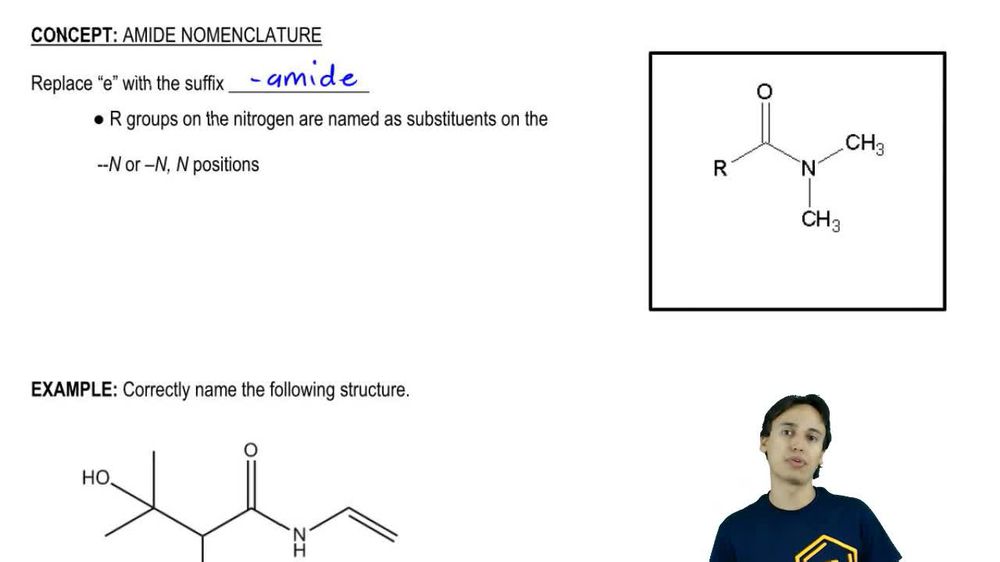
An amide group consists of a carbonyl group (C=O) linked to a nitrogen atom (NH). This functional group is prevalent in proteins and many pharmaceuticals, including penicillin G. Amides are known for their stability and ability to form hydrogen bonds, influencing the molecule's solubility and reactivity.
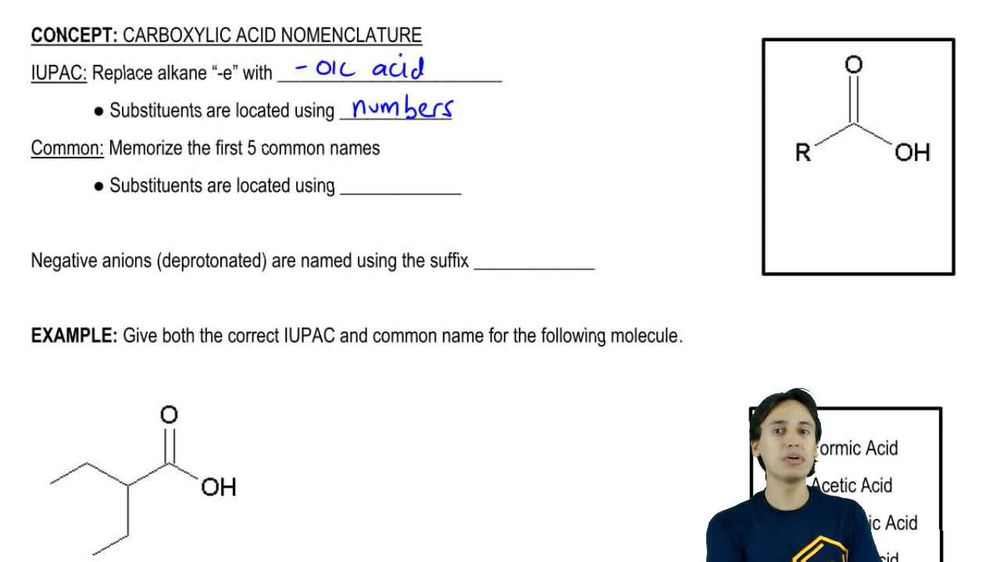
The carboxylic acid group is characterized by a carbon atom double-bonded to an oxygen atom and single-bonded to a hydroxyl group (COOH). This group is acidic, meaning it can donate a proton (H+) in reactions, and is a common feature in many organic compounds, affecting their solubility and reactivity. In penicillin G, the carboxylic acid group is crucial for its biological activity.