Draw a Lewis structure, and classify each of the following compounds: (g) (CH3)3CCH2CH2COOH (h)
Verified step by step guidance
1
To draw the Lewis structure for (CH3)3CCH2CH2COOH, start by identifying the central atoms and the functional groups. The compound contains a tert-butyl group ((CH3)3C), a propyl chain (CH2CH2), and a carboxylic acid group (COOH).
Draw the tert-butyl group by placing a central carbon atom and attaching three methyl groups (CH3) to it. Each methyl group consists of a carbon atom bonded to three hydrogen atoms.
Next, connect the tert-butyl group to the propyl chain. The propyl chain consists of two CH2 groups. Connect the central carbon of the tert-butyl group to the first CH2 group, then connect the first CH2 group to the second CH2 group.
Attach the carboxylic acid group (COOH) to the end of the propyl chain. The carboxylic acid group consists of a carbon atom double-bonded to an oxygen atom and single-bonded to a hydroxyl group (OH).
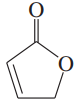
For the compound in the image, identify the structure as a cyclic ester, specifically a lactone. The image shows a five-membered ring with an oxygen atom and a carbonyl group (C=O), indicating it is a gamma-lactone.
Verified video answer for a similar problem:
This video solution was recommended by our tutors as helpful for the problem above
Video duration:
3m
Play a video:
0 Comments
Key Concepts
Here are the essential concepts you must grasp in order to answer the question correctly.
Lewis Structures
Lewis structures are diagrams that represent the bonding between atoms of a molecule and the lone pairs of electrons that may exist. They are essential for visualizing the arrangement of atoms, the distribution of electrons, and the identification of functional groups within a molecule. Understanding Lewis structures helps in predicting the geometry, reactivity, and properties of the compound.
Functional groups are specific groups of atoms within molecules that have characteristic properties and reactivity. In organic chemistry, identifying functional groups such as carboxylic acids, alcohols, or ketones is crucial for classifying compounds and predicting their chemical behavior. For example, the carboxylic acid group (COOH) in (CH3)3CCH2CH2COOH is key to its acidic properties.
IUPAC nomenclature is a systematic method of naming organic chemical compounds as recommended by the International Union of Pure and Applied Chemistry. It provides a standardized way to name compounds based on their structure, ensuring clear communication. For instance, the compound (CH3)3CCH2CH2COOH is named 3,3-dimethylbutanoic acid, reflecting its structure and functional groups.