The acid-catalyzed hydration we learned here in Chapter 8 is reversible: (c) Which side of the reaction would be favored by running the reaction at high temperatures?
Verified step by step guidance
1
Step 1: Recognize that the reaction shown is an equilibrium between an alcohol and an alkene, with water as a byproduct. The reaction is acid-catalyzed using H2SO4.
Step 2: Recall Le Chatelier's Principle, which states that a system at equilibrium will shift to counteract changes in conditions. Temperature is one such condition that can influence the equilibrium.
Step 3: Understand that this reaction involves a dehydration process (removal of water) to form the alkene. Dehydration reactions are typically endothermic, meaning they absorb heat.
Step 4: Since the reaction is endothermic, increasing the temperature will favor the formation of products (alkene and water) because higher temperatures drive endothermic reactions forward.
Step 5: Conclude that running the reaction at high temperatures will favor the side of the reaction that produces the alkene and water, shifting the equilibrium toward the products.
Verified video answer for a similar problem:
This video solution was recommended by our tutors as helpful for the problem above
Video duration:
4m
Play a video:
0 Comments
Key Concepts
Here are the essential concepts you must grasp in order to answer the question correctly.
Le Chatelier's Principle
Le Chatelier's Principle states that if a dynamic equilibrium is disturbed by changing the conditions, the position of equilibrium shifts to counteract the change. In the context of acid-catalyzed hydration, increasing temperature will favor the endothermic direction of the reaction, which can help predict the favored side of the reaction under high-temperature conditions.
Reactions can be classified as endothermic or exothermic based on their heat exchange with the surroundings. Endothermic reactions absorb heat, while exothermic reactions release heat. Understanding which side of the hydration reaction is endothermic or exothermic is crucial for predicting how temperature changes will affect the equilibrium position.
The equilibrium constant (K) quantifies the ratio of the concentrations of products to reactants at equilibrium for a reversible reaction. Changes in temperature can alter the value of K, influencing the position of equilibrium. A higher temperature may shift the equilibrium towards the side with a higher K value, indicating a preference for products or reactants depending on the reaction's thermodynamics.

 4:29 minutes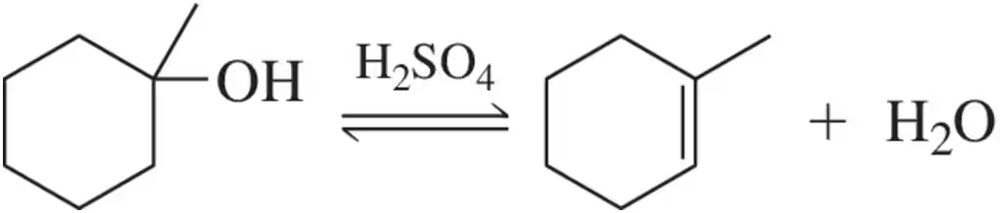
 Verified step by step guidance
 04:12
04:12