Show how Diels–Alder reactions might be used to synthesize the following compounds. (g) (h)
Verified step by step guidance
1
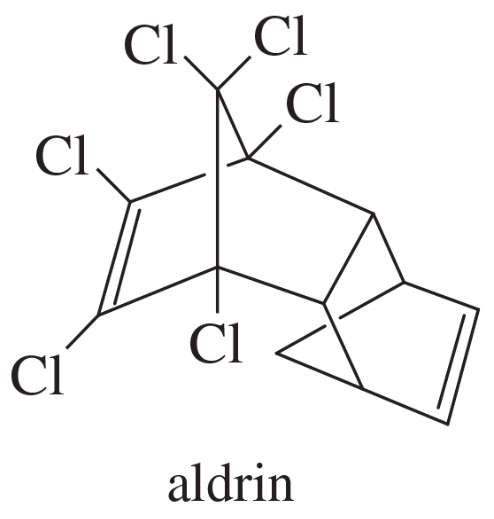
Step 1: Identify the target molecules (chlordane, aldrin, and the sulfur-containing compound) and recognize their structural features, such as the bicyclic systems and substituents. These compounds are products of Diels–Alder reactions, which involve a conjugated diene and a dienophile.
Step 2: For chlordane, analyze the structure to determine the diene and dienophile components. The bicyclic system suggests that the diene is likely a cyclic conjugated diene, and the dienophile is a molecule with multiple chlorine substituents to introduce the chlorinated groups.
Step 3: For aldrin, note the additional fused ring system compared to chlordane. This indicates that the dienophile used in the Diels–Alder reaction must contain a structure capable of forming the extra ring, such as a cyclic compound with a double bond and chlorine substituents.
Step 4: For the sulfur-containing compound, observe the presence of the sulfone group and cyano groups. The diene component likely contributes the bicyclic framework, while the dienophile introduces the sulfone and cyano substituents. Consider how the stereochemistry of the cyano groups is controlled during the reaction.
Step 5: Propose the reaction conditions for each synthesis. Diels–Alder reactions typically require heat to facilitate the cycloaddition. Ensure that the dienophile and diene are appropriately substituted to yield the desired products with the correct stereochemistry and substituents.
Verified video answer for a similar problem:
This video solution was recommended by our tutors as helpful for the problem above
Video duration:
7m
Play a video:
0 Comments
Key Concepts
Here are the essential concepts you must grasp in order to answer the question correctly.
Diels–Alder Reaction
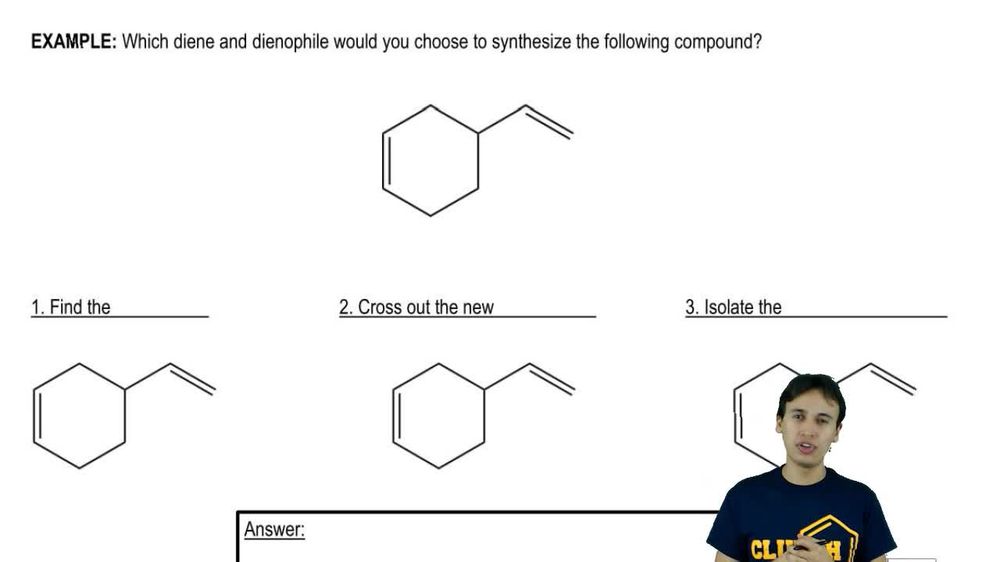
The Diels–Alder reaction is a [4+2] cycloaddition reaction between a conjugated diene and a dienophile, resulting in the formation of a six-membered ring. This reaction is a powerful tool in organic synthesis due to its ability to create complex cyclic structures in a single step, often with high stereoselectivity and regioselectivity.
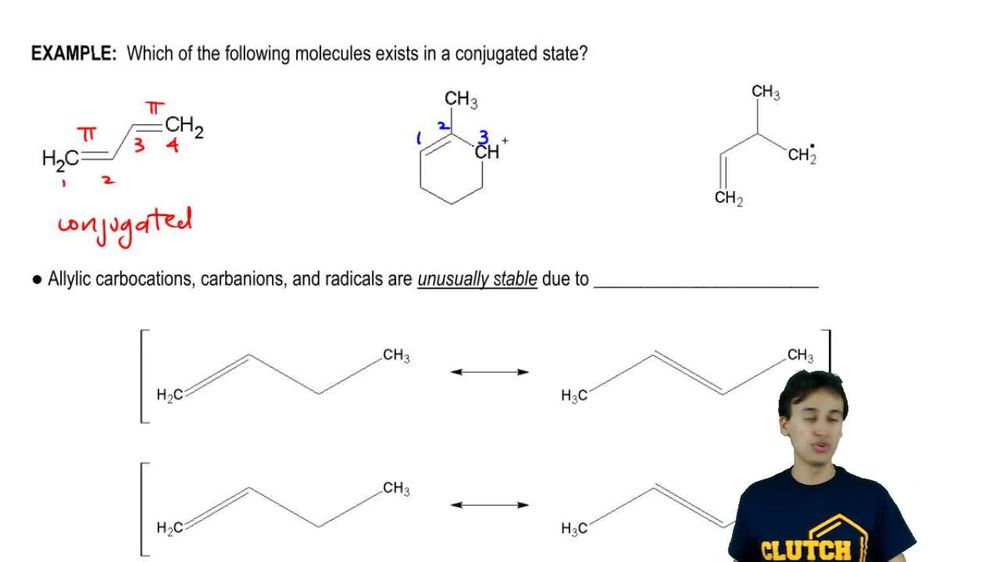
Conjugated dienes are compounds that contain two double bonds separated by a single bond, allowing for resonance stabilization. This property enhances their reactivity in Diels–Alder reactions, as the electron-rich diene can effectively interact with an electron-deficient dienophile, facilitating the cycloaddition process.
Stereochemistry plays a crucial role in Diels–Alder reactions, as the orientation of substituents on the diene and dienophile can influence the final product's configuration. The reaction typically proceeds with a concerted mechanism, preserving the stereochemistry of the reactants, which is essential for predicting the structure of the synthesized compounds.

 7:59 minutes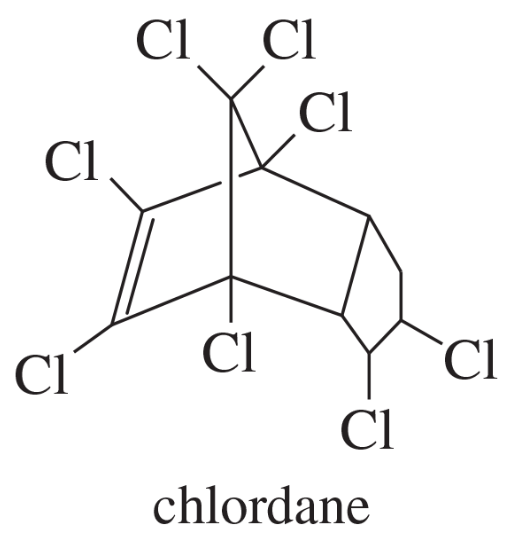
 Verified step by step guidance
 04:02
04:02