Show how norbornane can be prepared from cyclopentadiene.
Verified step by step guidance
1
Step 1: Begin with cyclopentadiene, which is a five-membered ring containing two conjugated double bonds. This compound is highly reactive in Diels-Alder reactions due to its diene structure.
Step 2: Identify the dienophile needed for the Diels-Alder reaction. In this case, ethylene (C₂H₄) is a suitable dienophile because it contains a double bond that can react with the diene in cyclopentadiene.
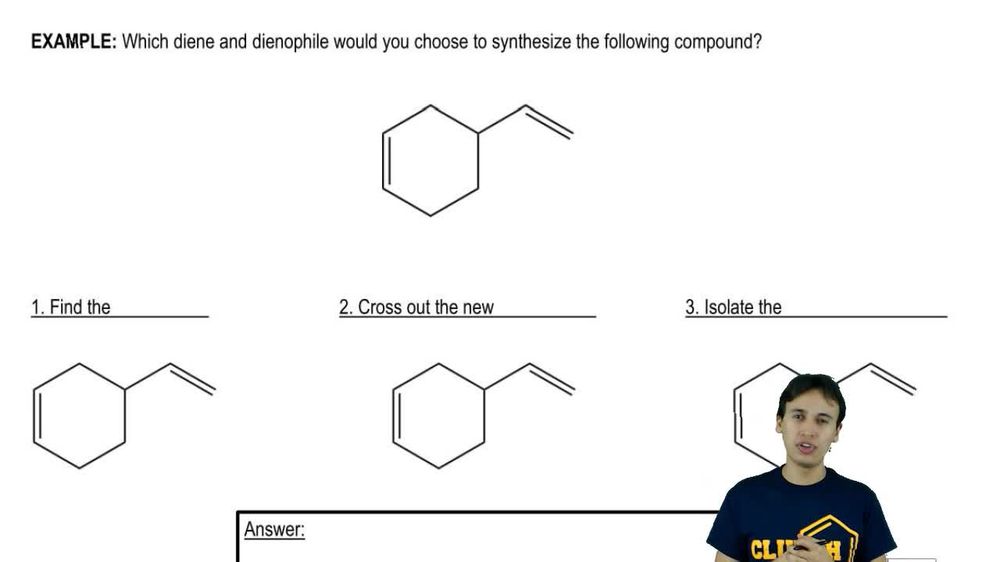
Step 3: Perform the Diels-Alder reaction. The diene (cyclopentadiene) and the dienophile (ethylene) undergo a [4+2] cycloaddition reaction. This reaction forms a new six-membered ring structure, which is bicyclo[2.2.1]heptane, commonly known as norbornene.
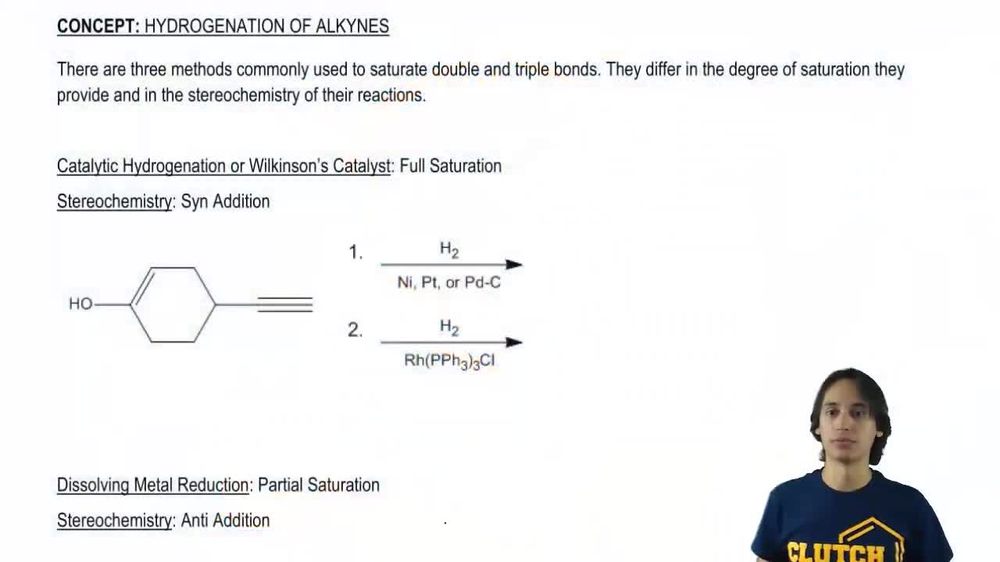
Step 4: To convert norbornene into norbornane, perform a catalytic hydrogenation reaction. Use a catalyst such as palladium on carbon (Pd/C) or platinum (Pt) in the presence of hydrogen gas (H₂). This step will reduce the double bond in norbornene to form the fully saturated hydrocarbon, norbornane.
Step 5: Verify the structure of the final product, norbornane, which is a bicyclo[2.2.1]heptane with no double bonds. This confirms the successful preparation of norbornane from cyclopentadiene.
Verified video answer for a similar problem:
This video solution was recommended by our tutors as helpful for the problem above
Video duration:
4m
Play a video:
0 Comments
Key Concepts
Here are the essential concepts you must grasp in order to answer the question correctly.
Diels-Alder Reaction
The Diels-Alder reaction is a [4+2] cycloaddition reaction between a conjugated diene and a dienophile, forming a six-membered ring. In this context, cyclopentadiene acts as the diene, which can react with itself to form norbornene, a key intermediate in the synthesis of norbornane. This reaction is a fundamental method in organic synthesis for constructing cyclic compounds.
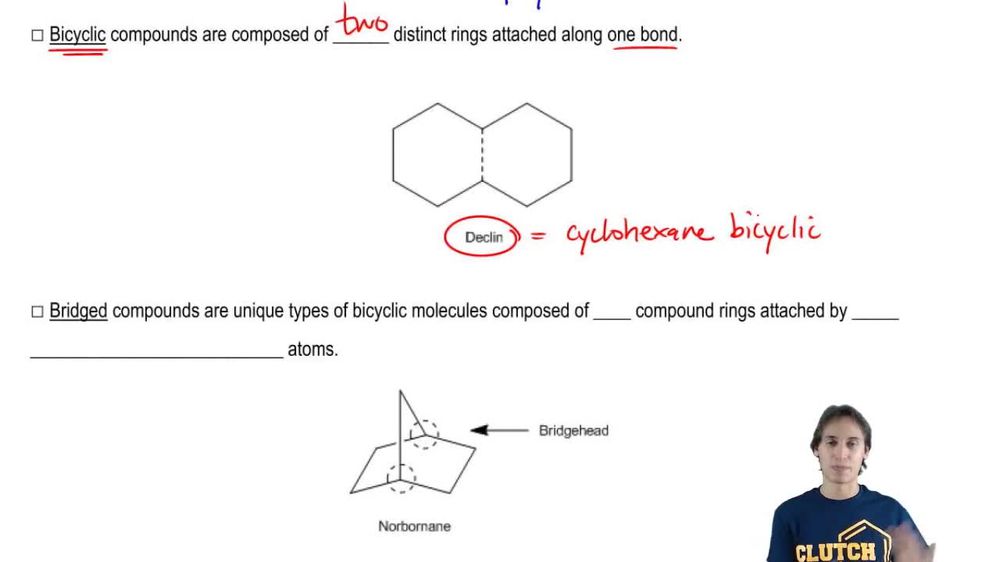
Norbornene is a bicyclic compound that can be derived from the Diels-Alder reaction of cyclopentadiene. It features a bridged bicyclic structure that is crucial for the subsequent hydrogenation step to produce norbornane. Understanding the structure and reactivity of norbornene is essential for grasping how to convert it into norbornane.
Hydrogenation is a chemical reaction that involves the addition of hydrogen (H2) to a compound, typically in the presence of a catalyst. In the preparation of norbornane from norbornene, hydrogenation converts the double bond in norbornene into a single bond, resulting in the saturated compound norbornane. This step is vital for completing the transformation from the unsaturated to the saturated bicyclic structure.

 4:23 minutes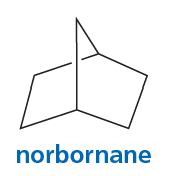
 Verified step by step guidance
 04:02
04:02