Show how you would accomplish the following syntheses efficiently (you may use any necessary reagents). (h)
Verified step by step guidance
1
Step 1: Analyze the starting material and the product. The starting material is 3-chloropropenoic acid, which contains a double bond and a carboxylic acid group. The product is a cyclohexane derivative with a carboxylic acid group and a chlorine atom attached to adjacent carbons in a cis configuration.
Step 2: Recognize that the transformation involves cyclization and stereochemical control. The double bond in the starting material will need to undergo a reaction that forms a six-membered ring while introducing the chlorine atom and carboxylic acid group in the correct positions.
Step 3: Use a Diels-Alder reaction as the key step. The starting material can act as a dienophile due to the electron-withdrawing carboxylic acid group. Pair it with a suitable diene, such as 1,3-butadiene, to form the cyclohexane ring.
Step 4: After the Diels-Alder reaction, the product will have the carboxylic acid group and chlorine atom in the correct positions. If stereochemical control is required, ensure the reaction conditions favor the cis configuration of substituents.
Step 5: Purify the product using standard organic chemistry techniques, such as recrystallization or chromatography, to isolate the desired cyclohexane derivative.
Verified video answer for a similar problem:
This video solution was recommended by our tutors as helpful for the problem above
Video duration:
1m
Play a video:
0 Comments
Key Concepts
Here are the essential concepts you must grasp in order to answer the question correctly.
Synthetic Pathways
Synthetic pathways refer to the series of chemical reactions and transformations that convert starting materials into desired products. Understanding these pathways is crucial for planning efficient syntheses, as it involves selecting appropriate reagents and conditions to achieve the target molecule with minimal steps and byproducts.
Energy Production In Biochemical Pathways Concept 1
Reagents and Their Functions
Reagents are substances used in chemical reactions to facilitate the transformation of reactants into products. Each reagent has specific roles, such as acting as a catalyst, providing a nucleophile or electrophile, or serving as a solvent. Knowledge of common reagents and their functions is essential for designing effective synthetic routes.
Reaction mechanisms describe the step-by-step sequence of elementary reactions that occur during a chemical transformation. Understanding mechanisms helps predict the outcomes of reactions, including the formation of intermediates and the stereochemistry of products, which is vital for successful synthesis in organic chemistry.

 1:27 minutes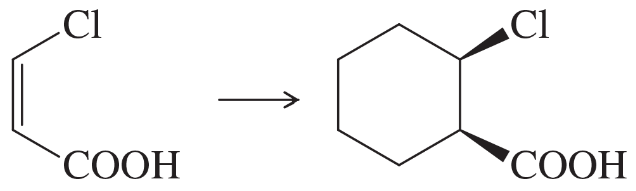
 Verified step by step guidance
 2:13
2:13