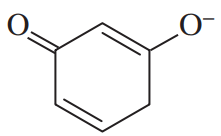
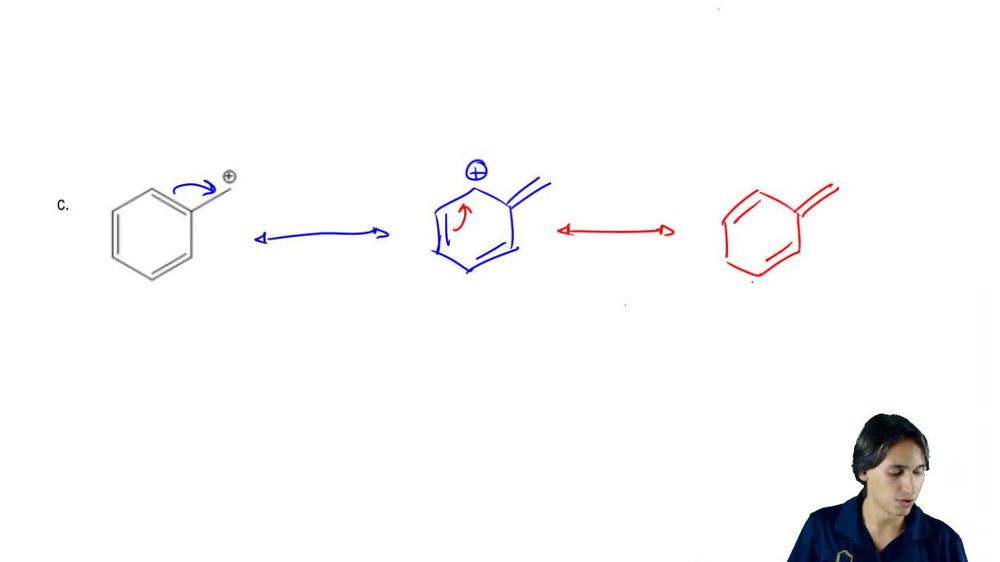
Draw the important resonance contributors for the following cations, anions, and radicals. (e) (f)
Verified step by step guidance
1
Step 1: Identify the resonance contributors by analyzing the structure. For the first molecule (e), the negative charge on the CH2 group can delocalize through the conjugated π-system. This involves the movement of electrons along the double bonds and towards the carbonyl group.
Step 2: Draw the first resonance structure for molecule (e) by moving the lone pair of electrons from the negatively charged CH2 group to form a double bond with the adjacent carbon. This will push the electrons in the existing double bond towards the next carbon in the chain.
Step 3: Continue the electron movement for molecule (e) by shifting the electrons in the conjugated π-system further down the chain, eventually reaching the carbonyl group. The oxygen in the carbonyl group can accept the electrons, forming a resonance structure with a negative charge on the oxygen.
Step 4: For the second molecule (f), analyze the aromatic ring and the carboxylate group. The negative charge on the oxygen can delocalize into the aromatic ring, forming resonance structures. This involves the movement of electrons from the oxygen into the ring, creating alternating double bonds and redistributing the negative charge.
Step 5: Draw additional resonance structures for molecule (f) by moving the electrons around the aromatic ring. Ensure that the negative charge is delocalized across the ring and that the aromaticity of the ring is preserved in all resonance contributors.
Verified video answer for a similar problem:
This video solution was recommended by our tutors as helpful for the problem above
Video duration:
6m
Play a video:
0 Comments
Key Concepts
Here are the essential concepts you must grasp in order to answer the question correctly.
Resonance Structures
Resonance structures are different Lewis structures for the same molecule that depict the same arrangement of atoms but differ in the placement of electrons. These structures help illustrate the delocalization of electrons within a molecule, which can stabilize cations, anions, and radicals. Understanding resonance is crucial for predicting the reactivity and stability of these species.
Not all resonance structures contribute equally to the overall resonance hybrid; some are more stable than others. Factors influencing stability include the octet rule, charge distribution, and the presence of formal charges. More stable resonance contributors have full octets, minimized formal charges, and charge separation that aligns with electronegativity trends.
In organic chemistry, electrophiles are electron-deficient species that seek electrons, while nucleophiles are electron-rich species that donate electrons. Understanding the nature of these species is essential when analyzing resonance structures, as it helps predict how cations, anions, and radicals will interact in chemical reactions. This knowledge is fundamental for grasping reaction mechanisms and stability.

 6:10 minutes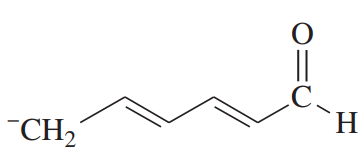
 Verified step by step guidance
 03:04
03:04