Show how you would make the following compounds from a suitable cyclic alkene. (a)
Verified step by step guidance
1
Step 1: Identify the cyclic alkene that can serve as the starting material. For the compound shown, a suitable cyclic alkene would be cyclohexene, as it provides the six-membered ring structure required.
Step 2: Perform a hydroboration-oxidation reaction to introduce hydroxyl groups in a syn-addition manner. Use BH₃ (borane) followed by H₂O₂ (hydrogen peroxide) and NaOH (sodium hydroxide). This reaction adds two hydroxyl groups to the same face of the double bond.
Step 3: To introduce the methyl group at the correct position, use a regioselective alkylation method. This can be achieved by starting with a substituted cyclohexene (e.g., 1-methylcyclohexene) before performing the hydroboration-oxidation step.
Step 4: Ensure stereochemistry is correct. The hydroboration-oxidation reaction inherently provides syn-addition, which matches the stereochemistry of the product shown in the image.
Step 5: Verify the final product by comparing the structure and stereochemistry of the synthesized compound to the target compound. Ensure the hydroxyl groups and methyl group are positioned correctly on the ring.
Verified video answer for a similar problem:
This video solution was recommended by our tutors as helpful for the problem above
Video duration:
9m
Play a video:
0 Comments
Key Concepts
Here are the essential concepts you must grasp in order to answer the question correctly.
Cyclic Alkenes
Cyclic alkenes are hydrocarbons that contain a carbon ring with at least one double bond. They are important in organic synthesis as they can undergo various reactions, such as hydrogenation, halogenation, and hydroboration, to form different functional groups. Understanding the structure and reactivity of cyclic alkenes is crucial for designing synthetic pathways to target compounds.
Functional group transformations involve converting one functional group into another through chemical reactions. In the context of organic synthesis, this is essential for modifying cyclic alkenes to produce alcohols, ketones, or other functional groups. Recognizing the appropriate reagents and conditions for these transformations is key to successfully synthesizing desired compounds.
Stereochemistry refers to the spatial arrangement of atoms in molecules and how this affects their chemical properties and reactions. In the synthesis of compounds from cyclic alkenes, understanding stereochemistry is vital, especially when dealing with chiral centers and the formation of stereoisomers. This knowledge helps predict the outcomes of reactions and the configuration of the final products.

 9:12 minutes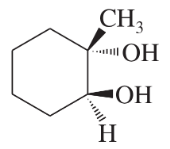
 Verified step by step guidance
 06:23
06:23