How does the ratio of substitution product to elimination product formed from the reaction of propyl bromide with CH3O− in methanol change if the nucleophile is changed to CH3S−?
Verified step by step guidance
1
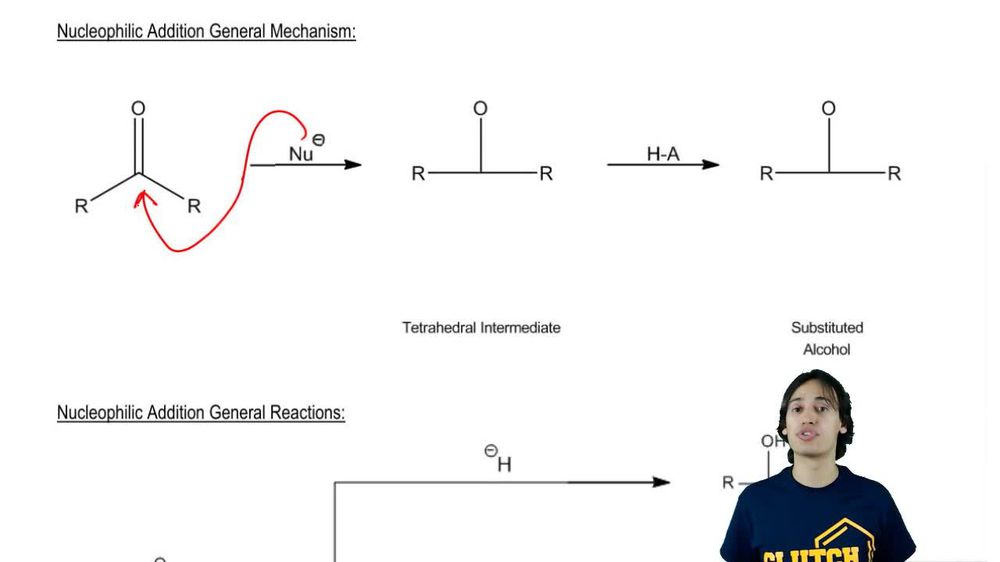
Understand the reaction mechanism: The reaction of propyl bromide with CH3O− in methanol can proceed via two competing pathways: substitution (SN2) and elimination (E2). Substitution involves the nucleophile attacking the carbon atom bonded to the leaving group (bromide), while elimination involves the removal of a proton from a β-carbon, forming a double bond.
Analyze the role of the nucleophile: CH3O− is a strong nucleophile and a strong base, which makes it capable of promoting both SN2 and E2 mechanisms. However, the balance between substitution and elimination depends on the relative nucleophilicity and basicity of the reagent.
Compare CH3O− and CH3S−: CH3S− is a stronger nucleophile than CH3O− because sulfur is larger and more polarizable than oxygen. However, CH3S− is a weaker base compared to CH3O− because sulfur is less electronegative than oxygen, making it less likely to abstract a proton in an elimination reaction.
Predict the effect of changing the nucleophile: When CH3O− is replaced with CH3S−, the reaction is expected to favor substitution (SN2) over elimination (E2). This is because CH3S− is a stronger nucleophile, which enhances its ability to attack the carbon atom directly, while its weaker basicity reduces its tendency to promote elimination.
Conclude the change in product ratio: The ratio of substitution product to elimination product will increase when the nucleophile is changed from CH3O− to CH3S−, as the reaction will favor the SN2 pathway more strongly due to the higher nucleophilicity and lower basicity of CH3S−.
Verified video answer for a similar problem:
This video solution was recommended by our tutors as helpful for the problem above
Video duration:
4m
Play a video:
0 Comments
Key Concepts
Here are the essential concepts you must grasp in order to answer the question correctly.
Nucleophilic Substitution vs. Elimination Reactions
Nucleophilic substitution (S_N1 and S_N2) and elimination (E1 and E2) are two fundamental reaction pathways in organic chemistry. In substitution reactions, a nucleophile replaces a leaving group, while in elimination reactions, a nucleophile abstracts a proton, leading to the formation of a double bond. The ratio of substitution to elimination products can vary based on factors like the structure of the substrate and the strength of the nucleophile.
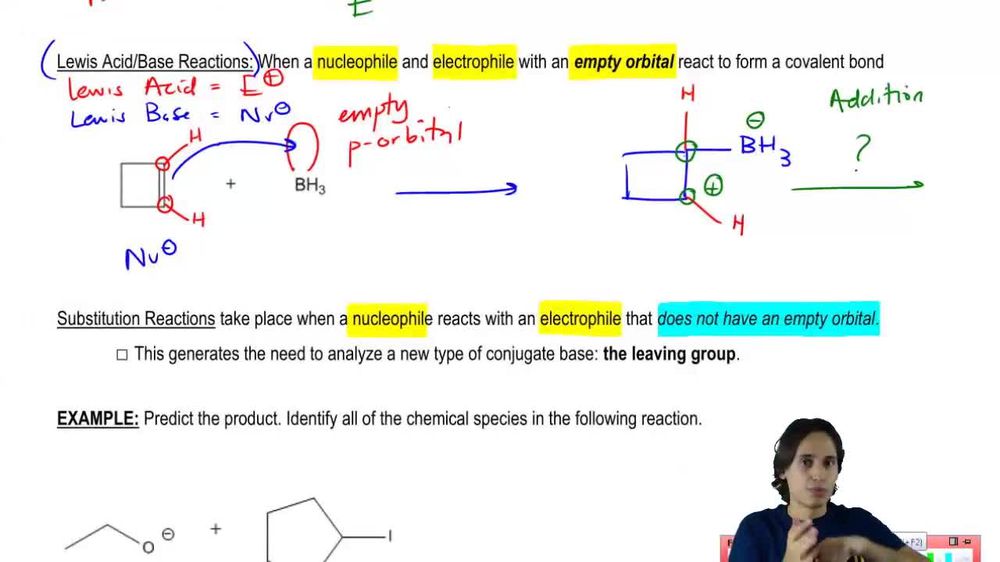
Nucleophiles and Electrophiles can react in Substitution Reactions.
Nucleophile Strength and Reactivity
The strength and reactivity of a nucleophile significantly influence the outcome of reactions. Stronger nucleophiles tend to favor substitution reactions, while weaker nucleophiles may lead to elimination. In this case, CH3O− (methoxide) is a stronger nucleophile compared to CH3S− (methanethiolate), which can alter the product distribution between substitution and elimination pathways.
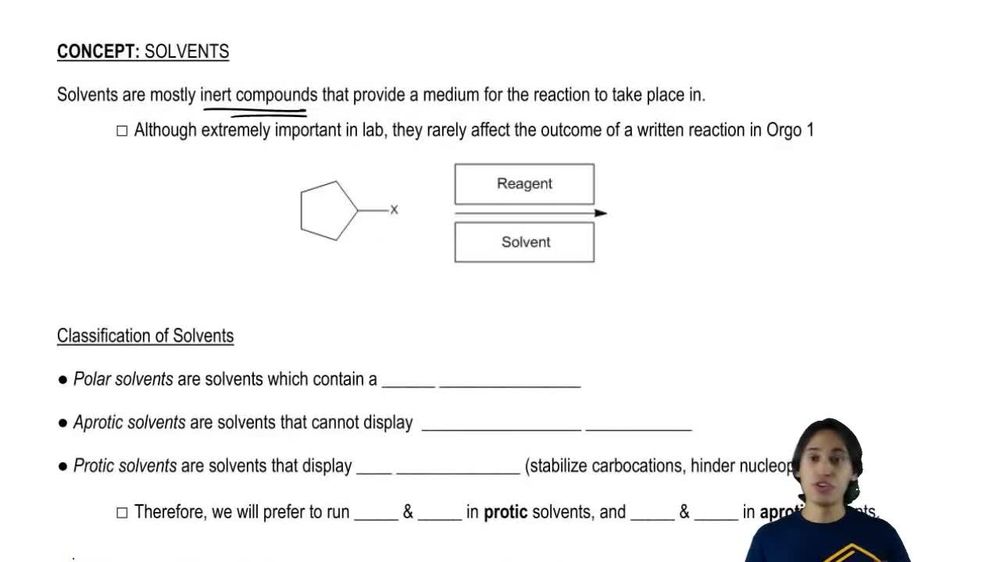
The choice of solvent can greatly affect the mechanism and products of a reaction. Polar protic solvents, like methanol, stabilize ions and can favor S_N1 and E1 mechanisms, while polar aprotic solvents favor S_N2 mechanisms. The solvent's ability to solvate the nucleophile and the leaving group can influence whether substitution or elimination is favored, thus impacting the ratio of products formed.