How could the following compounds be synthesized from acetylene? b.
Verified step by step guidance
1
Step 1: Begin by understanding the structure of acetylene (C₂H₂), which is a simple alkyne with a triple bond between two carbon atoms. Acetylene is a versatile starting material in organic synthesis due to its reactivity.
Step 2: Identify the target compound (b) and analyze its functional groups and carbon skeleton. Determine the transformations required to convert acetylene into the desired compound, such as chain elongation, addition reactions, or functional group modifications.
Step 3: Use acetylene's reactivity with electrophiles to introduce new groups. For example, acetylene can undergo hydrohalogenation (addition of HX) to form haloalkenes or halides, or hydration (addition of H₂O in the presence of HgSO₄ and H₂SO₄) to form ketones.
Step 4: If chain elongation is required, consider reactions such as alkylation. Acetylene can be deprotonated using a strong base (e.g., NaNH₂) to form an acetylide ion, which can then react with alkyl halides to extend the carbon chain.
Step 5: Perform additional functional group transformations as needed. For example, reduction (using H₂ and a catalyst) can convert triple bonds to double or single bonds, and oxidation reactions can introduce oxygen-containing groups. Tailor the sequence of reactions to achieve the desired compound.
Verified video answer for a similar problem:
This video solution was recommended by our tutors as helpful for the problem above
Video duration:
7m
Play a video:
0 Comments
Key Concepts
Here are the essential concepts you must grasp in order to answer the question correctly.
Acetylene Reactivity
Acetylene (C2H2) is a highly reactive alkyne that can undergo various reactions, including addition reactions with electrophiles. Understanding its reactivity is crucial for synthesizing more complex compounds. The triple bond in acetylene makes it a good nucleophile, allowing it to react with halogens, hydrogen halides, and other reagents to form different functional groups.
Functional group transformations involve converting one functional group into another through chemical reactions. In the context of synthesizing compounds from acetylene, it is essential to know how to manipulate the existing functional groups or introduce new ones. This includes reactions like hydrogenation, halogenation, and hydroboration, which can modify the structure and reactivity of the starting material.
Synthetic pathways refer to the step-by-step sequences of reactions used to convert starting materials into desired products. For synthesizing compounds from acetylene, it is important to outline a logical pathway that includes all necessary reactions and intermediates. This involves selecting appropriate reagents and conditions to achieve the desired transformations efficiently and effectively.

 7:00 minutes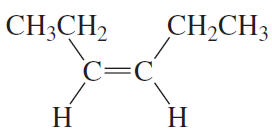
 Verified step by step guidance
 01:17
01:17