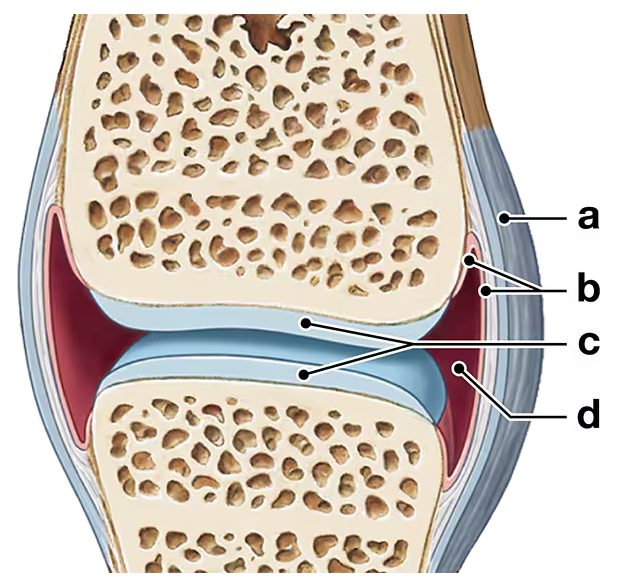
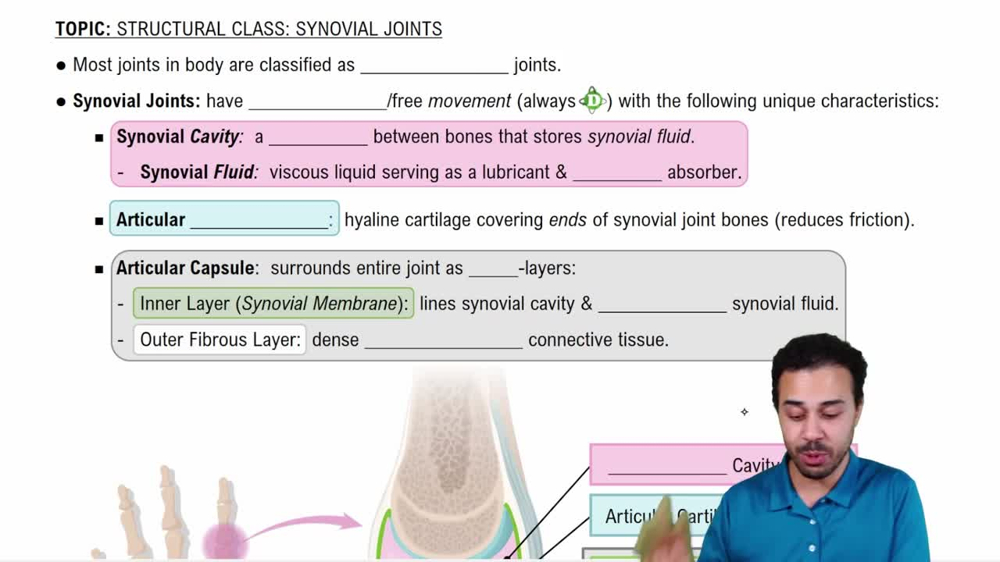
Label the structures in the following illustration of a synovial joint.
Verified step by step guidance
1
Identify the outermost layer surrounding the joint, which is the fibrous capsule. This structure provides stability and protection to the joint.
Locate the synovial membrane lining the inner surface of the fibrous capsule. This membrane produces synovial fluid that lubricates the joint.
Find the synovial fluid within the joint cavity, which reduces friction between the articulating bones during movement.
Identify the articular cartilage covering the ends of the bones. This smooth cartilage cushions the bones and allows smooth movement.
Locate the ligaments outside the fibrous capsule that connect bone to bone, providing additional support and stability to the joint.
Verified video answer for a similar problem:
This video solution was recommended by our tutors as helpful for the problem above
Video duration:
1m
Play a video:
0 Comments
Key Concepts
Here are the essential concepts you must grasp in order to answer the question correctly.
Articular Cartilage
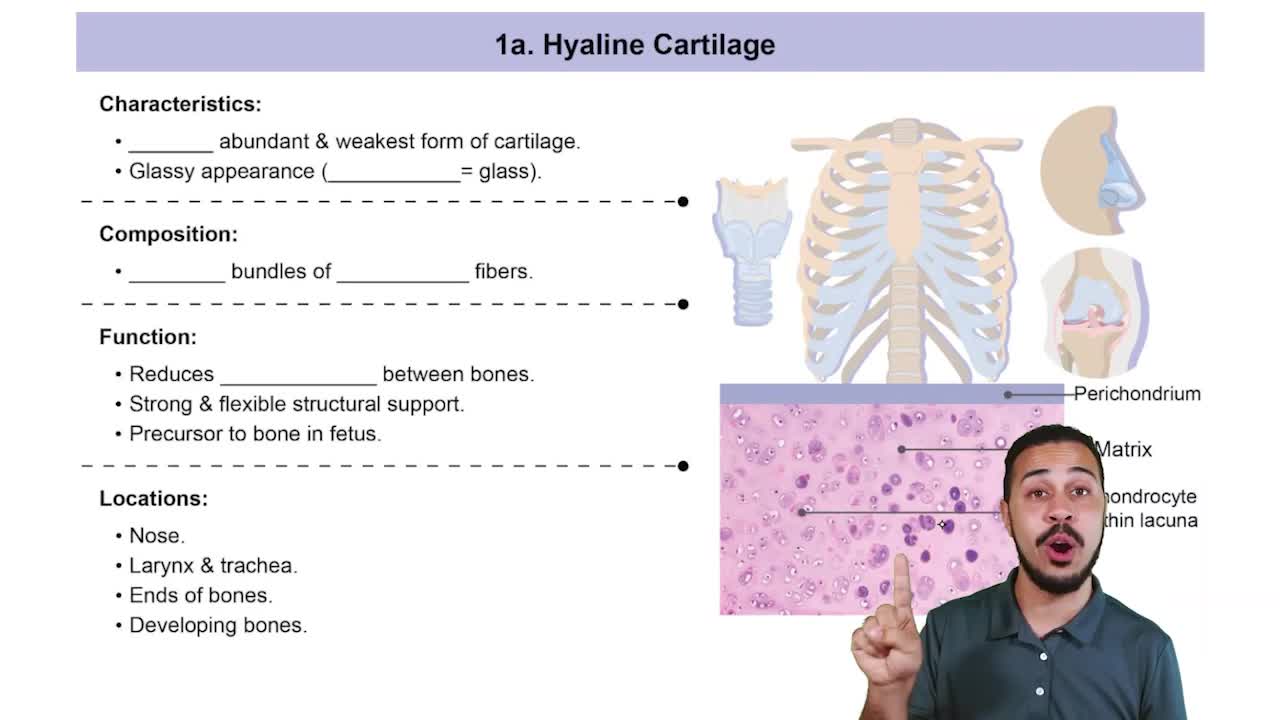
Articular cartilage is a smooth, white tissue that covers the ends of bones where they come together to form joints. It reduces friction and absorbs shock during movement, allowing bones to glide smoothly over each other.
Synovial fluid is a viscous, lubricating fluid found within the synovial cavity of a joint. It nourishes the articular cartilage and reduces friction between the articulating surfaces during joint movement.
Ligaments are strong, fibrous connective tissues that connect bones to other bones at joints. They provide stability and support, preventing excessive or abnormal movements that could damage the joint.