Pearson+ LogoPearson+ Logo
Ch. 16 Microbial Life: Prokaryotes and Protists
Taylor - Campbell Biology: Concepts & Connections 10th Edition
Taylor, Simon, Dickey, Hogan10th EditionCampbell Biology: Concepts & ConnectionsISBN: 9780136538783Not the one you use?Change textbook
Chapter 16, Problem 1

Explain how each of the following characteristics contributes to the success of prokaryotes: cell wall, capsule, flagella, fimbriae, endospores.

Verified step by step guidance
1
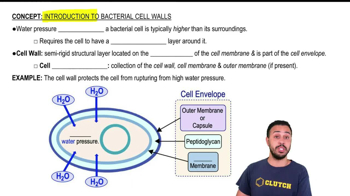
Cell Wall: The cell wall in prokaryotes provides structural support and protection. It helps maintain the shape of the cell and prevents it from bursting in hypotonic environments. The cell wall is primarily made up of peptidoglycan in bacteria, which is a strong and rigid structure that can withstand tough environmental conditions, aiding in the survival and success of prokaryotes.
Capsule: Many prokaryotes have a gelatinous capsule surrounding the cell wall. This capsule serves multiple functions including protecting the cell from desiccation (drying out) and shielding it from phagocytosis by larger organisms. The capsule also helps in adherence to surfaces and other cells, which is crucial for forming biofilms and for the infection process in pathogenic bacteria.
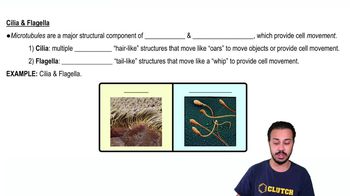
Flagella: Flagella are long, whip-like structures that protrude from the cell body and are used for locomotion. The ability to move enables prokaryotes to travel towards favorable environments (positive chemotaxis) such as those with nutrients, and away from harmful substances and conditions (negative chemotaxis). This mobility is key for finding optimal conditions for growth and survival.
Fimbriae: Fimbriae are hair-like structures that are shorter than flagella and are used by bacteria to attach to other cells and surfaces. This attachment can be critical for colonization and the establishment of infections, as well as for forming stable aggregates like biofilms. These structures enhance the ability of prokaryotes to thrive in various environments by facilitating close associations with surfaces or other organisms.
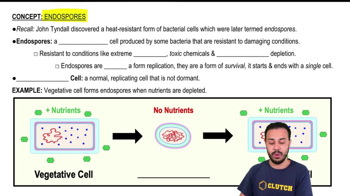
Endospores: Some bacteria can form endospores, which are tough, dormant structures that protect the genetic material of the cell in harsh conditions. Endospores can survive extreme heat, lack of water, and exposure to many toxic chemicals and radiation. This ability allows the bacteria to endure unfavorable conditions and then germinate to resume normal growth when conditions improve, ensuring the long-term survival of the species.

Verified video answer for a similar problem:

This video solution was recommended by our tutors as helpful for the problem above.
Video duration:
1m
Was this helpful?

Key Concepts

Here are the essential concepts you must grasp in order to answer the question correctly.

Cell Wall

The cell wall is a rigid structure that surrounds the cell membrane of prokaryotes, providing shape and protection against environmental stresses. It helps maintain osmotic balance, preventing lysis in hypotonic conditions. The composition of the cell wall, primarily peptidoglycan in bacteria, also plays a crucial role in determining the organism's susceptibility to antibiotics.
Recommended video:
Guided course
03:44
Introduction to Bacterial Cell Walls

Flagella

Flagella are long, whip-like appendages that enable prokaryotes to move through their environment. They are essential for motility, allowing bacteria to swim toward nutrients or away from harmful substances. The movement is powered by a rotary motor mechanism at the base of the flagellum, which is crucial for survival and colonization in various habitats.
Recommended video:
Guided course
03:15
Cilia & Flagella

Endospores

Endospores are highly resistant structures formed by some prokaryotes, allowing them to survive extreme conditions such as heat, desiccation, and radiation. This survival strategy is vital for the persistence of the species in unfavorable environments. When conditions improve, endospores can germinate and revert to a vegetative state, ensuring the continuation of the organism.
Recommended video: