

Pearson+ LogoPearson+ Logo
Ch. 19 The Evolution of Vertebrate Diversity
Taylor - Campbell Biology: Concepts & Connections 10th Edition
Taylor, Simon, Dickey, Hogan10th EditionCampbell Biology: Concepts & ConnectionsISBN: 9780136538783Not the one you use?Change textbook
Chapter 19, Problem 14

Summarize the hypotheses that explain variation in human skin color as adaptations to variation in UV radiation.

Verified step by step guidance
1
Identify the main hypotheses: There are several hypotheses that explain the variation in human skin color, primarily focusing on the adaptation to different levels of ultraviolet (UV) radiation exposure in various geographical regions.
Understand the UV radiation protection hypothesis: This hypothesis suggests that darker skin evolved to protect against the harmful effects of UV radiation, such as skin cancer and folate degradation, which is crucial for DNA synthesis and reproductive success.
Explore the vitamin D synthesis hypothesis: Lighter skin is thought to have evolved in regions with lower UV radiation to maximize the synthesis of vitamin D, which is vital for bone health and immune function. In areas with less intense sunlight, lighter skin increases the efficiency of UV radiation absorption, enhancing vitamin D production.
Consider the sexual selection hypothesis: This hypothesis proposes that skin color variations may also be influenced by sexual selection, where certain skin colors become preferable in a given community, influencing mating choices and thus affecting the gene pool.
Examine the integration of hypotheses: It's important to recognize that these hypotheses are not mutually exclusive and may interact in complex ways. The variation in human skin color is likely due to a combination of evolutionary pressures including UV radiation levels, dietary factors, and social structures.

Verified video answer for a similar problem:

This video solution was recommended by our tutors as helpful for the problem above.
Video duration:
1m
Was this helpful?

Key Concepts

Here are the essential concepts you must grasp in order to answer the question correctly.

Melanin Production

Melanin is a pigment produced by melanocytes in the skin, which plays a crucial role in determining skin color. Higher melanin levels provide greater protection against ultraviolet (UV) radiation by absorbing and dissipating harmful rays, reducing the risk of skin damage and cancer. This adaptation is particularly beneficial in regions with high UV exposure, leading to darker skin tones.
Recommended video:
Guided course
04:36
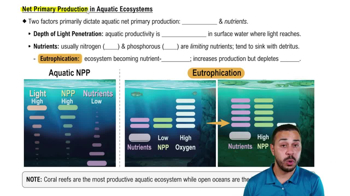
Primary Production in Aquatic Ecosystems

UV Radiation and Vitamin D Synthesis

Ultraviolet radiation is essential for the synthesis of vitamin D in the skin, which is vital for bone health and immune function. In areas with low UV radiation, lighter skin allows for more efficient vitamin D production, compensating for reduced sunlight exposure. This creates a balance between protecting against UV damage and ensuring adequate vitamin D levels, influencing skin color variation.
Recommended video:
01:34
Adaptive Radiation Example 2

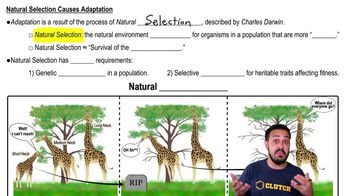
Natural Selection and Adaptation

Natural selection is the process by which certain traits become more common in a population due to their advantageous effects on survival and reproduction. In the context of skin color, individuals with skin tones better suited to their environment's UV radiation levels are more likely to thrive and reproduce. Over generations, this leads to the adaptation of skin color as a response to varying UV exposure across different geographic regions.
Recommended video:
Guided course
07:48
Natural Selection Causes Adaptation