Draw the conjugate acid of each of the following: a. CH3CH2OH b. CH3CH2O− c.
Verified step by step guidance
1
Identify the concept of a conjugate acid: A conjugate acid is formed when a base accepts a proton (H⁺). For each compound, determine the site where a proton can be added.
For CH₃CH₂OH (ethanol): The molecule contains an -OH group, which can act as a base. Add a proton (H⁺) to the oxygen atom, resulting in CH₃CH₂OH₂⁺. This is the conjugate acid of ethanol.
For CH₃CH₂O⁻ (ethoxide ion): The molecule is already negatively charged, indicating it is a strong base. Add a proton (H⁺) to the oxygen atom, neutralizing the negative charge and forming CH₃CH₂OH. This is the conjugate acid of the ethoxide ion.
Draw the structures of the conjugate acids: For CH₃CH₂OH₂⁺, the oxygen will have a positive charge due to the addition of the proton. For CH₃CH₂OH, the structure remains the same as ethanol since it is the neutral conjugate acid of ethoxide.
Verify the results: Ensure that the conjugate acids are correctly formed by checking that a single proton (H⁺) has been added to the base in each case, and the charges are consistent with the addition of the proton.
Verified video answer for a similar problem:
This video solution was recommended by our tutors as helpful for the problem above
Video duration:
3m
Play a video:
0 Comments
Key Concepts
Here are the essential concepts you must grasp in order to answer the question correctly.
Conjugate Acids and Bases
In acid-base chemistry, a conjugate acid is formed when a base gains a proton (H+). Conversely, a conjugate base is what remains after an acid donates a proton. Understanding this relationship is crucial for predicting the behavior of substances in chemical reactions, particularly in organic chemistry where proton transfer is common.
Alcohols, like CH3CH2OH (ethanol), can act as weak acids. When they are protonated, they form their conjugate acids, which are typically oxonium ions. This concept is important for understanding the reactivity of alcohols in various chemical reactions, including their role in nucleophilic substitutions and eliminations.
Alkoxide ions, such as CH3CH2O− (ethoxide), are the conjugate bases of alcohols. They are formed when an alcohol donates a proton. Recognizing the properties and reactivity of alkoxide ions is essential for understanding their role in organic synthesis, particularly in reactions involving nucleophiles and bases.

 3:54 minutes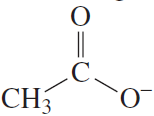
 Verified step by step guidance
 02:11
02:11