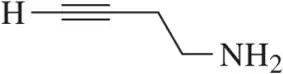
For each of the following molecules, predict the product that would form upon reaction of a single equivalent of a strong base. (f)
Verified step by step guidance
1
Identify the functional groups in the molecule. Look for acidic protons, such as those on alcohols, phenols, carboxylic acids, or alpha-hydrogens adjacent to carbonyl groups, as these are most likely to react with a strong base.
Determine the strength of the base and its ability to deprotonate the molecule. A strong base, such as hydroxide (OH⁻) or alkoxide (RO⁻), will preferentially remove the most acidic proton in the molecule.
Locate the most acidic proton in the molecule. For example, alpha-hydrogens (hydrogens on carbons adjacent to a carbonyl group) are often acidic due to resonance stabilization of the resulting enolate ion.
Write the deprotonation reaction. Use MathML to represent the chemical equation, showing the molecule reacting with the strong base to form the conjugate base and water (or the corresponding conjugate acid of the base).
Analyze the stability of the conjugate base formed. If the conjugate base is resonance-stabilized or otherwise stabilized, it confirms that the reaction is likely to proceed as written.
Verified video answer for a similar problem:
This video solution was recommended by our tutors as helpful for the problem above
Play a video:
0 Comments
Key Concepts
Here are the essential concepts you must grasp in order to answer the question correctly.
Strong Bases
Strong bases are substances that completely dissociate in solution to produce hydroxide ions (OH-). Common examples include sodium hydroxide (NaOH) and potassium hydroxide (KOH). In organic chemistry, strong bases are often used to deprotonate acidic protons in molecules, leading to the formation of reactive intermediates such as carbanions or enolates.
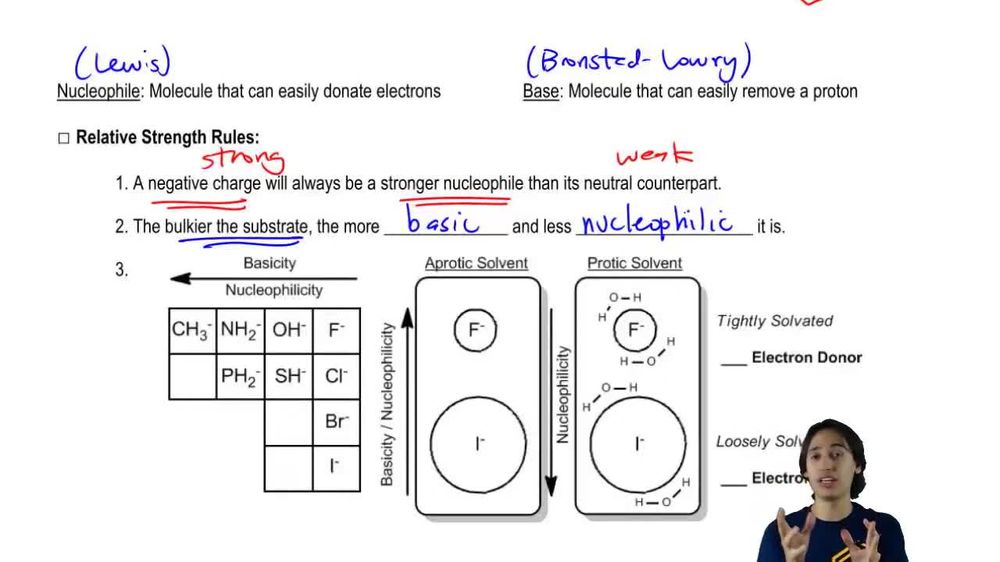
Acidity refers to the tendency of a molecule to donate protons (H+), while basicity refers to the ability to accept protons. The strength of an acid or base can be quantified using the pKa scale, where lower pKa values indicate stronger acids. Understanding the relative acidity of functional groups in organic molecules is crucial for predicting the outcome of reactions with strong bases.
Understanding the difference between basicity and nucleophilicity.
Reaction Mechanisms
Reaction mechanisms describe the step-by-step process by which reactants are converted into products. In the context of strong base reactions, mechanisms may involve deprotonation, nucleophilic attack, or elimination processes. Familiarity with common mechanisms, such as E2 or SN2, helps in predicting the products formed when a strong base reacts with a given organic molecule.