Show how the following compounds could be prepared from 2-methylpropane: c. 2-iodo-2-methylpropane
Verified step by step guidance
1
Start with 2-methylpropane (isobutane), which has the structure (CH₃)₂CHCH₃. The goal is to introduce an iodine atom at the tertiary carbon (C-2).
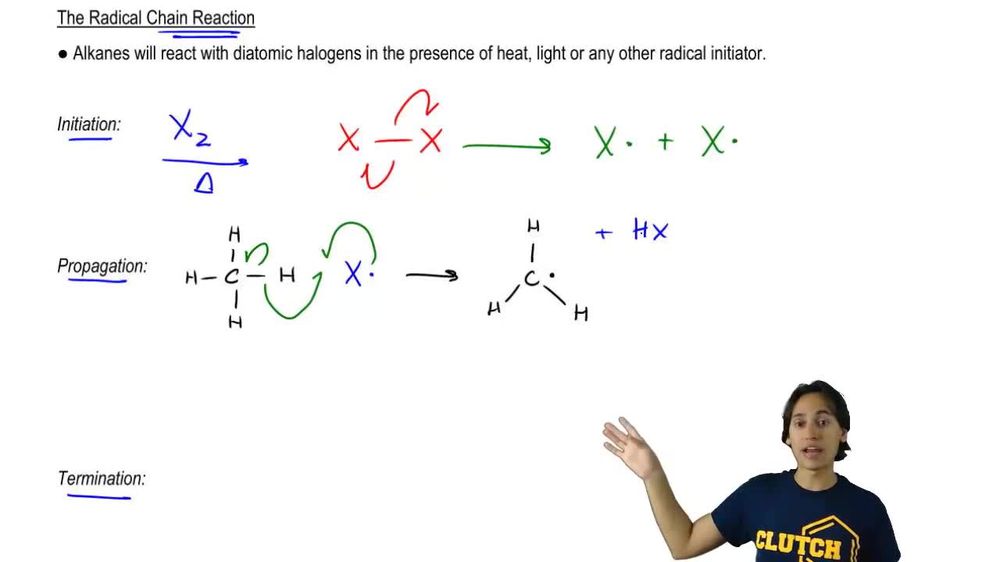
Perform a free radical halogenation reaction using chlorine (Cl₂) in the presence of UV light or heat. This will selectively form 2-chloro-2-methylpropane ((CH₃)₃CCl) due to the stability of the tertiary radical intermediate.
Next, carry out a nucleophilic substitution reaction (SN2) to replace the chlorine atom with iodine. Use sodium iodide (NaI) in acetone as the reagent. This reaction is driven by the insolubility of NaCl in acetone, which helps to shift the equilibrium toward the formation of 2-iodo-2-methylpropane ((CH₃)₃CI).
Ensure proper reaction conditions, such as maintaining a suitable temperature and reaction time, to maximize the yield of the desired product.
Finally, purify the product (2-iodo-2-methylpropane) using techniques such as distillation or recrystallization, depending on the physical properties of the compound.
Verified video answer for a similar problem:
This video solution was recommended by our tutors as helpful for the problem above
Video duration:
4m
Play a video:
0 Comments
Key Concepts
Here are the essential concepts you must grasp in order to answer the question correctly.
Nucleophilic Substitution
Nucleophilic substitution is a fundamental reaction in organic chemistry where a nucleophile replaces a leaving group in a molecule. In the context of preparing 2-iodo-2-methylpropane from 2-methylpropane, this process typically involves the substitution of a halogen for a hydrogen atom, facilitated by a strong nucleophile such as iodide ion (I-). Understanding this mechanism is crucial for predicting the products of the reaction.
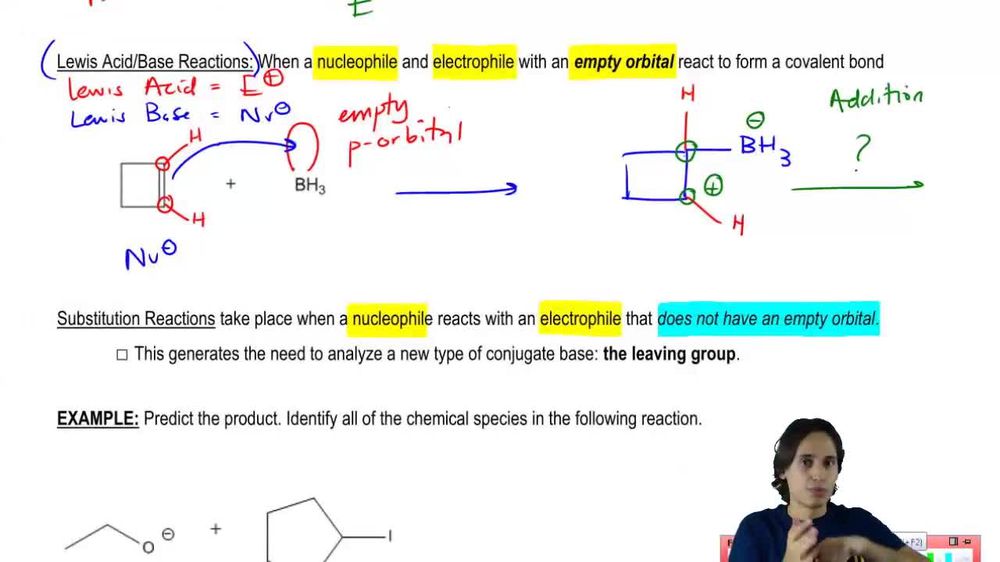
Nucleophiles and Electrophiles can react in Substitution Reactions.
Radical Halogenation
Radical halogenation is a reaction that introduces halogens into organic compounds through radical intermediates. In the case of converting 2-methylpropane to 2-iodo-2-methylpropane, the process often begins with the formation of bromine or iodine radicals, which abstract hydrogen atoms from the alkane, leading to the formation of alkyl radicals. This concept is essential for understanding how to selectively introduce iodine into the desired position of the molecule.
Rearrangement reactions involve the structural reorganization of a molecule to form a more stable or reactive species. In the synthesis of 2-iodo-2-methylpropane, understanding how carbocation rearrangements can occur is important, as the formation of a more stable tertiary carbocation can facilitate the substitution reaction. This concept helps in predicting the pathways and products of reactions involving branched alkanes.

 4:00 minutes
 Verified step by step guidance
 01:47
01:47